22 June, 2026
|
25 minutes to read

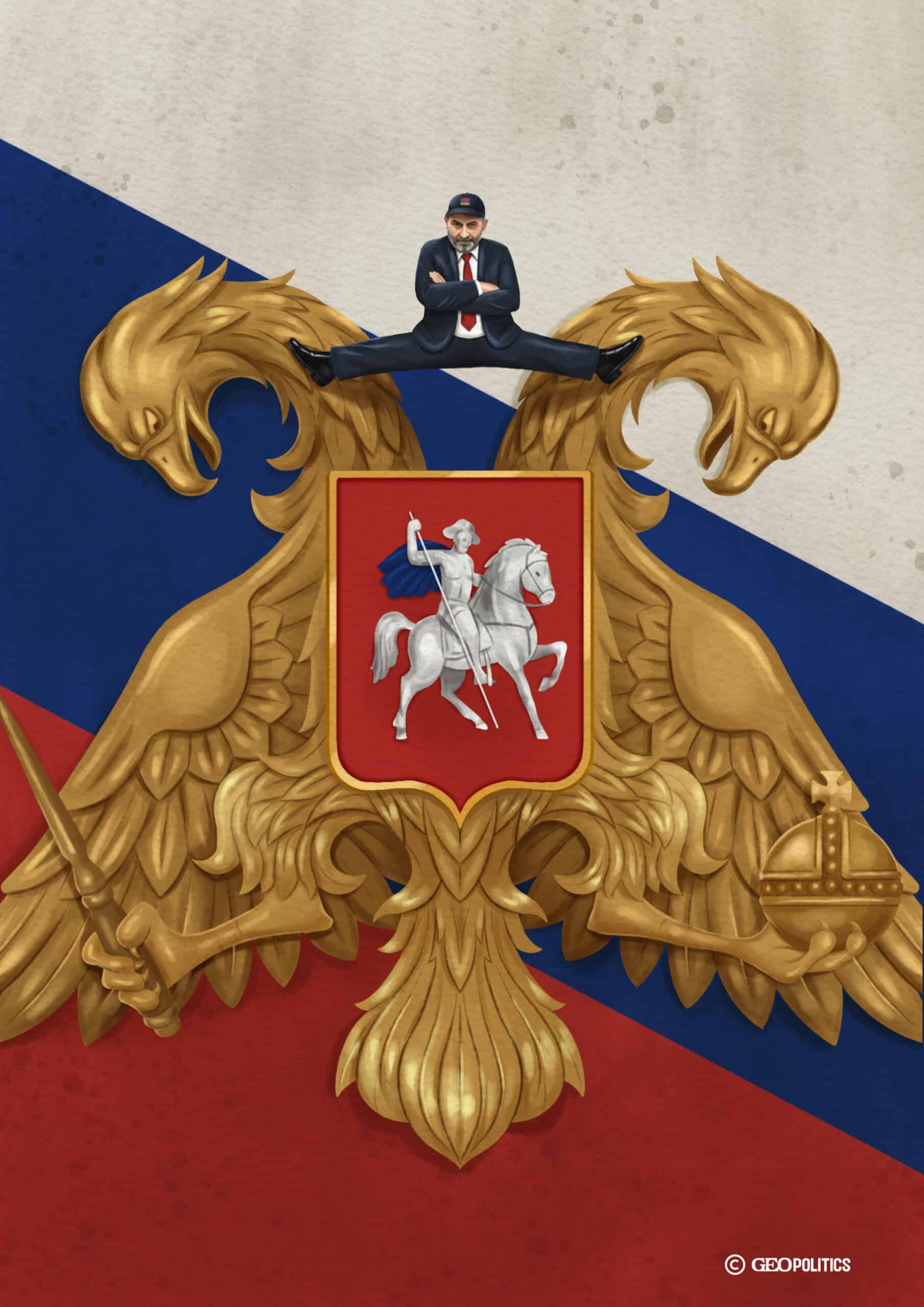
A couple of weeks ago, Armenia had its first genuinely “geopolitical” elections in modern history. Virtually every major domestic political actor espoused a clearly defined geopolitical orientation. The government has embraced a strategy of closer alignment with the West, while the principal opposition parties and alliances advocated restoring closer ties with Russia. External actors were also playing a more visible role than in previous electoral cycles. The European Union, the United States, Russia, and even Azerbaijan and Türkiye, not so long ago Armenia’s arch-enemies, each had clear strategic preferences and were, to varying degrees, seeking to bolster the political forces most closely aligned with their respective visions of the regional future.
Prime Minister Nikol Pashinyan’s Civil Contract (CC) party won with just under 50 percent of the vote, securing a clear and consequential victory. While not a landslide on the scale of Pashinyan’s post-revolutionary triumph in 2018, the result was nevertheless a commanding endorsement of his leadership and left the opposition far from power. CC secured enough seats to govern alone, avoiding the need for coalition negotiations and reaffirming Pashinyan’s dominance of Armenian politics.
The result is particularly striking given that Pashinyan has been in power since 2018 and has carried the inevitable burdens of incumbency, compounded by persistent criticism over Armenia’s defeat in the Nagorno-Karabakh war. Some supporters of the ruling party even argue that the victory could have been more decisive had Pashinyan been less confrontational, more conciliatory, and more attentive to the sentiments and pride of the average Armenian voter.
Yet this, too, cuts both ways. While some of his personal traits alienated parts of the electorate, those same characteristics broadened his appeal, particularly among voters in rural areas and small towns, who have traditionally been less receptive to pro-European or liberal platforms. By portraying himself as a challenger to oligarchs, corrupt elites, and entrenched business interests, Pashinyan successfully framed the election as a contest between ordinary citizens and the established powers—and emerged victorious.
Yet the scale of his victory should not obscure the opposition’s considerable score. Taken together, the principal pro-Russian opposition forces garnered nearly 40% of the vote, a far-from-insignificant showing. With the CC polling at 49.7% and no constitutional majority in the National Assembly, there are growing concerns that the referendum on the new constitution, which is necessary to conclude a peace agreement with Azerbaijan and advance the reform agenda, will not be a mere formality for the ruling party. Instead, it may prove a challenging, closely contested battle, even if some observers argue that many dissatisfied voters cast their ballots primarily as a protest against the Prime Minister and that anti-Western, pro-Russian sentiment remains well below half the population.
The opposition’s ability to mobilize a substantial share of the electorate was due in large measure to a well-oiled, sophisticated propaganda apparatus that made extensive use of AI and social media, and to the effective dissemination of powerful political narratives that resonated with a significant segment of Armenian society. As a result, although the opposition was defeated, it was by no means crushed. Rather, the election underscored the persistence of deep political polarization.
Paradoxically, this lowers the likelihood of direct Russian military intervention in Armenia, which was already complicated by the lack of a shared border and by Russia’s military setbacks in Ukraine. It may, however, encourage the Kremlin to rely more heavily on political destabilization, supporting continuous opposition-led obstruction, recurring protests, and institutional paralysis. Such a climate of seemingly endless political crisis, coupled with the array of economic pressure tools that Russia could deploy against Armenia and the persistent cognitive warfare waged through disinformation campaigns, will aim at exhausting the authorities and creating favorable conditions for a popular uprising or the downfall of the regime.
The majority appears to have accepted Pashinyan’s argument that Russia failed to safeguard Armenian interests during the Nagorno-Karabakh crisis and can no longer be relied upon as the country’s security guarantor.
But so far, whatever one may say, the defeat of the openly pro-Russian opposition represents another setback for Moscow’s influence in Armenia. The majority appears to have accepted Pashinyan’s argument that Russia failed to safeguard Armenian interests during the Nagorno-Karabakh crisis and can no longer be relied upon as the country’s security guarantor. The result, therefore, strengthens Yerevan’s ongoing rapprochement with the EU and the U.S.
Pashinyan’s visit to Moscow on April 1, just two months before Armenia’s parliamentary elections and one month ahead of the European Political Community summit scheduled for Yerevan, provided a revealing snapshot of the current state of Armenian-Russian relations. The public exchanges between Vladimir Putin and Nikol Pashinyan offered a relatively clear illustration of the Kremlin’s growing frustration with Yerevan’s gradual rapprochement with Western actors, particularly the European Union and, to a lesser extent, the United States, whose interest in the South Caucasus has expanded in connection with strategic initiatives such as the Trump Route for International Peace and Prosperity (TRIPP) corridor.
If it were solely up to Yerevan, Armenia would have avoided a complete and immediate rupture with Russia. Economic ties remain substantial, and geography limits Armenia’s strategic options. Ideally, Pashinyan would have preferred to keep his balancing strategy: reducing dependence on Moscow while avoiding a direct confrontation that could damage Armenia’s economic and security interests.
Russia appears increasingly determined to exert maximum pressure on Armenia in an effort to force it to clarify its strategic and economic orientation. Trade, in Moscow’s view, is also essentially a geopolitical instrument.
But Russia appears increasingly determined to exert maximum pressure on Armenia in an effort to force it to clarify its strategic and economic orientation. Trade, in Moscow’s view, is also essentially a geopolitical instrument. Russia is therefore threatening to push Yerevan out of both Russia-dominated blocs, the Eurasian Economic Union (EAEU) and the Collective Security Treaty Organization (CSTO), without delay.
To this end, Moscow has been sending increasingly firm signals while seeking to raise the political and economic costs of Armenia’s growing rapprochement with the EU. Russia’s calculation appears to be that fears of exclusion from existing economic and security structures, before Armenia has secured any credible pathway into Western economic or security institutions, will ultimately outweigh the appeal of Pashinyan’s westward ambitions.
Russia remains Armenia’s largest trading partner, and significant sectors of the Armenian economy, particularly exporters of food products, mineral water, and alcohol, continue to depend heavily on access to the Russian market. By fueling concerns among these economic stakeholders, Moscow hopes to generate domestic tensions in Yerevan and weaken the political consensus behind the country’s European opening.
This strategy was on full display at the EAEU summit in Astana in May 2026. Russia reportedly sought to secure a resolution from fellow member states, explicitly demanding that Armenia make an immediate choice between deepening ties with Brussels and remaining within the Eurasian bloc. Yet the demand is fundamentally political. Armenia is not a member of the EU, has not signed a free trade agreement with it, and does not participate in either the EU single market or the customs union. The issue, therefore, is less about legal or economic incompatibilities than about the country’s broader geopolitical trajectory.
While several of Moscow’s partners supported the initiative, subsequent developments suggested that not all EAEU members shared Russia’s position. Kazakhstan and Kyrgyzstan, in particular, were quick to congratulate Nikol Pashinyan on his electoral victory immediately after the summit ended, reflecting a more pragmatic and nuanced approach than Moscow and its closest ally, Belarus, adopted.
Moreover, any attempt to expel Armenia from the EAEU would face significant legal and institutional hurdles. Major decisions within the organization are based on the principle of consensus, and a measure as consequential as expulsion would require the unanimous consent of all member states. Armenia, therefore, retains considerable room for maneuver within the institution.
A similar logic applies to the Collective Security Treaty Organization (CSTO). Yerevan has frozen its participation in CSTO activities but has so far stopped short of formally withdrawing from the alliance. For the time being, Armenian leaders appear inclined to maintain this policy of suspension rather than pursue a definitive exit. Preserving this intermediate status for as long as possible provides Armenia with an argument, though by no means a guarantee, against the prospect of Russian military action. An armed attack by one member state against another within the same defensive alliance would fundamentally undermine the organization’s credibility. Such a move would inevitably alarm the remaining members and prompt them to question the value and rationale of their continued membership.
Finally, it is worth recalling that Armenia is not merely a member of these organizations but also one of their founding states. This fact gives any potential expulsion particular political and legal significance. Such a move would require a level of consensus that currently appears out of reach and would set a far-reaching precedent for the entire Eurasian institutional architecture.
Since the loss of Nagorno-Karabakh and Yerevan’s subsequent decisions to freeze its participation in the CSTO and drastically reduce its purchases of Russian weaponry, Moscow’s influence over Armenia has become increasingly economic rather than security-based. Armenia still hosts Russia’s military base in Gyumri, and although Russian border guards have withdrawn from Zvartnots International Airport and from the southern border crossing with Iran at Agarak, they remain deployed along the Turkish frontier. Yet Russia’s security leverage has weakened considerably and appears far less reliable as an instrument of influence than it once was.
Several factors explain this decline. First, Russia’s protracted war in Ukraine has significantly reduced its capacity for regional power projection. Second, reductions in personnel at the Gyumri base have diminished its operational relevance. Finally, the ongoing negotiations between Armenia and Azerbaijan, together with the prospect of normalization with Türkiye, have structurally reduced Armenia’s dependence on Russian security guarantees.
For years, Russia’s principal source of influence in the Armenian-Azerbaijani dispute was neither Yerevan nor Baku, but the conflict itself, and, to some extent, the political and military elites of Nagorno-Karabakh.
For years, Russia’s principal source of influence in the Armenian-Azerbaijani dispute was neither Yerevan nor Baku, but the conflict itself, and, to some extent, the political and military elites of Nagorno-Karabakh. The disappearance of that leverage, following the definitive end of the territory’s disputed status, represents a profound strategic shift. At the same time, Armenia’s diversification of arms suppliers, with India and France increasingly replacing Russia, and the gradual reform of its defense sector along lines broadly compatible with NATO standards, have further reduced Moscow’s ability to shape Armenian security policy. The dismissal, marginalization, or prosecution of several security officials perceived as close to Russia has further narrowed the Kremlin’s room for maneuver.
In what increasingly appeared to be a desperate attempt to shape the outcome of Armenia’s elections and raise the political stakes ahead of the vote, Moscow repeatedly invoked parallels between Armenia and Ukraine. The comparison was first introduced by Vladimir Putin himself, who, in an interview on May 29, recalled that Ukraine’s crisis had begun when the government in Kyiv decided to sign an Association Agreement with the European Union. The allusion was unmistakable: that decision ultimately led to war.
For pro-Russian political forces, which have traditionally framed Russia as Armenia’s indispensable protector, the notion that the principal threat could come from that very protector created an obvious conceptual dilemma.
Since then, the argument has been echoed by senior Russian officials and amplified by pro-Russian commentators in Armenia. Yet the narrative carried an inherent contradiction. Pashinyan has sought to present himself as a leader of peace, having secured a settlement with Azerbaijan and pursued a gradual normalization of relations with Türkiye. By drawing comparisons with Ukraine, however, Moscow implicitly suggested that Armenia now faced a renewed risk of war, this time emanating from Russia itself, a country that has long portrayed itself as Armenia’s security guarantor. For pro-Russian political forces, which have traditionally framed Russia as Armenia’s indispensable protector, the notion that the principal threat could come from that very protector created an obvious conceptual dilemma.
Nevertheless, the Kremlin appears to have concluded that such messaging was worth pursuing, perhaps because references to Ukraine and the specter of war were perceived as politically effective during Georgia’s 2024 elections. Moscow thus attempted to replicate a similar strategy in Armenia.
In fact, the parallels between Armenia and Ukraine are neither new nor entirely artificial. They date back at least to 2013, when, in the run-up to the Eastern Partnership Summit in Vilnius, Putin’s Russia exerted intense pressure on both Viktor Yanukovych’s Ukraine and Serzh Sargsyan’s Armenia. After years of negotiations with Brussels, both countries had prepared Association Agreements (AA) and Deep and Comprehensive Free Trade Areas (DCFTA) with the European Union. Yet, under sustained Russian pressure and coercion, both governments ultimately reversed course.
Some accounts suggest that Russian officials directly threatened Yanukovych with physical elimination. In Armenia’s case, the pressure appears to have had both personal and national security dimensions. According to several sources, Moscow warned that it could facilitate the return to Azerbaijan of Armenian-controlled territories surrounding Nagorno-Karabakh should Yerevan persist in its European course.
The parallel did not end there. In Ukraine, Russia’s intervention triggered the Maidan Revolution almost immediately. In Armenia, the 2018 Velvet Revolution can likewise be understood, at least in part, as a delayed response to years of Russian coercion and political pressure. Public frustration had been building since 2013, erupting periodically through protests such as Electric Yerevan in the summer of 2015 and subsequent demonstrations in 2016 before culminating in the mass mobilization that brought about political change in 2018.
Yet the prospect of direct Russian military intervention in Armenia remains relatively unlikely and may not constitute Moscow’s preferred instrument of influence. Unlike in Ukraine, Russia can hardly claim a moral duty to defend discriminated Russian speakers, and, logistically, such an operation would be far from straightforward. The Russian military presence at the Gyumri base has been reduced as resources have been diverted to the war in Ukraine, while Russian peacekeepers have also withdrawn from Nagorno-Karabakh. Any substantial deployment of additional forces to Armenia would require transit through Georgia, a step that would necessitate the consent of the Georgian authorities. While such a scenario cannot be entirely ruled out, given Tbilisi’s current disposition toward Moscow, it would pose significant political risks for Ivanishvili and could trigger serious domestic unrest.
This reality also helps explain Yerevan’s cautious approach toward Georgia’s ruling authorities. The Armenian government has gone out of its way to avoid confrontation with Tbilisi, adopting an accommodating posture and, at times, even offering mediation to restore dialogue between Georgia and the EU.
Ultimately, Moscow’s attempt to weaponize the Ukrainian precedent appears to have yielded few tangible results in Armenia. If anything, it may have produced the opposite effect, further eroding Russia’s standing among the Armenian public.
Ultimately, Moscow’s attempt to weaponize the Ukrainian precedent appears to have yielded few tangible results in Armenia. If anything, it may have produced the opposite effect, further eroding Russia’s standing among the Armenian public. The episode suggests that the Kremlin is becoming less concerned with maintaining a positive image in Armenia than with preserving influence through intimidation.
Russian security influence in Armenia has by no means vanished. Yet it appears to be in structural decline, and efforts to activate the remaining levers of influence now carry growing political risks for Moscow. This is particularly true given that several attempts to destabilize Armenia since 2020 have failed to produce the desired outcome.
Against this backdrop in the security domain, it is hardly surprising that the Kremlin increasingly views economic pressure as its most effective remaining instrument of influence.
Russia remains Armenia’s largest trading partner, with bilateral trade reaching approximately USD 6.7 billion in 2025, nearly one-third of Armenia’s total foreign trade. Moscow continues to exercise direct or indirect control over several strategic sectors of the Armenian economy, including the railway network, operated under a concession granted to Russian Railways until 2038. The country’s gas infrastructure, from pipelines to distribution, also remains under Gazprom’s control, and the nuclear energy sector is controlled by Rosatom. Russia’s presence is significant in banking and telecommunications, even if the influence of Russian firms has recently diminished following the withdrawal of Beeline and MTS.
Armenia remains heavily dependent on Russia in several key areas. Beyond Moscow’s influence over strategic sectors, the country continues to rely on Russian energy imports and essential commodities. Financial ties are equally significant, with remittances from Russia remaining an important source of income for many households. In addition, the influx of Russian citizens since 2022 has provided a noticeable boost to sectors ranging from information technology to real estate, further deepening the economic interdependence between the two countries.
Perhaps the most striking economic development of recent years has been the dramatic expansion of Armenian-Russian trade following Russia’s invasion of Ukraine. Western sanctions had the paradoxical effect of strengthening Armenia’s role as a logistical and re-export hub, enabling Russia to circumvent certain restrictions, particularly regarding dual-use goods such as semiconductors. Bilateral trade doubled in 2022 and tripled in 2023 compared with pre-war levels, peaking at USD 12 billion in 2024, equivalent to nearly 45% of Armenia’s external trade. This trend was partially reversed in 2025 due to Western pressure and measures adopted by the Armenian government to avoid exposure to secondary sanctions.
Armenia’s strong economic performance since 2022, with growth rates of 12.6% in 2022, 8.3% in 2023, 5.9% in 2024, and 7.1% in 2025, has been closely linked to these developments. Yet this very success has also increased the country’s vulnerability to economic pressure from Moscow.
Based on this, Russia possesses a broad arsenal of coercive economic tools: manipulation of gas prices, trade restrictions, sanitary and phytosanitary measures, limitations on migrant labor flows, and obstacles to financial transfers. Such instruments have been deployed repeatedly against other post-Soviet states, including Ukraine, Georgia, and Moldova, though they yielded little in terms of achieving these states’ geopolitical orientation. Armenia has already received a foretaste of these measures. In 2023, Russian authorities suspended Armenian drivers’ licenses for professional and commercial driving activities in Russia and tightened controls on Armenian agricultural exports (strawberries, apricots), flowers, fish, mineral waters (Jermuk), and brandy known throughout much of the former Soviet Union as Armenian cognac.
The signals delivered by Moscow during Pashinyan’s meeting with Putin, who repeatedly stressed the incompatibility between EAEU membership and deep economic integration with the European Union. These warnings were made even more explicit the following day, when Deputy Prime Minister Alexei Overchuk elaborated on them in an interview with TASS on April 2, 2026. Armenia’s efforts to align its regulatory framework with the European Union’s are seen in Moscow as a fundamentally geopolitical choice.
Moscow has also increasingly hinted at possible higher gas prices (currently well below prevailing European levels), the introduction of visa requirements for Armenian citizens, deportations of migrant workers, restrictions on access to the Russian market, and even limitations on air connections and financial transfers. All of these instruments have been employed by Russia against other post-Soviet states at various points over the past two decades.
Tensions have also emerged around specific investment disputes. Armenian authorities have sought to reassert control over strategic infrastructure, including the electricity distribution network, formerly owned by the Tashir Group of Samvel Karapetyan, Russia’s favorite candidate in the June 7 elections. Existing concession agreements, particularly in the railway sector, have also come under increasing scrutiny. Moscow interprets these developments as political signals of disengagement and believes that Russian interests are being unfairly marginalized.
The nuclear sector provides another source of friction. Russian officials have openly criticized Armenia’s growing willingness to engage Western partners in sensitive strategic industries. Rosatom, long regarded as the dominant external player in Armenia’s nuclear sector, now faces potential competition as Yerevan explores future cooperation with American, French, and South Korean firms.
Russian rhetoric continues to emphasize that they use “purely economic arguments”. Kremlin officials routinely question the commercial viability of Western-backed projects, highlight the limited capacity of European markets to absorb Armenian agricultural exports, and point to the perceived lack of employment generated by high-profile Western investments, including those associated with technology companies such as Nvidia. These arguments are intended to shape Armenian public opinion by portraying the government’s strategic choices as economically misguided.
The relationship between Russia and Armenia cannot, therefore, be described as a strategic partnership, but rather as a model characterized by coercive conditionality. While Moscow presents its regional integration projects as pillars of stability and prosperity, it simultaneously suggests that any weakening of Russia’s role could produce instability and economic disruption.
The relationship between Russia and Armenia cannot, therefore, be described as a strategic partnership, but rather as a model characterized by coercive conditionality. While Moscow presents its regional integration projects as pillars of stability and prosperity, it simultaneously suggests that any weakening of Russia’s role could produce instability and economic disruption. As we mentioned above, Armenia’s attempt to maintain balanced relations with both Russia and the European Union clashes with a Russian worldview that views movement towards the EU as inherently adversarial. At its core, Russia fears a gradual erosion of its influence in the South Caucasus. The further Armenia moves beyond Moscow’s orbit, the more willing the Kremlin appears to be to recalibrate its commitments.
Despite these pressures, Armenia today enjoys considerably greater room for maneuver than it did in 2013, when President Serzh Sargsyan abandoned an Association Agreement with the European Union under intense Russian pressure.
The geopolitical environment has changed dramatically. A strategic partnership with the United States, formalized in January 2025; deepening engagement with the European Union; growing defense cooperation with India; ongoing negotiations with Azerbaijan; and the normalization process with Türkiye have all strengthened Yerevan’s position vis-à-vis Moscow.
Moreover, some Russian retaliatory measures could prove costly for Russia itself.
Suspending air links would affect not only Armenians but also thousands of Russian citizens who use Armenia as a transit and commercial hub. Any interruption in gas supplies could prompt Yerevan to explore alternatives, including imports from Azerbaijan or more radical measures, such as nationalizing Gazprom-owned infrastructure.
The railway sector illustrates these tensions particularly clearly. Armenian officials argue that Russian Railways has failed to meet key investment commitments under its concession agreement. Constrained by Western sanctions, cut off from external financing, and unable to access certain equipment, the company is in no position to participate in the reconstruction of the 43-kilometer railway segment associated with the TRIPP corridor project. As a result, Yerevan has begun exploring alternatives, including the possibility of replacing Russian Railway with a Kazakh operator. A European alternative remains unlikely given the technical specificities of Armenia’s Soviet-era rail infrastructure.
Moscow no longer exercises meaningful control over regional transport infrastructure.
For Moscow, however, the railway issue extends far beyond commercial considerations. Control over Armenia’s rail network would ensure Russia a seat at the negotiating table throughout the broader regional connectivity and transport corridor discussions. There is a profound difference between a transit corridor through Nakhchivan managed by Russia and a scenario in which Moscow no longer exercises meaningful control over regional transport infrastructure. This helps explain the unusually direct and explicit warnings emanating from Russian officials, who appear determined to prevent such an outcome from materializing.
However, Moscow’s approach may yet evolve in a more pragmatic direction as the political landscape becomes clearer. Should Russian policymakers conclude that an opposition already defeated at the ballot box lacks the capacity to challenge the incumbent government, the Kremlin may opt to limit further escalation and reopen channels of dialogue with Pashinyan’s administration. Such a shift would reflect less a strategic rapprochement than an effort to manage losses and preserve whatever influence Russia retains in Armenia amid an increasingly unfavorable political environment.
Russian diplomacy is fully capable of combining pressure on Armenia with efforts to preserve influence through less confrontational means. Indeed, the first signs of such a strategy are already emerging. They were reflected in recent talks between Russian Foreign Minister Sergey Lavrov and his Turkish counterpart Hakan Fidan, which highlighted a parallel Russian track aimed at securing Turkish support for maintaining Russia’s role in the South Caucasus.
Moscow understands that Türkiye requires support on several strategic issues beyond the Caucasus, particularly in the Middle East. Ankara’s tensions with Israel over Syria and its opposition to any U.S.-Israeli military campaign against Iran create opportunities for cooperation with Russia. Although Russia and Türkiye remain competitors in the Caucasus and the Black Sea region, Moscow may still prove a useful partner for Ankara in other theatres.
In return, Russia appears to be promoting a revival of the so-called “3+3” format. First proposed several years ago, the initiative brings together Russia, Türkiye, Iran, Armenia, Azerbaijan, and Georgia. From Moscow’s perspective, its main attraction lies in the exclusion of Western actors, particularly the European Union and the United States.
Faced with Armenia’s efforts to reduce its dependence on Russia, declining Russian influence in Azerbaijan, and growing European and American engagement through the TRIPP project, the Kremlin may once again seek to place the initiative on the diplomatic agenda. The proposal may also appeal to some Turkish interests, which helps explain Russia’s efforts to secure Ankara’s backing. Iranian support would likely be easier to obtain.
Beyond broader geopolitical considerations, Moscow is also pursuing more concrete objectives. One concerns the future of the Russian railway concession operating Armenia’s rail network. Yerevan has signaled its intention to transfer the concession to a non-Russian operator. For Moscow, retaining control of this strategic asset would enable it to remain connected to the TRIPP initiative and preserve a foothold in the region’s emerging transport architecture. This may also help explain Russia’s unusually supportive stance towards Turkish-Armenian reconciliation following the Lavrov-Fidan meeting.
Yet it remains unclear whether Türkiye is prepared to align itself with Moscow’s preferences. Historically, the “3+3” format has never enjoyed genuine consensus among its participants.
Previously, Georgia was the principal obstacle. Under the 3rd President, Mikheil Saakashvili, Tbilisi firmly opposed any arrangement that excluded Western powers. Today, Georgia’s leadership may prove more receptive, even though Tbilisi has so far respectfully declined to participate.
Azerbaijan is unlikely to support any mechanism that could strengthen Russian or Iranian influence in the South Caucasus. Baku’s foreign policy is firmly rooted in the assertion of national sovereignty and shows little interest in facilitating the return of external tutelage. Azerbaijan remains satisfied with its strategic partnership with Türkiye and would generally prefer to see Russian and Iranian influence diminish rather than expand.
Armenia, too, may resist such a framework. In recent years, Yerevan has sought to reduce its dependence on Moscow, a trend likely to accelerate following Pashinyan’s renewed mandate and strengthened domestic legitimacy.
Moscow is no longer relying solely on coercive instruments. Alongside pressure tactics, it is increasingly pursuing a strategy to preserve its regional position through negotiation, transactional diplomacy, and carefully calibrated compromises.
The central question, therefore, is whether Türkiye will be willing to champion Russia’s proposal and use its influence over Azerbaijan to facilitate its implementation. At present, that outcome appears far from certain. What is clear, however, is that Moscow is no longer relying solely on coercive instruments. Alongside pressure tactics, it is increasingly pursuing a strategy to preserve its regional position through negotiation, transactional diplomacy, and carefully calibrated compromises.
Pashinyan’s victory provides a renewed mandate to continue Armenia’s gradual reorientation toward the West and reduce the country’s long-standing dependence on Russia. More than that, Armenia has entered a period unlike any in its post-Soviet history.
Yet the coming years are likely to be defined by a paradox. Armenia has never possessed greater freedom of maneuver than it does today. Russia’s military leverage has weakened, new international partnerships have emerged, and the prospect of peace with Azerbaijan and normalization with Türkiye offers opportunities that would have seemed unimaginable only a few years ago. At the same time, Armenia has rarely faced such profound uncertainty. It is attempting to leave a geopolitical order that still shapes much of its economy before a viable alternative security and economic architecture has fully materialized.
For Moscow, the election represents another stage in the gradual erosion of Russian influence in the South Caucasus. Yet decline does not necessarily imply withdrawal. The Kremlin retains significant economic instruments, political networks, and diplomatic assets. The question is no longer whether Russia can restore the dominant position it once enjoyed in Armenia. It is whether it can preserve enough influence to remain an indispensable actor in the region’s future.
Much will depend on factors that lie beyond Yerevan’s control. The durability of Western engagement, the success of Armenian-Azerbaijani normalization, the evolution of Turkish-Armenian relations, the trajectory of the war in Ukraine, and the internal political stability of Georgia and Iran will all shape the strategic environment in which Armenian leaders must operate. But the success of this transformation will also depend on whether Pashinyan and his team can convert electoral success into a durable and resilient political settlement and reverse the gradual erosion of their political legitimacy.
The election may therefore be remembered less as the end of a political contest than as the beginning of a far more consequential strategic test. Armenia has chosen a direction. The far more difficult question is whether it can successfully manage the journey.