22 September, 2026
|
30 minutes to read

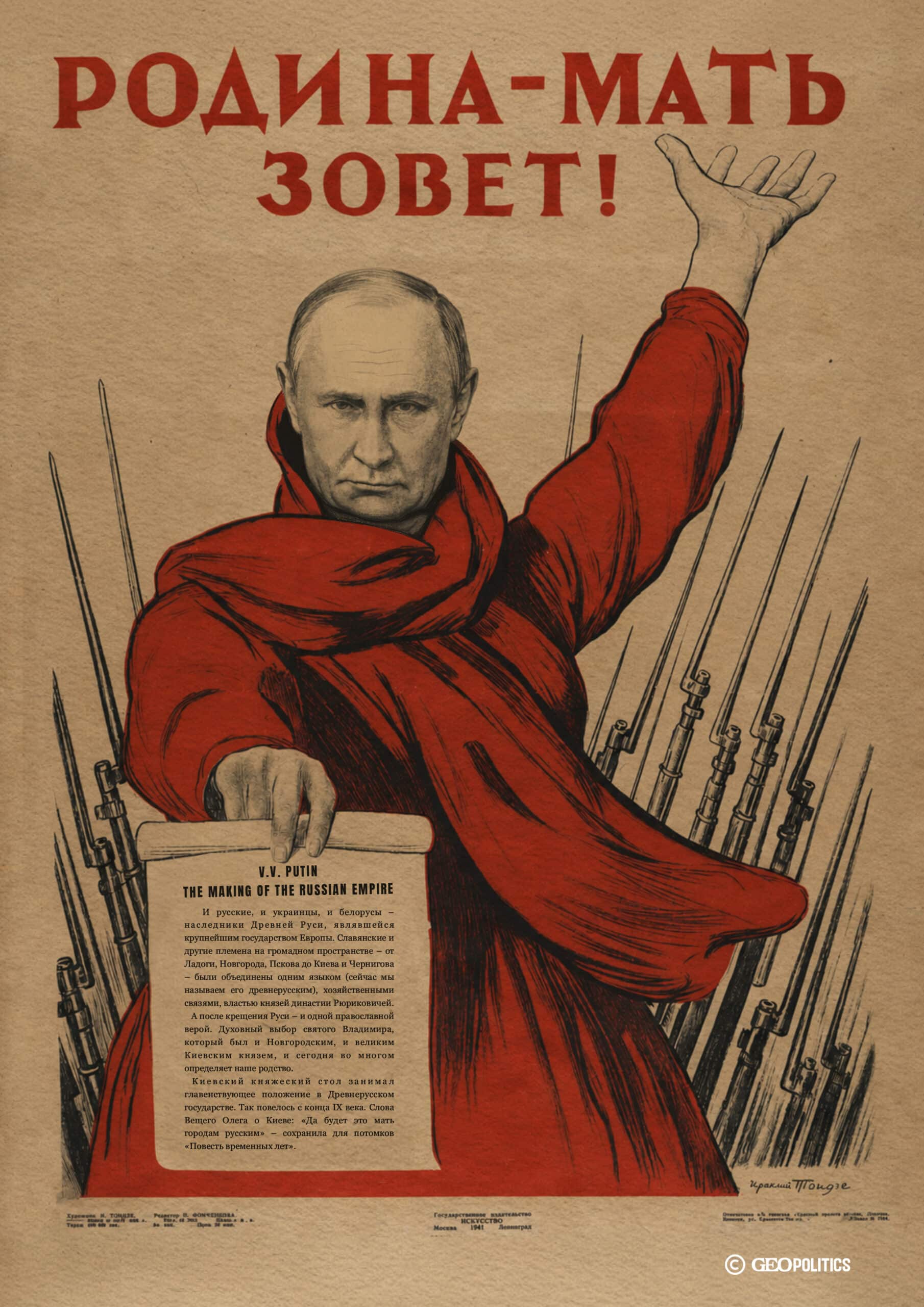
When Georgian Dream (GD) Prime Minister Irakli Kobakhidze called a special briefing in the sweltering August heat, many expected a major announcement about the country’s future. Instead, he delivered a long, preachy lecture about a historical defense of the 1783 Georgievsk Treaty, under which the kingdom of Kartli-Kakheti (Eastern Georgia) placed itself under Russian protection. In these particularly turbulent times, few political leaders would devote a lengthy press conference to an event that took place 243 years ago, say, James Cook’s voyages or Marie-Antoinette’s accession to the French throne. The choice of subject, however, was hardly accidental. For much of modern Georgian historiography, the Treaty of Georgievsk has stood as the beginning of the country’s subordination to Russia: the Empire failed to honor its guarantees, did not protect Tbilisi from Persia’s sack of 1795, and ultimately abolished the Georgian monarchy and annexed the kingdom in 1801.
Kobakhidze offered almost the opposite reading, describing King Erekle II’s decision as not merely justified but the “only correct and unavoidable” choice available to Georgia, and arguing that it ultimately helped preserve Georgian statehood and the nation’s Christian faith. The episode’s significance lies less in the eighteenth-century dispute itself than in what its revival says about Georgia today. Since the collapse of the Soviet Union, the Treaty of Georgievsk has generally been remembered as a cautionary tale about Russian protection turning into Russian domination and about Russia’s predatory nature. Its rehabilitation by GD is part of a broader attempt to recast the country’s past through a new paradigm: all Georgia’s ills are blamed on the West (“Europe”, “Liberalism”, “Deep State”), and on its attempt to provoke conflict between two brotherly Orthodox nations. A parliamentary ad hoc commission has already recast the Rose Revolution and the 2008 war as episodes of Georgian provocation, under Saakashvili’s government now branded as “foreign agents,” and of Western manipulation. Russia’s responsibility, by contrast, has been systematically downplayed by GD, even in the April 1989 massacre of a peaceful pro-independence demonstration.
The Georgievsk episode reaches further back, however, suggesting that this is not merely a tactical reinterpretation of the recent past but an effort to alter the historical frame through which Georgians understand their relationship with Russia and the West. That helps explain why the briefing caused such alarm. At a moment when Georgia’s European trajectory is being steadily dismantled, invoking the last great treaty that preceded the country’s incorporation into the Russian Empire inevitably invites speculation about whether Moscow might once again be offered the role of guarantor, or whether Georgia is being prepared, politically and psychologically, for a new settlement with Russia, a possible “Georgievsk 2.0” agreement with Moscow.
GD’s deliberate reopening of these questions therefore represents more than a change of emphasis. It reverses the post-independence paradigm, and bears an unmistakable resemblance to the transformation of the politics of history in Vladimir Putin’s Russia. While Ukraine has increasingly foregrounded the history of its national resistance to Russification, neighboring Armenia’s government is trying to decolonize Armenian national consciousness and liberate it from Russia’s little-brother complex. Azerbaijan’s president, Ilham Aliyev, has openly referred to the “Soviet occupation of Azerbaijan.” Kazakh authorities have erected monuments to Kenesary Khan, the leader of the major uprising against Russian rule in the mid-19th century, and to the Alash movement. While history textbooks in Central Asia are being revised to replace the terms “voluntary accession” and “Soviet modernization” with “colonial incorporation and resistance.” Georgia, by contrast, is moving against this broader post-Soviet current. Much as in its position on Russia’s war against Ukraine, Tbilisi’s growing alignment with Moscow is also increasingly visible in its approach to the country’s own historical narrative.
Over the past two decades, the Kremlin has turned history into an instrument of state power and foreign policy, using a carefully curated past to legitimize an increasingly authoritarian present and to contest the post-Cold War order. The glorification of the Soviet victory in the Second World War has provided the regime with its foundational patriotic myth; the rehabilitation of aspects of the imperial past has supplied a narrative of Russia as a historically great power whose territorial reach was unjustly curtailed; and the portrayal of the West as a force seeking to weaken, encircle or ultimately destroy Russia has provided the ideological bridge between historical grievance and contemporary geopolitics.
History is not merely propaganda for the current Russian regime; it is one of the regime’s principal languages of political legitimacy.
History is not merely propaganda for the current Russian regime; it is one of the regime’s principal languages of political legitimacy. This is especially true of imperial history because it lets the Kremlin present contemporary power relations as the restoration of something supposedly natural, continuous, and historically legitimate. There are several interconnected reasons.
First, history compensates for a weak ideological foundation, as Putin’s Russia lacks a coherent ideology comparable to Soviet communism. It is neither conventionally conservative nor simply nationalist. It combines authoritarianism, Russian nationalism, Orthodoxy, Soviet nostalgia, imperial symbolism, and great-power aspirations. It’s a big mishmash. History, or rather, its Kremlin version, provides the regime with the “ideological glue” that these elements otherwise lack. This transforms an essentially contemporary political project into something presented as historical continuity. Academic research on Russian memory politics explicitly identifies this function: the official historical narrative is used to legitimize authoritarian government and contemporary foreign-policy ambitions.
Second, imperial history solves the problem of the post-1991 territorial rupture. This is particularly important, as the fundamental historical trauma of Putinism is not the collapse of communism. It is “the loss of empire”. The Soviet Union disappeared in 1991, but the Russian state inherited a population and political elite whose conception of Russia had been built around a much larger geopolitical space. The resulting contradiction is that Russia is legally a federal republic, but much of the regime’s historical imagination remains imperial. Imperial history helps reconcile the two. The Russian Empire and the USSR can be presented not as successive multinational empires that incorporated other peoples, but as successive manifestations of a single Russian historical state.
Third, imperial history converts imperial domination into fraternity. Imperialism rarely presents itself as imperialism; the narrative instead insists on “common history” or “common civilization”. Whenever citizens of Russia’s neighboring countries hear Russian officials invoke notions such as “brotherly people,” “a shared faith,” or “our common victory over Nazism,” they should recognize the language for what it often conceals: a justification for domination and, ultimately, for the right to dictate, subjugate, and demand obedience. That is why the imperial history matters so much: it naturalizes asymmetry.
Fourth, the imperial history delegitimizes the sovereignty of neighboring states. It does not merely legitimize Russia. It can simultaneously undermine the legitimacy of others. If Ukraine and Belarus are described as historically Russian, and Moldova, Georgia, and Armenia as situated within a centuries-old Russian sphere, then the sovereignty of these countries can be rhetorically downgraded from an unquestionable principle to a relatively recent political development. This makes the independence of these states appear less like an irreversible historical fact and more like an aberration produced by the collapse of the Russian/Soviet state.
Fifth, history gives the regime a usable genealogy, and the Kremlin can simultaneously appropriate very different historical periods: Kyivan Rus’, Tsarist Russia, the Russian Empire, the Soviet Union, and post-Soviet Russia. These regimes were obviously radically different. Yet the Kremlin increasingly constructs a selective genealogy in which they become successive chapters of one Russian statehood. This is why Putin can simultaneously invoke Peter the Great, Catherine II, the Russian Orthodox Church, Stalin, the Red Army, the Second World War, Soviet achievements such as the first man in space, etc. Historically, these references are contradictory. Politically, however, they can all serve the same proposition: Russia’s greatness. The regime therefore does not need to choose between imperial nostalgia and Soviet nostalgia. It can appropriate both.
Sixth, the Second World War provides the emotional core. Imperial history is important, but 1945 is probably the emotional center of the contemporary Russian historical myth. Of course, nobody is supposed to remember that during the first two years of WW2, the USSR and Hitler were allies and divided Poland and the Baltic States between them. On the other hand, the victory over Nazi Germany gives the regime an almost incomparable reservoir of legitimacy because it combines sacrifice, heroism, victimhood, and victory. The Kremlin has therefore constructed a powerful temporal bridge between 1941–45 and 2014– present. This is why “denazification” became one of the declared objectives of the 2022 invasion, creating a sense of historical repetition and continuity.
Seventh, history creates a permanent state of mobilization and thus justifies authoritarian rule and repression domestically. If Russia is permanently surrounded by enemies, and if those enemies are understood through historical analogies, then extraordinary political measures become easier to defend. A historical threat becomes an existential threat, which should create national unity and require strong authoritarian leadership. Suppression of dissent and social unity around the regime become necessary, and criticism of the state becomes easier to portray as disloyalty to the historical nation. This is why memory politics and authoritarian politics reinforce each other.
History reviewed by the Kremlin therefore magnifies contemporary power, and the past becomes a form of “strategic capital”. This historical politics is not simply about “remembering the past”. It is about controlling the meaning of the past. This distinction is crucial, as the state tries to establish a “canonical history”; certain interpretations become patriotic, and others become suspect or even punishable. The result is what one could call “historical sovereignty”, the idea that the Russian state should possess authority not only over its territory and political institutions, but also over the legitimate interpretation of its past.
The Kremlin instrumentalizes imperial history because it lets it turn political choices into historical necessities. A territorial ambition becomes “historical justice,” a sphere of influence becomes the “natural geopolitical space,” military intervention – “protection,” authoritarianism – “political stability,” and resistance by neighboring nations becomes “western plot” or “fascism.”
The Kremlin instrumentalizes imperial history because it lets it turn political choices into historical necessities. A territorial ambition becomes “historical justice,” a sphere of influence becomes the “natural geopolitical space,” military intervention – “protection,” authoritarianism – “political stability,” and resistance by neighboring nations becomes “western plot” or “fascism.”
Putin, besides being a great friend of Siberian tigers, wild geese and assorted other wildlife, is also a self-appointed authority on history. Over the years, the Russian president has often displayed his “deep historical knowledge” before cameras. On one occasion, he appeared among newly unearthed relics of the fourteenth-century prince Dmitry Donskoy, candle in hand, ordering that the relics be taken on a tour in the war zone to “give courage” to the soldiers fighting Ukrainians and other “evil forces”; on the other, when commenting about COVID or wildfires, he expounds on the history of steppe nomads such as the Pechenegs and Polovtsy.
For Putin, history is not merely something to be studied; it is something to be lectured about. He has lectured the 44th President of the U.S. Barack Obama, the president of a “country without history”, over a traditional samovar and a Russian boot; Tucker Carlson; and anyone else fortunate enough to receive a geopolitical seminar from the Kremlin’s resident time traveler.
But Vladimir Putin did not begin his career as a historian-president. In the early years of his rule, history served a more conventional purpose: to restore a sense of continuity and pride to a country traumatized by the collapse of the Soviet Union. The central reference was what Russians call the Great Patriotic War: a comfortable source of national pride, while the Soviet past could be selectively rehabilitated without requiring a full defense of communism.
The shift began in the mid-2000s. In his 2005 address to the Federal Assembly, Putin famously described the collapse of the Soviet Union as “a major geopolitical disaster of the century.” The phrase was revealing not because it expressed a desire to restore the USSR: Putin was never simply a Soviet restorationist, but because it framed the post-Soviet settlement as a historical rupture and a geopolitical loss. In Putin’s emerging worldview, the disappearance of Soviet power deprived Russia of a sphere of influence to which its history entitled it.
From this point on, Putin increasingly fused several historical traditions: Orthodox and imperial Russia, the Soviet Union’s military power, and the territorial reach of the former USSR. The result was not a coherent ideology, as the empire and the Soviet Union could be invoked selectively, because both represented something Putin considered essential: a powerful Russian state commanding a large geopolitical space.
The 2008 war with Georgia marked another step in this evolution. Historical arguments were increasingly applied not merely to define Russia’s identity but to challenge the political legitimacy of its neighbors. Quickly, Ukraine became the most consequential case. Putin repeatedly questioned the historical distinctiveness of Ukrainians and Russians, portraying their separation as an artificial consequence of foreign intervention and Soviet administrative decisions. The underlying implication was profound: if Russian and Ukrainian statehood were historically unnatural divisions of a single people, then Ukrainian sovereignty could be treated as something reversible.
History was no longer used simply to explain what Russia was. It was being used to explain where Russia had a legitimate right to be.
The annexation of Crimea in 2014 transformed this historical language into an instrument of territorial politics. In the speech announcing the incorporation of Crimea into Russia, Putin invoked Kyivan Rus’, Orthodox Christianity, the Russian Empire, Sevastopol, and the Soviet experience of war. History was no longer used simply to explain what Russia was. It was being used to explain where Russia had a legitimate right to be. The past became a source of territorial entitlement.
After 2014, this logic became increasingly explicit. The Kremlin’s historical narrative presented Russia not as one nation-state among others, but as the political center of a wider historical civilization whose borders wars, revolutions, and foreign interference had repeatedly distorted. The distinction between historical memory and political doctrine consequently became increasingly blurred.
Putin’s July 2021 essay, “On the Historical Unity of Russians and Ukrainians,” represented the culmination of this process. Its central argument was that Russians and Ukrainians constituted essentially one historical people whose separation was largely the product of political manipulation. The essay was not simply an interpretation of the past. It was an argument about the present: if Ukrainians and Russians belonged to a single historical nation, Ukraine’s full sovereignty and independent geopolitical choices could be portrayed as historically anomalous.
By February 2022, this historical worldview had become integral to justifying war. Putin’s address preceding the full-scale invasion was an extraordinary exercise in retrospective state-building: Lenin, the Bolsheviks, the creation of Soviet republics, Crimea and Donbas were assembled into a narrative in which contemporary Ukraine appeared less as an established sovereign state than as an historical error.
The evolution is therefore important. Over two decades, history moved from national memory to geopolitical argument: from celebrating Russia’s past, to mourning its territorial disintegration, to defining a privileged Russian sphere of influence, and finally to questioning the sovereignty of neighboring states. The transformation was gradual, but its political consequence was radical. Once history becomes a source of contemporary territorial legitimacy, challenging the Kremlin’s historical narrative is no longer merely an academic dispute. It becomes a challenge to the political map that the Kremlin believes history entitles it to redraw.
As time passes and Putin’s power becomes increasingly personal and unchecked, the Russian president presents himself as an arbiter of historical truth, and sometimes as someone entitled to settle historical disputes himself. This is reminiscent of Joseph Stalin, although the institutional context and the nature of the two regimes differ.
In June 1950 Stalin intervened personally in a highly specialized academic controversy over Nikolai Marr’s linguistic theory. His Marxism and Problems of Linguistics, published in Pravda, addressed questions about the structure and development of language, grammar, dialects, language families, and the relationship between language and social structure. Stalin then adjudicated fundamental questions of linguistics and declared Marr’s theory erroneous. His intervention effectively ended Marxism’s dominance in Soviet linguistics. And this wasn’t merely a private intellectual intervention. Once Stalin had spoken, the academic debate was essentially over. The subsequent Academy of Sciences session treated his intervention as authoritative and “genius”
The dictator did not necessarily possess specialist knowledge, but his political authority transformed his opinion into specialist knowledge. That is also potentially relevant to Putin.
The dictator did not necessarily possess specialist knowledge, but his political authority transformed his opinion into specialist knowledge. That is also potentially relevant to Putin. An interesting scholarly article in Contemporary European History (Sergey Radchenko “Putin’s Histories”, January 2023) describes Putin’s increasing personal involvement with historical questions and argues that what distinguishes him is not simply that he uses history politically, but that he intervenes in historical debates as though he possesses the authority to settle them. The author observes that Putin’s piles of archival documents function performatively: they demonstrate his supposed command of “History” rather than constitute a normal historiographical argument. Putin isn’t merely offering his interpretations of history; increasingly, he says: “This is what actually happened, and therefore this is what Russia is.” This formulation is indeed much closer to the Stalinist mode of authority.
The 2024 Tucker Carlson interview was an extraordinary example of this: when Carlson asked Putin why Russia invaded Ukraine, Putin spent more than 20 minutes giving him a historical lecture beginning in the ninth century (again mentioning his beloved Pecheneg tribes!). He brought out documents and constructed an argument running from Kyivan Rus’ through the Polish-Lithuanian Commonwealth, the Russian Empire, the Bolsheviks and the Soviet Union to contemporary Ukraine.
Across the interview, as well as in Putin’s other “public lectures” on history, an evident and probably intentional analogy with Stalin is displayed: political authority and historical authority are increasingly fused in Putin’s persona. As with Stalin after WW2, Putin, the supreme political authority, becomes the ultimate arbiter of a specialized intellectual field again.
Another interesting moment worth remembering occurred in 2022, at a meeting with historians and religious figures, Putin invoked Karamzin’s metaphor that rulers should look at history as navigators look at nautical charts. He said that leaders who display ignorance of history and deny “historical logic” consequently sail in the wrong direction. Here Putin assumes that he is the one who understands the historical logic, the “laws of history,” and thus is able to adopt the only correct political action. Putin appears as someone to whom the laws of history have been revealed by some superior force, as truth is revealed to the chosen ones in the narratives of Abrahamic religions.
If you believe that you can identify the laws of historical development, then contemporary politics becomes partly a matter of correctly understanding those laws. And that gives the political leader who claims to understand history a powerful epistemic position: “I know what history teaches; therefore I know what Russia must do.”
By incredible luck, the revealed person is also the head of the Russian state and has total control of the state apparatus. Thus, Putin claims that as there is an objective “truth” in history and he knows that truth, the state can establish or even enforce the right version of history. In his 2025 meeting with history textbook editors, Putin complained that the 1990s had disrupted the “continuity of history“ and produced textbooks with contradictory interpretations. He said debate was acceptable, but it had to stay within a state-defined factual framework, quoting and criticizing several history textbook chapters on WW2. In 2020, a constitutional amendment established “historical truth” as a state value, and that same year Putin published a major WW2 historical essay (“The Real Lessons of the 75th Anniversary of World War II”).
What we see is a purely authoritarian conception of historical knowledge. Putin thus got directly involved in the production of history textbooks and discussed with the editors, the education minister, and the Kremlin’s chief historian Vladimir Medinsky (who, by no accident, is at the same time the chief peace negotiator with Ukraine) the structure of the Russian historical narrative, the Great Patriotic War, the 1990s, the Soviet nationalities policy, the creation of Soviet republics, Russia’s historical continuity, and everything that Russian schoolchildren should be taught.
To sum up the current stage of Putin’s relationship with history as a discipline, one conclusion stands out: he increasingly presents himself, or seeks to persuade others, as governing through history. Historical interpretation is no longer merely a tool for legitimizing political choices; it is becoming a mechanism through which questions of political authority are decided: who belongs to the Russian nation, what constitutes legitimate Russian territory, which borders can be regarded as historically valid, and which neighboring peoples have a legitimate right to sovereign statehood, etc.
Consequently, according to the “laws of history” and “historical truth”, Putin can see what policy is therefore required. Moreover, Putin aligns with post-WW2 Stalin and presents himself as the political leader who rescues science from bad specialists: falsifiers, Western interpretations, liberal historians, and the chaotic historiography of the 1990s. That is very close to a supreme political authority acting as a guardian of historical truth. It may represent the emergence of a form of personal epistemic authority in which the ruler increasingly claims the capacity to adjudicate the truth of the nation’s past, and thereby the legitimacy of its present and future.
The Kremlin’s imperial historical narrative has an especially important consequence for the post-Soviet space: it is fundamentally incompatible with the idea that the former Soviet republics possess independent historical trajectories of their own. Ukraine is the most consequential case, but the logic extends much further: to Georgia, Armenia, Moldova, Belarus, the Baltic states, and Central Asia.
This is also why the Russian regime’s historical politics has become increasingly imperial rather than merely Soviet. The Soviet past remains indispensable, above all the 1945 victory, but the deeper framework is increasingly one of Russian state continuity across 1917 and 1991, in which the Empire and USSR are selectively reassembled as stages of a single great-power history. That is arguably one of the most important ideological transformations of Putinism.
Putin’s “On the Historical Unity of Russians and Ukrainians,” published on 12 July 2021, is one of the most consequential texts of his presidency. Its significance lies less in any individual historical claim than in the political conclusions that Putin draws from his interpretation of the past. The essay presents Ukrainians and Russians as parts of a single historical community and portrays the emergence of an independent Ukrainian nation and state as largely the product of external manipulation, foreign intervention and Bolshevik mistakes. In this account, Ukraine is not simply a neighboring country with which Russia shares a complicated history. Its very political separation from Russia is cast as historically questionable: if Russians and Ukrainians constitute one historical people, then the existence of a fully sovereign Ukrainian state, free to choose its alliances and geopolitical orientation, can be presented as an abnormality.
The essay’s treatment of borders is particularly revealing. Putin argues that the territorial configuration of contemporary Ukraine largely reflects Soviet decisions. He portrays the Bolsheviks as having transferred territories belonging to “historical Russia” to the Ukrainian republic. The implication is extraordinary: the borders inherited in 1991 are no longer treated as an unquestionable historical or political settlement. The argument effectively calls into question the validity of the post-Soviet territorial settlement, including the principle embodied in the 1991 Belovezha agreements that the former Soviet republics recognized each other’s territorial integrity.
Putin’s essay establishes a conceptual bridge between the two: if today’s borders are historically illegitimate, then challenging them can be framed not as aggression but as correcting a historical injustice.
This is where historical revisionism becomes geopolitical revisionism. Putin is not merely revising the past’s interpretation. He is creating a narrative through which the present international order can itself be revised. The distinction matters. A state may have a nostalgic or selective interpretation of history without seeking to alter its borders; Viktor Orbán’s Hungary is an example. Putin’s essay establishes a conceptual bridge between the two: if today’s borders are historically illegitimate, then challenging them can be framed not as aggression but as correcting a historical injustice.
The concept of “historical Russian lands” is therefore central. Putin does not define Russia exclusively through the internationally recognized borders of the Russian Federation. He defines it through a much larger historical space, extending across territories that were once incorporated into the Russian Empire or Soviet Union. Consequently, the political subject called “Russia” becomes larger than the state recognized by international law.
The essay also introduces another crucial concept: “anti-Russia.” Ukraine’s rapprochement with the European Union, NATO and the United States is not presented as the sovereign choice of an independent state. Instead, Putin describes Ukraine as being transformed by the West into an “anti-Russia”, a geopolitical platform directed against Russia. In this logic, Ukrainian Westernization is not merely a foreign-policy disagreement. It becomes evidence that Ukraine has been captured by external forces and is therefore ceasing to be genuinely sovereign.
The July essay therefore marks a crucial transition in Putin’s intellectual trajectory. History ceases to be merely instrumentalized in support of policy; policy itself becomes the implementation of a historical narrative. The past is used to establish which peoples are genuinely nations, which territories are genuinely theirs, which borders are legitimate and which political choices are considered historically permissible. The crucial shift of 2021 is that Russian revisionism is no longer simply about recovering influence lost after 1991. The question is no longer merely whether Ukraine would remain in Russia’s sphere of influence. It is whether Moscow accepted Ukraine’s sovereignty in the first place.
Although the other post-Soviet states should not be treated as exact analogies of Ukraine, the underlying geopolitical objective appears to be broadly consistent: Russia should not have fully independent states on its borders that are free to choose their own geopolitical orientation. Yet the historical narratives deployed to justify Russian dominance vary considerably. Unlike Ukrainians and Belarusians, Moldovans, Georgians, Armenians, Kazakhs and Uzbeks are not portrayed as constitutive parts of the Russian people. But neither are the Chechens, Tatars or Buryats. The implicit principle is therefore less one of outright incorporation than of hierarchy: ideally, the degree of political autonomy enjoyed by Russia’s neighbors should not differ substantially from that tolerated for peoples within the Russian Federation itself; more realistically, limited sovereignty and geopolitical deference could be a good start.
The Kremlin reaches into different layers of imperial, Soviet, Orthodox, and Second World War history depending on the country.
For the Moldovans, obviously not easily incorporable into the Russian ethnos, the Kremlin’s historical repertoire combines Bessarabia’s incorporation into the Russian Empire in 1812, the Soviet Moldavian Republic, the Romanian–Moldovan relationship, and the memory of WW2. Russian narratives have often portrayed Moldova’s history through the prism of its belonging to a larger Russian/Soviet space (between 1812-1917 and 1940-1991) and have treated the distinction between Moldovan and Romanian identities as politically useful.
Georgia is particularly revealing because, beyond the explicitly negative territorial narrative, which asserts that Abkhazia and Tskhinvali Region/South Ossetia are not historically Georgian, Moscow deploys a series of narratives ostensibly framed in terms of “love” and “care”. These include the notion of “fraternal peoples”, invoking centuries of supposedly harmonious coexistence, a shared Orthodox faith and a common Soviet experience, as well as the “protection” narrative: the claim that the Russian Empire saved Georgia from annihilation at the hands of the Ottomans and Persians. This is well summarized in Lermontov’s poem “Mtsyri”, whose famous opening lines describe Russian military presence as “divine grace” that makes Georgia bloom in peace: “And God’s own grace came down to bless the Georgian land!/ In peacefulness she bloomed, in the shade of her own gardens,/ Unafraid behind the hedge that friendly bayonets made.” This pattern allows Moscow to turn its rule from a history of domination and repression of Georgia’s national aspirations and culture into one of great achievement in the interest of the Georgian people.
The Orthodox faith is not merely a shared religious tradition: it becomes a political marker separating a supposedly authentic Christian civilization from a secular, liberal, and increasingly “anti-Christian” West and, by implication, a powerful argument against Georgia’s Europeanization.
The “shared Orthodox faith” narrative, as opposed to both Islam and Western Christianity and, by extension, Western liberalism, is equally important. The abolition of the autocephaly of the Georgian Orthodox Church under the Tsars and the destruction of churches and repression of thousands of Georgian clergymen under the Soviets are now largely erased from the Kremlin’s narrative. Instead, Orthodoxy is presented as an ancient and supposedly uninterrupted bond between the two peoples, a civilizational affinity that places Georgia within Russia’s natural sphere of influence. The Orthodox faith is not merely a shared religious tradition: it becomes a political marker separating a supposedly authentic Christian civilization from a secular, liberal, and increasingly “anti-Christian” West and, by implication, a powerful argument against Georgia’s Europeanization.
The implication of all these “friendly” narratives is that Georgia’s post-1991 attempt to define itself as an independent European state represents a departure from an allegedly natural historical relationship.
In Armenia, Moscow has traditionally drawn on the memory of the Russian–Persian and Russian–Ottoman wars of the nineteenth century, portraying Russia as the power that liberated and protected Christian Armenians. This creates a historical narrative that links Armenian security to Russian power. The same patterns as “brotherly people”, “Russia as savior and protector” mentioned with regard to Georgia also apply to Armenia, but maybe with even more acuity.
According to Russia’s preferred story about Armenia, Armenian statehood is less a historical achievement than a Russian restoration project. After centuries in which Armenian political sovereignty had disappeared, the Russian Empire’s conquest of the South Caucasus created the territorial and political conditions for an Armenian national home, foyer national, in the language of nineteenth-century European diplomacy, to re-emerge. The Treaty of Turkmenchay of 1828 transferred the khanates of Erivan and Nakhchivan from Persia to Russia and established the Arax as the imperial frontier. It also facilitated the movement of Armenians from Persia and the Ottoman Middle East into the newly acquired Russian territories.
In Moscow’s imperial and, later, Soviet-inflected interpretation, Armenia’s survival becomes a debt: Russia is cast as the power that made modern Armenia possible. The implication is that gratitude should outlive empire. Sovereignty, in this formulation, does not quite erase the obligation incurred under Russian protection.
The 2020 Armenia-Azerbaijan war and the 2023 Armenian exodus from Karabakh create an awkward gap in the Russian narrative. But the Russian narrative is no stranger to contradictions: Russia “loves” Georgia, while waging war on it in 2008 and expelling hundreds of thousands of Georgians from their homes in Abkhazia and South Ossetia; the Chechens are proud children of the empire, even if they sometimes have to be massacred en masse or deported wholesale to the steppes of Central Asia. After all, truth matters little; what matters is a powerful narrative, instilled through modern means of communication. But in Armenia’s case, the task is harder because, instead of a colonial proxy such as Kadyrov or a Georgian government open to collaboration, the current Armenian leadership is an obstacle.
That is where history becomes an instrument of contemporary pressure. In April 2026, Russian Deputy Prime Minister Alexey Overchuk argued that implementing the Trump Route for International Peace and Prosperity (TRIPP) had disrupted a regional balance that, in his words, had existed since the Treaty of Turkmenchay in 1828. He specifically recalled that the treaty had transferred the Erivan and Nakhchivan khanates to the Russian Empire and placed the frontier under Russian and Iranian supervision. The choice of historical reference was revealing, very much Putin-style.
Putin and Russian elites claim that Armenia may be independent in law, but it cannot quite be independent in historical memory.
Putin and Russian elites claim that Armenia may be independent in law, but it cannot quite be independent in historical memory. And that is precisely what the current Armenian transformation is beginning to challenge. The question is no longer whether Russia played an enormous role in shaping modern Armenia. It plainly did. The question is whether that role gives Russia a permanent veto over Armenia’s future. The Kremlin’s answer appears to be yes, or, at least, that Russia should retain a privileged position from which to contest any Armenian departure. Armenia’s emerging answer is different: history may explain why the country exists, but it does not determine whom the country must belong to.
The key narrative in Central Asia is the shared Soviet past. Russia presents the USSR as a common civilization that created modern institutions, infrastructure, education, industrialization, and inter-republican economic networks. Soviet nostalgia therefore becomes a form of soft geopolitical capital.
In 2014 Putin said of Kazakhstan that President Nazarbayev had created a state “on a territory where no state had ever existed.” He also referred to Kazakhstan’s participation in the “Russian world”, alluding to the fact that a large part of its population remains Russophone. The statement provoked significant concern in Kazakhstan because of its implications for the historical legitimacy of Kazakh statehood. Putin did not use the Ukrainian “one people” argument here. Instead, he said that Kazakhstan had a state today, but its statehood was historically recent and substantially connected to the Russian/Soviet state-building process.
This argument has since become even more explicit. In a June 2025 meeting with history textbook editors, Putin discussed Bolshevik korenizatsiya and said that Lenin’s approach involved creating “independent states, entities that had never existed before.” He was speaking specifically in the context of the Soviet nationalities policy and the creation of republics.
As we have seen, his historical digressions are no longer simply exercises in interpreting the past; they increasingly serve as political programs that the Russian state is prepared to pursue with its army and weapons.
These claims are particularly sensitive in the context of the Central Asian states. Putin’s statement that Soviet national republics were political constructions rather than straightforward expressions of pre-existing sovereign nations is historically correct. The problem, however, is that Putin is not merely a historian, and he did not deliver his remarks to an audience of fellow scholars at an academic conference. As we have seen, his historical digressions are no longer simply exercises in interpreting the past; they increasingly serve as political programs that the Russian state is prepared to pursue with its army and weapons. For Central Asians, and particularly for Kazakhs, such statements are therefore more than historical reflections. They are a reason for concern.