22 November, 2026
|
21 minutes to read

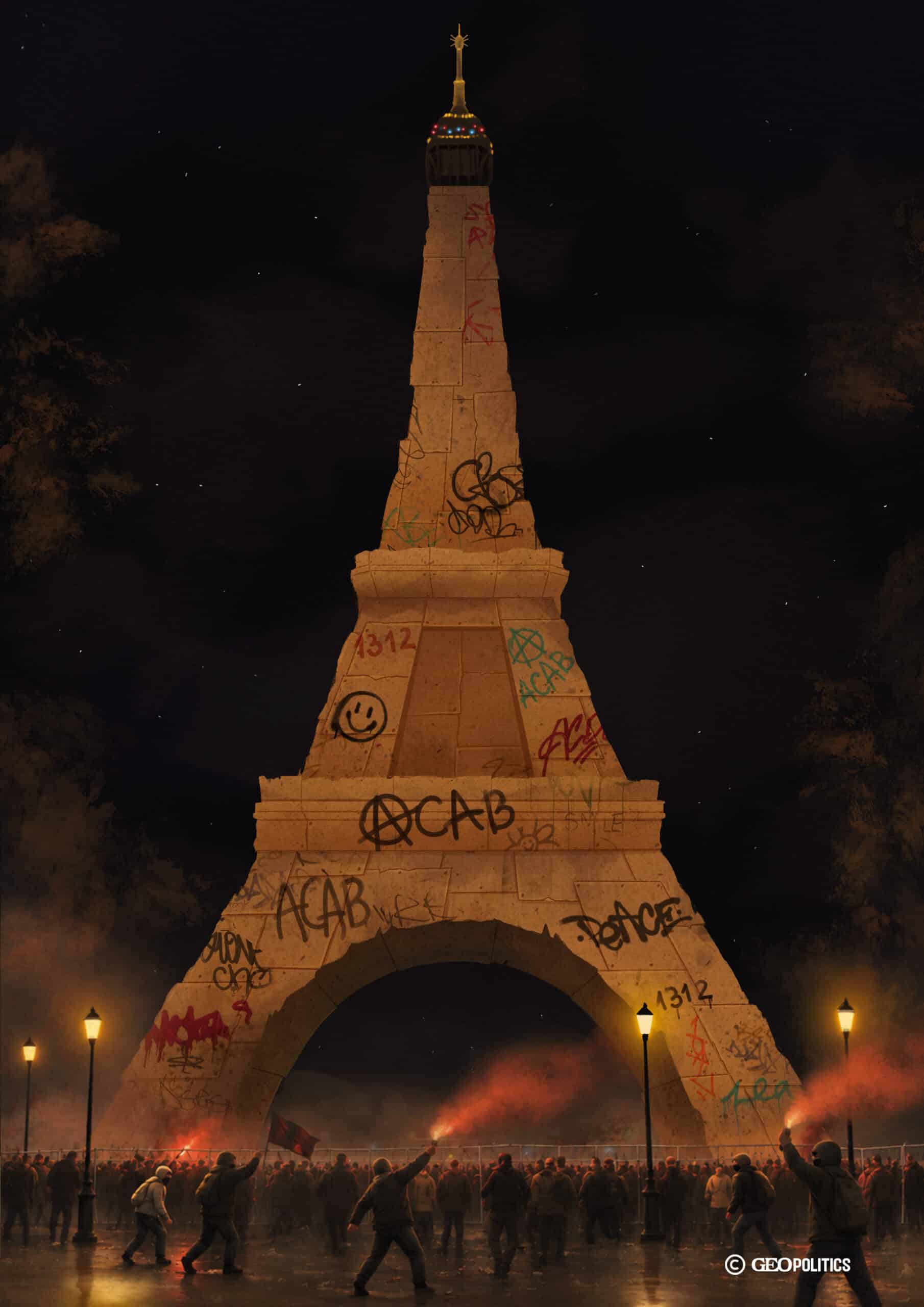
During my childhood (the late Soviet period), the coverage of the capitalist West by the media focused almost exclusively on social unrest: dramatic footage of police beating protesters, using water cannons to disperse demonstrations, rising prices, inflation, unemployment, crime, and various social problems. As a child, before my parents carefully explained that the news was largely biased, I came to believe that life in Europe and America must be dangerous.
After a paradigm shift in the 1990s, starting in the mid-2000s, Russian television (RT, Sputnik) and media brought back this narrative, but this time without glorifying the socialist alternative. I remember stories shown on RT about people supposedly being unable to celebrate Christmas or able to afford only one McDonald’s hamburger to share for dinner with their family of four. It was so absurd that we actually laughed, thinking Russian propaganda had somehow outdone even the Soviet version. But I would never, ever have imagined that 35 years after the collapse of the Soviet Union, I would be witnessing something similar in Georgia. Yet today, watching Georgian television news, I sometimes feel that it has absolutely nothing to envy about Soviet-era or Putin’s Russian propaganda.
Today, Georgia’s ruling party, Georgian Dream, seems to have turned every social or political crisis unfolding in Europe into an opportunity for domestic propaganda.
Today, Georgia’s ruling party, Georgian Dream (GD), seems to have turned every social or political crisis unfolding in Europe into an opportunity for domestic propaganda. Strikes, demonstrations, clashes with the police: any event capable of tarnishing the image of European democracies becomes fodder for media exploitation.
One recalls, in particular, the caricatural reports by Georgian pro-government media journalists on the Danish police intervention in Copenhagen on May 13, 2026, where activists attempting to block Maersk’s headquarters, as its ships were suspected of carrying military equipment to Israel, were forcibly removed. Georgian Dream’s propaganda channels routinely opened their evening bulletins with reports from Copenhagen, portrayed as little short of a war zone. Meanwhile, Russia’s creeping occupation of Georgian territory and a succession of arrests of former and serving government officials on corruption charges received barely a passing mention. GD Prime Minister of Georgia, Irakli Kobakhidze, was bold enough to be ridiculous, addressing an open letter, widely discussed by the regime media, to Presidents Costa, von der Leyen and Metsola, requesting that they condemn the Danish police’s behavior. Later on, he even gave a long interview on this topic to GD’s favorite television channels.
The tactic is hardly original. In Russia or Iran, isolated dysfunctions in Western democracies are turned into evidence of systemic collapse. Iranian regime officials complained about France’s treatment of street protests only months after the regime massacred up to 30,000 civilians in January 2026.
Since Soviet times, the scenery has changed, and so have the means of communication, but the reflex remains remarkably intact. Yesterday, Soviet television proclaimed the imminent demise of the capitalist world; today, Georgian Dream’s media outlets stage its convulsions. The difference lies less in the narrative itself than in the packaging.
The instrumentalization of France’s October–November 2026 social unrest by Georgia’s ruling party is hardly surprising. Its political narrative is remarkably flexible: images of police violence are used to dismiss European criticism of the Georgian authorities’ repression of demonstrators, while scenes of looting, clashes, and urban disorder are presented as evidence of the collapse of Europe’s liberal, multicultural, and supposedly permissive model. The contradictions are not accidental. The objective is not to understand France, but to discredit Europe.
When social crises, riots, or demonstrations erupt in France, they naturally give rise to a range of interpretations within the French debate itself. But those interpretations are not necessarily exported abroad in the same form. In France, the debate is relatively contextualized and multifaceted. Depending on the actors involved, it draws on a variety of themes: social inequality, poverty, and territorial segregation; relations between young people from disadvantaged neighborhoods and the police; the difficulties of integration in the education system and in republican institutions; the crisis of political representation; economic frustration; but also, of course, interpretations that emphasize immigration, insecurity, the erosion of state authority, failures of integration, or what they portray as a weakening of republican order.
Abroad, such events are stripped of their context and recast as evidence of a broader crisis of the Western model. France is no longer portrayed as grappling with a crisis of its own, but as embodying the failure of an entire political and social system. Georgian Dream is hardly alone in exploiting this narrative: from Germany’s AfD to MAGA, and Netanyahu’s description of the protesters as “Hamas on the streets of Paris,” the events of October 17 offered illiberal forces an opportunity to reinforce their ideological claims. More surprising, perhaps, is that some voices within Georgia’s pro-Western opposition have echoed similar interpretations, a point to which we shall return.
In media environments where knowledge of French politics and society is limited, as is often the case in Georgia, these images can readily be turned into sweeping verdicts on immigration, national identity, or state failure.
The mechanism centers on context giving way to spectacle. Illiberal forces abroad reduce French protests to a succession of arresting images (not to mention countless fakes): burning cars, looting, clashes, and barricades. In media environments where knowledge of French politics and society is limited, as is often the case in Georgia, these images can readily be turned into sweeping verdicts on immigration, national identity, or state failure. The violence was real, but it was neither the whole story nor an adequate account of the motivations of those who took to the streets. What is lost in this process is precisely the context that might complicate, and ultimately challenge, the narrative being advanced.
French crises can thus be recast as evidence that liberal democracies cannot maintain order, tolerance breeds weakness, multiculturalism undermines national cohesion, liberal elites have abandoned ordinary citizens, Western states are losing their capacity to govern, and their economic models are failing to meet social expectations. This framing is especially potent in countries where governments, media, or political movements seek to legitimize more authoritarian, nationalist, or conservative alternatives.
Why is GD particularly inclined to seize upon and amplify this interpretation of the French crisis? Its propaganda aims to undermine the legitimacy of the European model and shield the Georgian regime from both external scrutiny and domestic criticism.
In covering French unrest, GD deploys two narratives that may be difficult to reconcile analytically, but are perfectly complementary politically. The first focuses on police violence in France, with pro-government media eagerly broadcasting footage of clashes, arrests, and alleged abuses to relativize, if not neutralize, European criticism of police brutality against demonstrators in Georgia. The second narrative is the exact opposite of the first: because they abandoned “traditional values” and sovereignty, European states lost their authority and power, and they are overwhelmed by violent migrants who riot and loot.
The almost pathetic scramble by pro-regime television correspondents to capture scenes of violence live in the streets of Paris illustrates the first narrative. On October 6, GD Parliament Speaker Shalva Papuashvili indignantly denounced French police for “beating peaceful demonstrators, women, with batons and dragging them along the ground”; two weeks later, on October 19, the same self-proclaimed champion of human rights described events as a “bloody chronicle of the streets of Paris,” linking them to Emmanuel Macron’s supposed support for Georgian protesters, having posted the day before a photograph of France’s former ambassador to Georgia, Sheraz Gasri, with activists, alongside the ominous message: “Whoever sows the wind in another country will reap the whirlwind in their own.”
The message, crude but unmistakable, is aimed less at Europeans than at Georgian audiences: the West is no better, and has no moral standing to lecture Georgia on repression. European condemnation may have limited impact on Western attitudes, but it resonates more readily with the regime’s domestic audience, its principal target. Of course, the double standard is glaring: the same media and officials who denounce violence by French police routinely condone, celebrate, or encourage violence against demonstrators in Georgia. GD politicians, ministers, mayors, and other public figures regularly dehumanize opponents, branding them extremists, foreign agents, or even Satanists, thereby legitimizing, and at times encouraging, the violence directed against them.
The second narrative is one of French society in collapse. The regime foregrounds looting, arson, urban violence, and images of particular groups of demonstrators, tying them to a chain of associations: urban violence is attributed primarily to immigration, which in turn is blamed on liberalism and multicultural policies. Multiculturalism is then cast as an expression of progressive liberal ideology, whose triumph supposedly reflects European elites’ willingness to sacrifice national identity and public safety. European governments, the argument goes, are now incapable of restoring order because they remain captive to these very ideologies, and all this is orchestrated by Brussels and “its bureaucracy.”
In the same statement on October 19, Shalva Papuashvili spoke of a “civilizational abyss into which Brussels is steering Europe.” He cast Georgia as bearing a considerable responsibility for rescuing Europe and preserving the civilization forged by European peoples, even as, in his telling, the European Union itself is busy destroying it. “Today, Europe needs to be saved from Brussels.” One might be relieved to discover that Papuashvili is not alone in this formidable civilizational rescue mission: the day before, Kirill Dmitriev, one of Putin’s emissaries, had described the Paris unrest as the “suicide of Western civilization through migration chaos.”
This is entirely consistent with Irakli Kobakhidze’s speech at the 2024 Conservative Political Action Conference (CPAC) in Budapest, where he declared that “uncontrolled migration poses the greatest threat to the national identity of European countries.” The irony, however, is hard to miss: under Georgian Dream’s own rule, Georgia has itself experienced a substantial influx of Russian migrants, contributing to a 5.8% increase in its population between the 2014 and 2024 censuses, even as thousands of Georgian citizens keep on emigrating to Europe and the United States.
Yet, in the interests of intellectual honesty, we should acknowledge that this second narrative of Europe’s decline, portrayed as the loss of control over immigration, particularly from Africa and the Arab-Muslim world, resonates well beyond Georgian Dream’s core supporters. The image of a Europe supposedly overwhelmed by Black and Arab immigrants has become a remarkably commonplace refrain in Georgia, heard across social strata, from taxi drivers to university professors. Nor is this perception confined to supporters of the government’s increasingly anti-European course: a sizable number of Georgians who oppose Georgian Dream, sometimes vehemently, share it. This broader social resonance deserves closer examination and is discussed below.
They serve two distinct purposes. The first is defensive: it seeks to relativize, normalize, or discredit criticism of the Georgian regime’s repression of its own protesters. The second is offensive: it seeks to undermine Europe, its political model, values, institutions, and ability to maintain social order.
The two narratives need not be consistent with one another. They serve two distinct purposes. The first is defensive: it seeks to relativize, normalize, or discredit criticism of the Georgian regime’s repression of its own protesters. The second is offensive: it seeks to undermine Europe, its political model, values, institutions, and ability to maintain social order.
The yardstick of democracy is not the absence of police violence, but the existence of mechanisms of oversight, accountability, transparency, and redress capable of addressing it.
Georgian Dream’s rhetoric is not particularly difficult to dismantle, but doing so matters. The regime’s relentless spotlight on police violence in France, juxtaposed with its diametrically opposite attitude toward abuses at home, should not obscure the questions that actually matter: in what circumstances was force used, against what kinds of demonstrators and under what conditions, and was it proportionate? More importantly, any meaningful comparison between France and Georgia must consider whether allegations of abuse can be investigated independently, whether victims have access to effective remedies, and whether those responsible can be identified and held to account. The yardstick of democracy is not the absence of police violence, but the existence of mechanisms of oversight, accountability, transparency, and redress capable of addressing it.
In Georgia, human rights organizations have documented arbitrary arrests, ill-treatment, violence against protesters and journalists, and persistent obstacles to accountability during the crackdown on demonstrations since late 2024. By November 2026, despite hundreds of reported cases of torture and abusive use of force by Georgian law-enforcement officers, accountability remained profoundly inadequate. Of the 624 detained or injured demonstrators visited by the Public Defender, 360 reported ill-treatment; yet only five police officers had been convicted, raising serious questions about the effectiveness and thoroughness of investigations. In addition, it is unclear how the sentences handed down will actually be enforced.
In France, too, allegations of police violence, injuries, arrests, restrictions on demonstrations, and the proportionality of force deserve serious scrutiny. The events of October 2026 prompted investigations into alleged police abuses, restrictions on demonstrations, and an ongoing debate over the security response. The analytical distinction, therefore, is not that France is free from police violence, but that its institutions retain the capacity, however imperfectly, to acknowledge abuses, investigate them, challenge them, and sanction those responsible. Comparing France and Georgia cannot be reduced to two videos of police officers beating protesters.
This narrative of “the civilizational abyss” is, factually and analytically, as flawed as the first one.
First, it conflates protesters, perpetrators of violence, and immigrant populations. The French demonstrations of October 2026 initially centered on grievances about education, living conditions, public services, and the cost of living, then broadened to include violence, looting, clashes, and destruction. It is entirely legitimate to investigate the profiles, motivations, and dynamics of those involved in violent incidents. But images alone cannot establish that violence is primarily the product of immigration. After all, France has a rather long history of riots, revolutions, and violent upheavals in which immigration played little, if any, part. The French, it turns out, have never needed much outside help to turn their streets upside down. Conflating violent offenders, immigrant populations, French citizens of immigrant background, protesters, and those voicing social grievances is precisely one of the distortions on which this narrative relies.
Second, it reduces a multidimensional crisis to a single causal explanation. France’s unrest must be understood through a combination of factors, whose relative weight remains to be established.
Third, it turns a social and political crisis into purported evidence of Europe’s collapse. This is perhaps the most consequential analytical distortion. France is experiencing a crisis, but crisis is not synonymous with collapse.
GD, exactly like Putin or other authoritarians, views unrest in France through an authoritarian lens: as evidence that disorder exposes the inherent weakness of democratic systems. Yet the paradox is that authoritarian regimes may be far more vulnerable to protest than democracies.
GD, exactly like Putin or other authoritarians, views unrest in France through an authoritarian lens: as evidence that disorder exposes the inherent weakness of democratic systems. Yet the paradox is that authoritarian regimes may be far more vulnerable to protest than democracies. Their apparent stability rests on coercion, fear, and the suppression of dissent, not on institutions that can absorb conflict and correct themselves. When that façade cracks, unrest can threaten the entire system. Democracies, by contrast, may be noisy, turbulent, and deeply divided, but their institutional resilience allows them to endure crises without necessarily collapsing.
In Georgian Dream’s case, the coverage of the French unrest can ultimately be understood as part of a broader, multi-layered strategy to undermine Europe’s legitimacy.
Most consequentially, it seeks to weaken Georgia’s own European orientation. Europe is no longer presented as a political and institutional model to which Georgia might aspire, but as a society in crisis, even in decline, whose criticism of Tbilisi carries little credibility.
By portraying Europe as a cautionary tale rather than an aspirational destination, Georgian Dream seeks to recast Georgia’s rapprochement with the EU as naïve, perilous, or inherently contradictory.
This last dimension is crucial. The campaign to discredit Europe is not simply commentary on European problems; it is part of a domestic political struggle over Georgia’s geopolitical direction, sovereignty, the legitimacy of its European aspirations and, ultimately, the legitimacy of the ruling party itself. By portraying Europe as a cautionary tale rather than an aspirational destination, Georgian Dream seeks to recast Georgia’s rapprochement with the EU as naïve, perilous, or inherently contradictory.
As mentioned at the beginning of this article, some figures in Georgia’s pro-European opposition and intellectual circles also tend to overestimate identity issues. Their criticism of France occasionally echoes the arguments of Europe’s populist and radical right.
This considerably complicates the picture. A broader societal skepticism toward certain developments in Western Europe cuts across political divides and extends into parts of the democratic opposition itself. For instance, the prosecution of the controversial French writer Michel Houellebecq was portrayed by some – in theory pro-European – Georgian personalities as proof of the triumph of woke ideology, while invoking immigration and Islam as symptoms of France’s, and ultimately Europe’s, civilizational decline.
Such reactions raise a more fundamental question: what kind of Europe are these Georgian pro-European voices actually defending?
The judicial proceedings involving Houellebecq should not be confused with a conviction, nor should they be presented as evidence that France criminalizes literary or political opinions indiscriminately. The case concerns allegations of complicity in incitement to discrimination, hatred, or violence against a group on grounds of origin or religion, and its outcome remains a matter for the courts. The principle at stake is not the suppression of freedom of expression, but the boundaries established by law and the safeguards that accompany their enforcement.
This is precisely what distinguishes the European democratic project from a civilizational or ethnically defined political vision. Europe is not merely a geopolitical alignment against Russia, nor a Christian, white, or culturally homogeneous community. Its political foundations include human dignity, freedom, equality, pluralism, the rule of law, and the protection of minorities. These principles do not prevent Europeans from debating immigration, integration, security, borders, religion, or their societies’ shortcomings. But they do require that such debates avoid turning entire populations into collective scapegoats.
This distinction matters for Georgia. Being opposed to Georgian Dream’s increasingly authoritarian and pro-Russian trajectory, and supporting Georgia’s European integration, does not automatically amount to an embrace of all of Europe’s democratic values. European orientation cannot be reduced to geopolitics. It also entails a commitment to the principles that underpin the European political and legal order. And the absorption of this requires much more time and probably some serious social transformation.
At the same time, Europeans or liberal pro-Europeans cannot simply counter such perceptions with moralizing rhetoric, branding those who share them as reactionary, xenophobic, or dupes of Russian propaganda. This approach risks deepening divisions and undermining the democratic camp’s credibility among significant sections of society.
The central question is: how can the Georgian democratic opposition simultaneously defend the European project without reproducing caricatures of Europe subsumed into an overarching narrative of civilizational decline and without dismissing legitimate concerns about security, integration, cultural change, and social cohesion?
Democratic, pro-European individuals who oppose authoritarian regimes and may be deeply committed to civil liberties can nevertheless hold views on immigration, national identity, and Europe’s supposed crisis that closely resemble those of the Western far right. There are several reasons for this apparent paradox.
The first lies in Europe’s dual image in parts of Eastern Europe and the post-Soviet world: it is both a political model and an imagined ideal. For decades, especially after 1991, Europe represented to many Georgian elites democracy, the rule of law, prosperity, individual freedom, modernity, and political normality: a return to a civilization they believed their country had historically belonged to. Yet many Georgian elites often viewed this idealized Europe from a distance. The societies looking toward it had not experienced, to anything like the same extent or under the same historical conditions, the transformations that reshaped Western Europe after the 1960s: decolonization, mass labor migration, the emergence of postcolonial societies, and the settlement of communities from North Africa, sub-Saharan Africa, the Middle East, and South Asia.
The result is sometimes a highly selective conception of Europe. People covet its institutions, freedoms, living standards, and social protections, but not necessarily the societal changes that accompanied its historical evolution. Europe is imagined as a place of prosperity, culture, security, elegant cities, and Christian or historical heritage, but also as a relatively homogeneous society whose recent transformations are seen as a rupture, even a decline.
A second factor is the divergence in historical experience. Georgia has historically been a multicultural society, in fact, more multicultural than many European societies. Yet over the past few decades, the number of minority communities, particularly those living in ethnically mixed areas, has declined sharply as a result of emigration. The sizable minorities that remain, such as ethnic Armenians in Javakheti, ethnic Azerbaijanis in Kvemo Kartli, and Kists (Georgian Vainakhs) in the Pankisi Gorge, tend to be concentrated in relatively homogeneous districts. Their opportunities for everyday interaction with the ethnic Georgian majority, and for participation in wider public debates, remain limited.
The difference is also experiential. Many people in Georgia encounter African or Arab immigration in Europe less through direct experience than through television, social media, political rhetoric, and the accounts of relatives or friends who have traveled or settled there. A social reality known primarily through images is especially vulnerable to simplification and dramatization.
There is also a deeper historical and political dimension. In societies shaped by imperial domination, occupation, Russification, and the suppression or contestation of national identity, the nation is more than one political construct among others. It is associated with resistance, survival, sovereignty, language, culture, and the preservation of a historical community. Western debates about multiculturalism, minority rights, anti-discrimination policies, and identity can therefore be interpreted as challenges to the nation itself, to majority culture, religious traditions, or established historical reference points.
Democratic opposition does not necessarily mean social liberalism. Western observers sometimes assume that movements opposing authoritarian regimes and defending European integration, political freedoms, and the rule of law naturally belong to the liberal camp in its broadest political and cultural sense. That assumption is misplaced. Democratic oppositions are rarely ideologically homogeneous. They bring together liberals, conservatives, nationalists, social democrats, religious figures, civic activists, and intellectuals whose principal common ground may simply be their rejection of the incumbent regime.
Their commitment to Europe may be primarily institutional and geopolitical: Europe stands for the rule of law, freedom, independence from Moscow, prosperity, security, and the prospect of living in a country governed by democratic rules. It does not necessarily entail endorsement of every cultural or social development in Western democracies.
A Georgian Dream opponent, for instance, may campaign passionately for EU membership, protest against the government, defend press freedom, and denounce arbitrary arrests, while believing that immigration into Europe has gone too far, or that European governments have lost control of their borders.
The political divide shaping pro-European conservatives’ engagement may be less about conservatism versus progressivism than about democracy versus authoritarianism, national sovereignty versus Russian domination, and Europe versus Russia. If the pro-Europe and pro-democracy camp doesn’t want to marginalize this significant component of Georgian society, a more effective response would be empirical, nuanced, and intellectually honest: acknowledging the real difficulties facing European societies, distinguishing between genuine problems and simplistic explanations of their causes, and demonstrating that democracies possess institutional, political, and social mechanisms for addressing these challenges without sacrificing civil liberties, fundamental rights, or the rule of law.
The real challenge for pro-European forces in countries such as Georgia may not be to persuade their societies that Europe has no problems, but to show that Europe’s problems do not prove liberal democracy has failed.
The real challenge for pro-European forces in countries such as Georgia may not be to persuade their societies that Europe has no problems, but to show that Europe’s problems do not prove liberal democracy has failed.