22 July, 2026
|
16 minutes to read

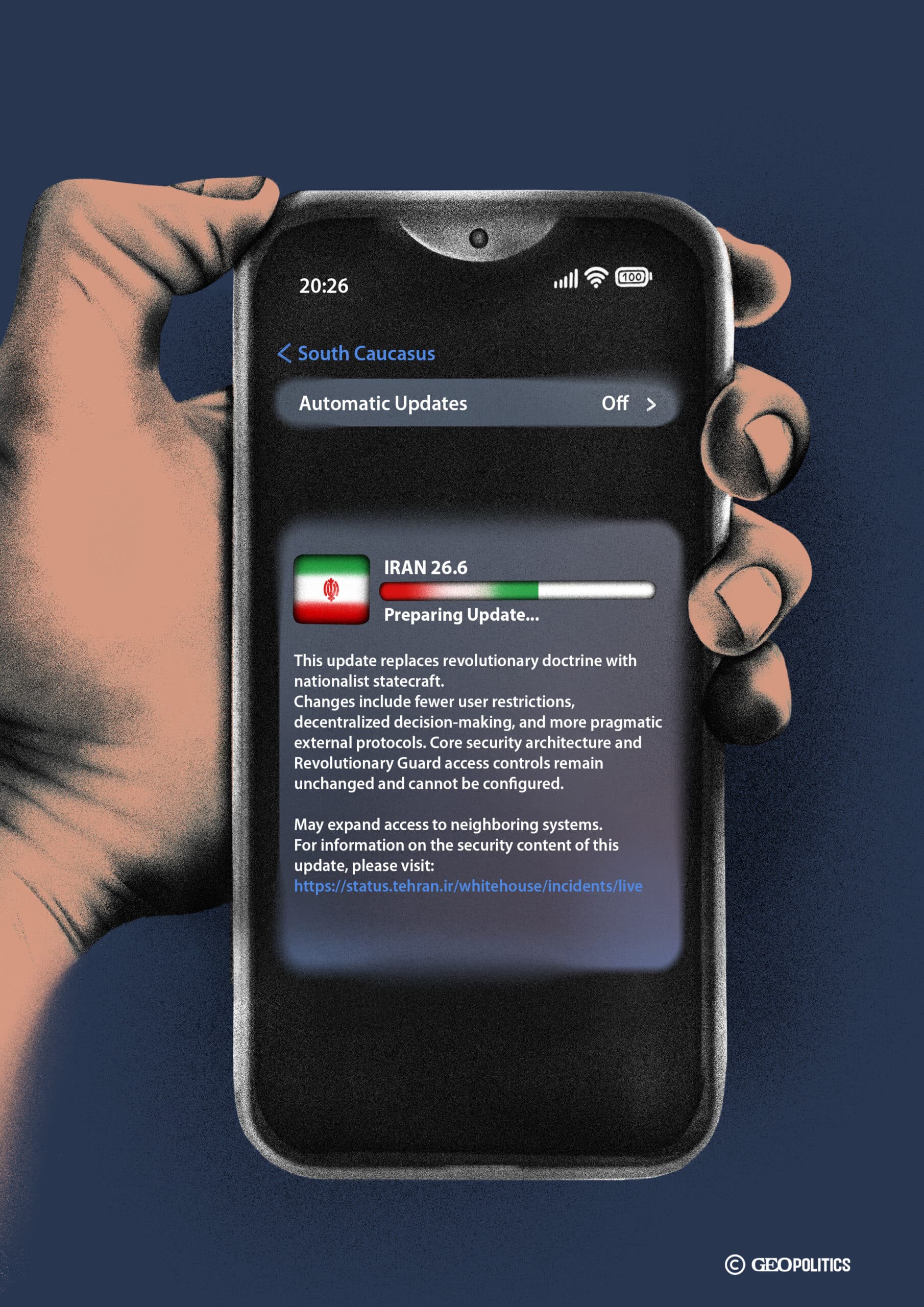
The hostilities between the United States and Iran have resumed. As of July 8, U.S. President Donald Trump indicated that he was “no longer interested” in a deal. Yet, the short-lived memorandum of understanding signed between the two countries on June 17 provided a glimpse of one potential future for Georgia’s immediate neighborhood, the one Tbilisi may not be ready for.
Several observers of the region have pointed out that, contrary to the commonly held assumptions about the overwhelming military and security superiority of the combined U.S. and Israeli forces, their onslaught has failed to trigger regime collapse or disintegration of Tehran’s security apparatus. Instead, the same researchers argue, all involved sides are now seeking – and so far, failing – to find an exit from the resulting strategic quagmire. Others, like Ali Vaez, who heads the Iran project at the International Crisis Group, a think tank, argue that precisely this condition will keep pushing the sides towards the deal.
It is likely then that any new equilibrium would have to take the June 17 MoU at least as a starting point for negotiations. Some of its key elements are particularly relevant for Georgia. If implemented, the MoU would have seen Iran mostly free from sanctions, free to use and sell its ample energy resources, and with significant resources to reconstruct the damages done to its economy and infrastructure. All of that without a significant liberalization of the regime. But perhaps, with an important transformation.
In their recent article, Narges Bajoghli and Vali Nasr of Johns Hopkins University have said the U.S.-Israeli “decapitation strike” has opened the way for the new generation of leaders, less beholden to the dogmas of the Islamic Revolution, but more motivated by more traditional nationalism. That streak, they argue, could simultaneously lead to softening of some of the more visible signs of the Islamic Republic’s interference into private life (for example, relaxing of the attitudes towards obligatory headscarf), bring about a considerably more decentralized decision-making structure, and capitalize on rallying of the larger swaths of the population to the flag. These new leaders, born after the Islamic revolution, “had separated revolution from statecraft” and are unlikely to create alliances out of revolutionary fervor, nor hide Iran’s weaknesses and problems. Instead, they will rely on a mix of nationalism and hard-nosed pragmatism to advance their own interests.
It does not mean that the Iranian state would become less repressive overall. But it is likely to look at the surrounding world through a different lens than its predecessor.
If this analysis is accurate, it does not mean that the Iranian state would become less repressive overall. But it is likely to look at the surrounding world through a different lens than its predecessor. If bolstered by the windfall profits from hydrocarbons and the relaunch of international trade, this new Iran may look differently and speak differently to its Northern neighbors, including Georgia, too. How could it look, and what should Tbilisi look out for?
Relations between independent Georgia and Iran have lacked warmth but have been largely positive and pragmatic. Iran was among the first countries to recognize Georgia’s independence in 1992. During most of the 1990s, Georgia’s domestic upheavals hindered deeper engagement, but Iran stayed away from any intervention harmful to Tbilisi’s interests. President Eduard Shevardnadze visited Tehran in 1993, and President Ali Akbar Hashemi Rafsanjani reciprocated in 1995.
After Georgia’s slow recovery in the late 1990s, Tbilisi has gradually embraced a more decisively pro-Western foreign policy, moved to a partnership with Türkiye, and seen its confrontation with Russia deepen. As Tehran also looked more towards the south, the prospects for developing closer ties faded.
For Tbilisi, its relations with Tehran proved increasingly difficult to reconcile with its efforts to nurture strong ties with the West.
Throughout the 2000s and 2010s, bilateral relationships fluctuated. President Mikheil Saakashvili visited Iran early after taking office, in 2004, but no reciprocal visit was made from the Iranian side. During Georgia’s 2006 energy crisis, Iran provided vital assistance by supplying natural gas to Georgia (via Azerbaijan), a gesture that was positively received in Tbilisi and contributed to the overall détente. Following the 2008 Russo-Georgian War, Iran disregarded the Kremlin’s calls to recognize Abkhazia and the Tskhinvali Region/South Ossetia as independent states. In 2011, Georgia and Iran lifted visa requirements, boosting tourism, trade, and business relations. Still, the broader geopolitical context – Georgia’s close ties with the U.S., and Iran’s strategic partnership with Russia – overshadowed bilateral relations. For Tbilisi, its relations with Tehran proved increasingly difficult to reconcile with its efforts to nurture strong ties with the West.
The relations briefly soured under the Georgian Dream (GD) government, which, in July 2013, unilaterally terminated the visa-free regime for Iranian citizens and froze the bank accounts of some businesses. The measures were heavily criticized in Tehran, but no reciprocal action was taken. At the same time, the authorities in Tbilisi became more vocal about their opposition to Iran’s nuclear plans. In 2016, following the conclusion of the nuclear deal with Iran, the visa-free regime was reinstated, but economic ties never fully recovered to their 2011-2013 levels. Concerns regarding the alleged inadequate treatment of Iranian nationals by Georgian border officials surfaced repeatedly in subsequent years, to the point that in December 2018, it prompted the Iranian Ministry of Foreign Affairs to issue a recommendation advising its citizens against traveling to Georgia. Similar concerns, alongside alleged restrictions on financial transactions, were raised in 2020 and 2021, including during Iranian Foreign Minister Mohammad Javad Zarif’s visit to Tbilisi in January 2021.
Tbilisi also repeatedly took positions against Tehran in regional developments. In 2020, Georgia refrained from condemning the killing of Qasem Soleimani, a high-ranking official of the Islamic Revolutionary Guard Corps (IRGC). Instead, then Foreign Minister Davit Zalkaliani condemned the attack on the U.S. embassy in Baghdad that preceded the strike, stating that the U.S. had “the legitimate right to defend its citizens.” In the aftermath of the October 2023 Hamas attacks on Israel, the Israeli ambassador was invited to brief a committee of the Georgian Parliament. A request by Iran’s ambassador to Georgia, Mahmoud Adib, to do the same went unanswered.
The situation began to change in 2024, when the Georgian Dream prime minister, Irakli Kobakhidze, made two official visits to Iran on symbolic occasions: in May, to attend the funeral of Iranian President Ebrahim Raisi, and in July, for the inauguration of President Masoud Pezeshkian, which was marked by a strongly anti-America fervor. A year later, following the military escalation between Israel and Iran, Georgia’s deputy foreign minister attended a memorial event organized by the Iranian Embassy in Georgia and dedicated “to the memory of martyrs who died during armed aggression against the Islamic Republic of Iran.”
The trend continued into 2026: in February, Deputy Foreign Minister Lasha Darsalia attended an event in Tbilisi marking the 47th anniversary of the Islamic Revolution, a particularly symbolic event. The invitation by the Embassy included a reference to the “410th anniversary of the arrival of Georgians in Iran.” This particular interpretation of history, alluding to the forced deportation of tens of thousands of Georgians in 1616, was seen as a tacit willingness on the part of Georgian officials to set aside painful historical memory in order to court the Iranian authorities.
After the U.S. struck Iran on February 28, the MFA issued a brief neutral statement, emphasizing Tbilisi’s interest in de-escalation and stability in the region. On March 2, Kobakhidze singled out Iran in condolences, also offered to Israel and the Gulf states. On March 11, Kobakhidze congratulated Ayatollah Mojtaba Khamenei on his appointment as Supreme Leader of Iran.
Notably, the authorities in Tbilisi summoned experts and opposition figures criticizing Tbilisi’s perceived alignment with Tehran.
Notably, the authorities in Tbilisi summoned experts and opposition figures criticizing Tbilisi’s perceived alignment with Tehran. reinforcing the perception that Georgian Dream was shifting toward a more Iran-friendly posture in its ongoing conflict with the U.S. and Israel.
Another twist followed on March 31, a day after the call between U.S. Secretary of State Marco Rubio and Kobakhidze. The Iranian ambassador to Georgia, Ali Moujani, issued a statement in response to the conversation, warning that “countries that allow their space and territory” would “sooner or later pay the price inside the country.” The GD chose not to respond, and some of its representatives downplayed. Ambassador Moujani, whose forward-leaning and extensive social media activity has differentiated him notably from predecessors, was also present at the funeral procession of Patriarch Ilia II. Amb. Moujani has also been notably particular in highlighting shared cultural heritage, affinity to traditions, and opposition to the West as common traits with Georgian people.
Georgian-Iranian economic relations largely followed the political trends. Economic exchange remained limited throughout the 1990s and 2000s. But the introduction of a visa-free regime in 2011 boosted commerce. Many Iranians relocated to Georgia, attracted by the country’s relatively liberal residency rules. Iranian businesses were also drawn to Georgia’s favorable business climate and the opportunities created by its growing integration with Western markets. As Georgia’s road infrastructure improved, Iran began to transport its goods more actively via Georgia. These ties persisted even after the reintroduction of visa requirements in 2013 and the subsequent tightening of entry procedures.
According to official data from the Georgian Statistics Office, trade turnover between Georgia and Iran increased from USD 10 million in 2003 to USD 177 million in 2013. In 2021, it stood at USD 171 million, before rising to USD 261 million in 2022, in the year the Russian Federation launched a full-scale invasion of Ukraine. In 2024, bilateral trade increased further, reaching USD 322 million, the highest annual figure since Georgia’s independence. In 2025, it decreased to USD 291 million, but this still represented the second-highest trade turnover on record, exceeded only by the 2024 peak. In 2026, bilateral trade reached USD 101 million in the first four months alone.
The share of both exports to and imports from Iran has never exceeded 2% of Georgia’s overall foreign trade.
Moreover, foreign direct investment flows indicate that Iran remains only a marginal investor in Georgia. According to official data, annual FDI has never exceeded USD 8 million. In 2025, it stood at 0.4 million.
Trade and investment data do not fully capture the extent of Iranian business activity in Georgia. Many Iranian businesses have operated through Georgian-registered legal entities, blurring the true scale of their presence.
Yet, trade and investment data do not fully capture the extent of Iranian business activity in Georgia. Many Iranian businesses have operated through Georgian-registered legal entities, blurring the true scale of their presence. Since 2011, the number of Iran-affiliated companies has grown from 84 in 2010 to 1,489 by 2012. The practice intensified under the GD government, with the number of companies estimated to reach approximately 13,000 by 2025 (According to the National Statistics Office of Georgia, in 2024, 382 Iranian companies were registered in Georgia). Many are also reported to operate through opaque schemes, using Georgian citizens as a cover and Georgia as a hub for accessing Western markets. Media reports have also pointed to the use of fictitious addresses, including cases in which around 700 companies were registered at a single address in Tbilisi and a combined 1,600 companies were registered across two remote villages.
The opacity of these activities has periodically come under Western scrutiny. In 2013, allegations emerged concerning the involvement of Iran’s Islamic Revolutionary Guard Corps (IRGC) in business networks in Georgia, with reports claiming that it had links to around 150 affiliated companies. The same year saw heightened concern over Georgia being used as a platform for sanctions evasion, leading to a broader crackdown on Iranian-linked activities. In 2019 and 2021, several Georgian companies were affected by sanctions regimes related to Iran, reflecting Georgia’s exposure to Iranian networks.
Iranians have also been active as tourists. In 2024, the number of visitors reached 146,000, nearly twice that of 2012. The highest number of visitors from Iran was recorded in 2018, at 291,000. Beyond commerce, Iran and Georgia have also discussed energy cooperation, including both electricity and natural gas.
Some initiatives were discussed, but never materialized. In 2016, talks were held on a possible supply of Iranian natural gas to Georgia via Armenia, but no such agreement was reached. In December 2025, there were reports of a possible opening of a transit route through Abkhazia for Iran-Russia trade, including an alleged test run from Iran, but no concrete follow-up has been recorded to date.
In recent months, researchers and politicians have argued that the current government has been gradually moving towards alignment with the Moscow-Tehran axis, and warned about the threat of such geopolitical positioning and the potential influence of the pro-Iranian actors – mostly Islamic organizations and communities – inside Georgia.
Iranian influence in Georgia’s Muslim community has been pronounced in a specific, relatively narrow group of Shia Muslims. They are predominantly Azerbaijani-speaking and primarily concentrated in the southern region of Kvemo Kartli. Georgian statistics do not distinguish between Sunnis and Shias in census data, so no official figures exist regarding the sectarian composition of the country’s Muslim population. According to most estimates (in 2012 and in 2016), Shia Muslims represent 60-75% of the ethnic Azerbaijani population of slightly over 233 thousand people. Although the 2022 study says 52% of surveyed ethnic Azerbaijani respondents in Kvemo Kartli identified simply as Muslims, without further specification, and only 13% said they were Sunni.
So the community on which Iranian clerical authorities may exert their influence is relatively small but geographically concentrated. There has been a continuous presence of Iranian and locally born but Iranian-educated Sunni clerics in Kvemo Kartli.
So the community on which Iranian clerical authorities may exert their influence is relatively small but geographically concentrated. There has been a continuous presence of Iranian and locally born but Iranian-educated Sunni clerics in Kvemo Kartli. One of them has been the Sheikh of the Shia community since 2023. Apart from the official entities, there are several factions around religious foundations, affiliated with Iran, Iraq, and Azerbaijan. One of these, Ahl al Bayt, was founded in 2001 by Qom-educated clerics and is known to maintain links with the Iranian embassy in Tbilisi. The Imam Ali Charity Foundation of Georgia, established in 2004, has been particularly vociferous against the U.S. and Israel, leading also annual Tasua march in Marneuli. Leaders of these organizations have referred to Ayatollah Khamenei as a “martyr”, railed against the U.S. and Israel as “the alliance of evil.”
Still, overall, the religiosity among ethnic Azerbaijanis has remained moderate – in 2024, according to the Caucasus Barometer survey, the percentage of ethnic Azerbaijanis reporting regular attendance at religious services stood at 19%, while among Georgians this figure was 30%. The identity of Georgia’s ethnic Azerbaijanis is based primarily on ethnic affinity with their kin state and general loyalty to the Georgian state.
That said, the more fundamentalist interpretations of Islam, particularly Salafism, have grown in influence in Georgia, even though the numbers remain relatively small. Also, the Georgian state has been considerably more permissive, according to some observers, towards religious leaders from Iran than, for example, Azerbaijan, which cracked down on them especially since 2012.
Even though the data is relatively scarce, studies conducted in the mid-2010s and in 2020–2021 (albeit on relatively small samples) confirm that Georgia’s ethnic Azerbaijani Muslim communities are not generally swayed by the Iran-friendly actors. The majority agree Georgia would benefit from joining the EU and NATO (even though Shia were more skeptical). Only 1.5% named Iran as a friendly country to Georgia in 2021 – the chart was led by Azerbaijan and Türkiye. In the 2024 Caucasus Barometer, both Shia and Sunni communities show the strongest affinity to Azerbaijan as Georgia’s friend and are not particularly enthusiastic about Iran.
It is, therefore, possible that Georgians are looking in the wrong direction when fretting about Islamic influence from Iran. For one, inside that country, the Islamic Republic may be mutating into a nationalistic regime with a wider base of popular support. But most importantly, Georgian citizens’ internal resilience to that kind of threat may be higher than what some analysts imagine.
Yet, if a more nationalistic, more open, and richer Iran is to emerge in Georgia’s neighborhood, this may cause new kinds of challenges. So far, the South Caucasus has been home to rivalry between two regional powers – Russia and Türkiye, while Iran has remained largely lukewarm to the region. A renewed Tehran may seek to restore the historically more traditional trilateral balance of regional power. The 3+3 format, promoted by Türkiye and strongly backed by Russia, may provide Tehran with an opportunity to secure its northern flank from Western influences.
Russia’s relative weakening creates a power vacuum in the South Caucasus that both Ankara and Tehran may find profitable to exploit – in terms of military-security cooperation, as well as trade and economic relations. As Armenia tries to bolster its economic and hard security, Iran, freed from sanctions, could become an attractive partner.
In addition, Russia’s relative weakening creates a power vacuum in the South Caucasus that both Ankara and Tehran may find profitable to exploit – in terms of military-security cooperation, as well as trade and economic relations. As Armenia tries to bolster its economic and hard security, Iran, freed from sanctions, could become an attractive partner.
For Georgia, there are multiple economic opportunities that were either shelved or have been in the grey economy while Iran remained under sanctions. Should this constraint be lifted, some of these shelved plans may be revived. It is also expected that bilateral trade and tourist visits will increase.
The Georgian leadership’s innuendos with the Islamic Republic have attracted condemnation and ridicule at home so far, but cooperation with Iran that insists less on its religious identity and more on its nationalistic credentials may look more natural to the Georgian audience. Especially if the current Iranian Ambassador’s reference to the current cultural heritage and history becomes state policy. Iran also has a natural interest (alongside Armenia) in cultivating overland transportation links with Russia through Georgia – something it may want to invest in.
Of course, while the cannons continue to speak, all these remain purely speculative. Yet, there is a persuasive argument that the belligerents have a vested interest in de-escalation and that Iran’s government is likely to emerge relatively stable after the dust settles. Once that happens, Georgia has several years to figure out its place in the South Caucasus with one more regional actor.