22 November, 2026
|
15 minutes to read

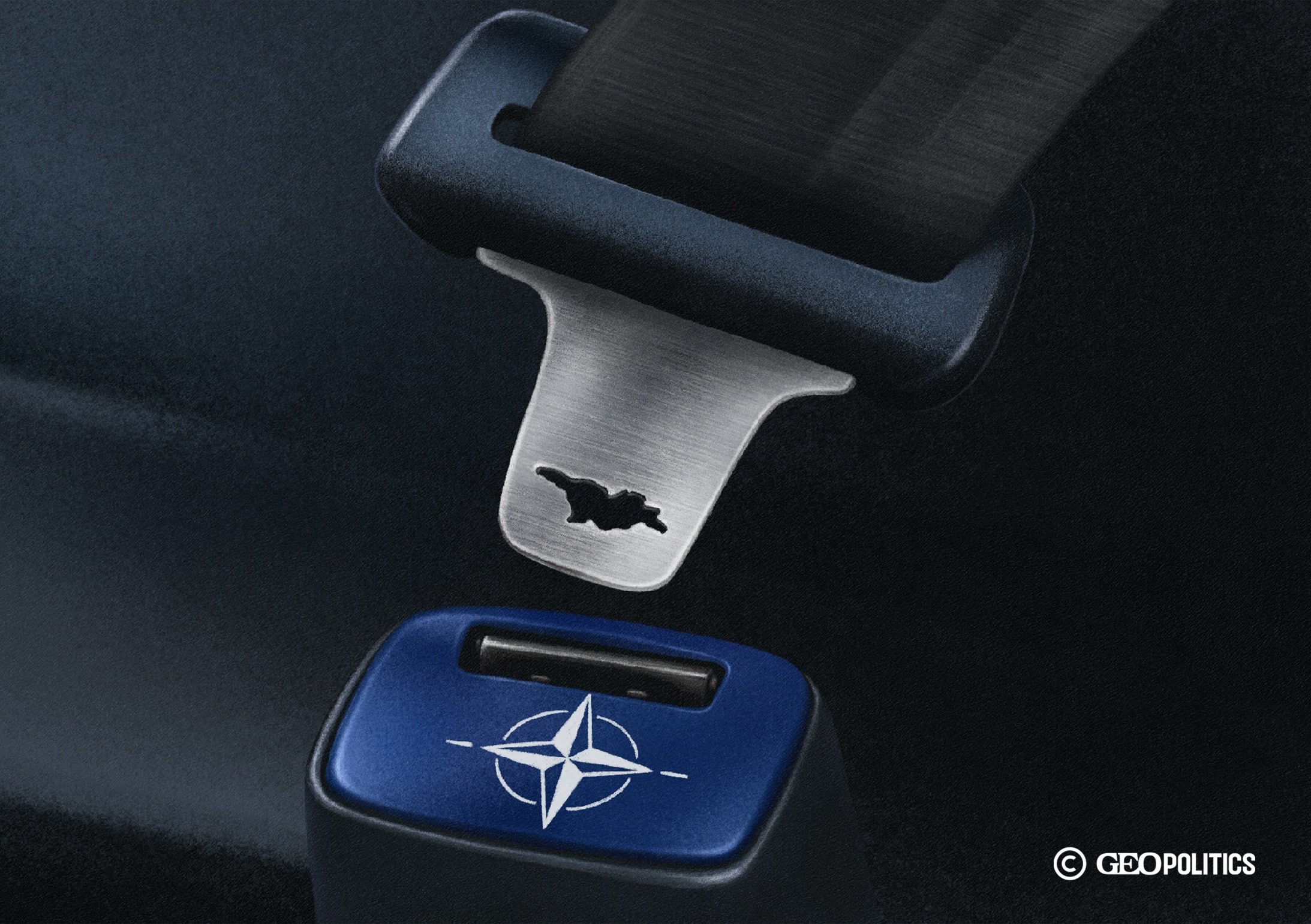
Cheap drones have removed the ceiling on what an attacker can afford. Small states like Georgia are discovering that the limits on what they can defend are very real.
For decades, air defense rested on a simple logic: expensive missiles for expensive aircraft. A state bought radars, batteries, and interceptors to deter or defeat an adversary’s costly warplanes and missiles, and the defense cost roughly matched the threat. Drones have broken that logic. A long-range attack drone of the Shahed type costs an estimated USD 20,000 to USD 50,000. An interceptor fired at it can cost several hundred thousand dollars, and a Patriot can cost several million. Add saturation tactics, low flight altitudes, small radar signatures, and cheap decoys, and the defender faces a losing exchange: every salvo drains stockpiles that are slow and costly to replace, while the attacker simply builds more. This is the defining problem of modern air defense, and it is as much economic as technological. The question is no longer only whether a threat can be shot down, but whether a state can afford to keep shooting.
Recent wars show how the problem unfolds. The lesson arrived first in Georgia’s own neighborhood. In the 44-day Nagorno-Karabakh war of 2020, Azerbaijan used armed drones and loitering munitions to hunt down Armenia’s air defenses, most of them Soviet-era systems. Armenia fielded individual systems rather than an integrated, layered defense, and lost the war in six weeks. Georgia inherited much the same Soviet legacy. Ukraine has since turned the lesson into a daily reality: mass salvos of drones and missiles, a constant contest between electronic warfare and countermeasures, and the rise of interceptor drones that answer cheap threats cheaply. In the Red Sea, low-cost Houthi attacks on shipping forced the U.S. Navy to expend roughly USD 1 billion in munitions within half a year. And in September 2025, when some 21 Russian drones crossed into Poland, allied jets downed only a few of them, while Romania has repeatedly raised the alarm over drones entering its airspace. Even well-funded states struggle to detect and stop every intruder.
If wealthy alliance members struggle with this, a small state with a modest budget faces an even harder problem.
The usual answer to the drone problem is layered defense: cheap measures against cheap threats, expensive ones kept for expensive threats. That means passive and acoustic detection, electronic warfare, gun systems, interceptor drones and, increasingly, directed-energy weapons. The approach is sound. But for a small state, four obstacles make it far harder than it sounds.
Layers, not platforms. Even inexpensive counter-drone defense requires sensors, command and control, electronic warfare, guns, and interceptors to work together. The cost of integrating them can rival the cost of the hardware.
Scale. A small state cannot buy enough of anything to cover its whole territory and still hold the stockpiles needed to survive a sustained attack. Interceptors run out first, so the economics worsen the longer an attack continues.
Sustainment. Training, maintenance, spare parts, software updates, and skilled radar operators are recurring costs. A one-time purchase is not a defense; a funded, staffed, continuously updated system is.
Opportunity cost. Every GEL spent on air defense is a GEL not spent on land forces, border security, or the rest of the budget. For a small economy, the trade-off is stark.
Small states that have secured their airspace have generally followed one of three models.
1. Self-reliance through a niche. Israel built a defense industry around its threats, and Azerbaijan paired large energy revenues with a deliberately drone-heavy doctrine. Both required money and industrial capacity on a scale most small states lack.
2. Armed neutrality. Switzerland and Austria have stayed outside alliances, but geography does most of the work: a belt of EU and NATO states shields both, which is why Switzerland can spend only about 0.7% of GDP on defense. And even they no longer go it alone in the air. In July 2023, both signed up to the German-led European Sky Shield Initiative, a joint air-defense procurement scheme. Neutrality works where no aggressor is next door, and even there it now borrows from the collective model.
3. Collective defense. The Baltic states, Slovenia and Slovakia do not guard their skies alone. Allied fighters rotate through Baltic air bases, Italian and Hungarian jets cover Slovenia, and Czech, German and Polish aircraft protect Slovakia. Estonia and Latvia bought their medium-range air defense in a joint procurement. All of them feed a shared radar picture, train together and exchange intelligence within NATO’s integrated air and missile defense. Finland makes the same point from the other end: it has a capable air force of its own and still chose to join the Alliance in 2023. Above all, these states’ deterrence does not depend on their own interceptor count.
The Baltic states are the clearest illustration. Their economies are small, yet allied air policing, a shared radar picture and joint procurement give them coverage they could never fund alone. In the drone age, air defense has become a network good: its value rises with the number of participants, and its cost per participant falls.
The claim is not that Alliance membership guarantees safety. It is that membership lowers the cost of defense and raises the cost of aggression, and for a small state nothing else does both.
Membership is not a free pass. NATO members have struggled with drone defense too; Article 5 does not mean allied interceptors guard every pipeline from the first hour, and members carry spending and interoperability obligations of their own. The claim is not that Alliance membership guarantees safety. It is that membership lowers the cost of defense and raises the cost of aggression, and for a small state nothing else does both.
Georgia faces every one of these obstacles at once. Its Soviet-era air defense was largely destroyed in the 2008 war and has been only partially rebuilt, with Israeli Spyder systems and, under a 2015 deal worth about EUR 100 million, French radars and short-range Mistral missiles that Tbilisi has since showcased. The country has never had a strong air force, and its defense industry is minimal. Public information on current inventories and recent procurement is incomplete, but nothing suggests that Georgia has built the comprehensive, layered system that modern aerial threats demand.
Geography compounds the problem. Abkhazia and Tskhinvali Region/South Ossetia, about one-fifth of the country’s internationally recognized territory, are occupied by Russia, whose forces and air-defense assets cloud Georgia’s picture of its own airspace. Drones can be launched from, or routed through, areas Tbilisi cannot monitor.
So does the economy. The Baku-Tbilisi-Ceyhan and South Caucasus pipelines, the Black Sea ports of Poti and Batumi, the possible deep-sea port at Anaklia and the wider transit corridor are cheap to target and expensive to protect. What makes Georgia valuable is its role as the link between Central Asia, the Caucasus and Europe, and that is exactly what makes it exposed too. Protecting these assets is not only a Georgian concern: their security affects Europe’s energy diversification and the resilience of the Middle Corridor.
The Black Sea, long an economic asset, has also become a front line. The war in Ukraine has filled it with naval drones, drifting mines and GPS jamming, and Georgia’s coast lies on the same waters. NATO’s growing attention to Black Sea security makes Georgia more relevant to the Alliance, yet its limited role in the region’s collective security architecture leaves it exposed.
The distinction between partnership and membership matters just as much: cooperation can improve Georgia’s capabilities, but only membership brings the collective-defense commitment of Article 5.
A state in this position cannot close the gap with its own budget. The practical question is who will share the cost. For Georgia, NATO integration is therefore not only a matter of political preference or geopolitical orientation; it is a practical security requirement. Membership would bring collective planning, intelligence sharing, integrated surveillance, joint procurement, training and reinforcement that Georgia could not finance or reproduce alone. The distinction between partnership and membership matters just as much: cooperation can improve Georgia’s capabilities, but only membership brings the collective-defense commitment of Article 5.
For two decades, Georgia pursued NATO and EU integration with broad public support. At the 2008 Bucharest summit, Allies agreed that Georgia “will become” a member of NATO, though without setting a date or granting a Membership Action Plan. Georgia built a substantial partnership around that promise: the NATO-Georgia Commission, the Substantial NATO-Georgia Package launched in 2014 and refreshed in 2020, and the NATO-Georgia Joint Training and Evaluation Center. Georgian troops served in Kosovo from 1999 to 2008. In Afghanistan, Georgia became the largest non-NATO contributor to ISAF, with more than 1,500 troops in 2013, and later the largest non-NATO contributor to the Resolute Support mission. Thirty-two Georgian soldiers died there. Georgia shared the burden of international security long before it received collective-defense protection.
Georgia developed its defense institutions, took part in joint exercises, and steadily improved interoperability with allied forces. It was not merely asking to join an alliance; it was investing in becoming a capable, contributing member.
Domestic reform supported this effort. Georgia developed its defense institutions, took part in joint exercises, and steadily improved interoperability with allied forces. It was not merely asking to join an alliance; it was investing in becoming a capable, contributing member.
Euro-Atlantic integration is therefore a constitutional commitment, not a policy to be changed at political convenience.
Public opinion has consistently backed this course. The Caucasus Barometer found support for NATO membership at 60% in 2021 and 57% in 2024, with 16% opposed in the latter year. A January 2025 survey by the Institute for Social Studies and Analysis (ISSA) for the Civil Society Foundation put support at 74.2%. Article 78 of the Constitution, moreover, obliges constitutional bodies to take all measures within their competences to ensure Georgia’s full integration into the EU and NATO. Euro-Atlantic integration is therefore a constitutional commitment, not a policy to be changed at political convenience.
That trajectory has now reversed. After the disputed October 2024 parliamentary election, Prime Minister Irakli Kobakhidze announced on November 28, 2024, that the government would not put EU accession negotiations on the agenda until the end of 2028, prompting mass protests and a rupture with Western partners. The decision formally concerned the EU, but it could not be confined to it: both tracks rest on the same foundation of democratic credibility and political trust, and NATO membership has slid into the background along with EU accession. In June 2025, the government moved to liquidate the Information Center on NATO and the EU, the public body that had explained the benefits of Euro-Atlantic integration to citizens since 2005, and to absorb its functions into the Foreign Ministry from July 1, at the very moment when public understanding of NATO and resistance to disinformation most needed strengthening.
The costs are already measurable. NATO’s Annual Report for 2025, presented on March 26, 2026, states that Allies reviewed their engagement with Georgia in light of the 2024 elections and their aftermath, and reprioritized elements of cooperation, including aspects of the Substantial NATO-Georgia Package. Military-to-military cooperation continued, and a joint exercise went ahead in May 2025, but the political signal was unmistakable. Georgia is no longer on the accession track. NATO’s complete disappearance from the Georgian leaders’ statements, the ruling party line that NATO integration is to blame for Ukraine’s calamities, and the claim that territorial integrity issues must be solved with Moscow have all but removed NATO as a foreign policy priority for Georgia.
Then, on August 4, 2026, Tbilisi Mayor and Georgian Dream Secretary General Kakha Kaladze declared that NATO had deceived Georgia and Ukraine for years with promises of membership it never intended to keep. Such a statement from a senior ruling-party figure is hard to reconcile with the constitutional commitment to NATO integration and with two decades of partnership.
The Georgian Dream reasoning appears to be that distance from NATO buys calm with Moscow. Its defenders add that membership was never realistically on offer, that Allies are unwilling to extend guarantees to a country with occupied territories, and that engagement with Moscow is a pragmatic hedge for a small state that cannot count on anyone’s protection.
Each of these objections, even if accepted, supports a different conclusion from the Georgian government’s. If the door is hard to open, drift removes any chance of opening it. If hedging is prudent, a hedge should add options, not remove the most valuable one. And if alliance integration is the only affordable route to a sustainable air defense, abandoning it does not make Georgia safer. It makes Georgia poorer in the one resource the drone age punishes hardest: shared defense. Membership may not be attainable soon, but preserving the political, democratic and military conditions for it remains a national security interest.
Appeasement also has a poor record in this region. Georgia was invaded in 2008, and Russia still occupies one-fifth of its territory. Distance from NATO did not protect Ukraine, which was non-aligned by law when Russia seized Crimea in 2014, or constitutionally neutral Moldova, where Russian troops remain in Transnistria. Deterrence has held where a credible collective-defense guarantee existed, as in the Baltic states. Neutrality that the neighbor does not respect is a bet, not a policy.
Going alone means exactly what the affordability trap describes: a small budget, no defense-industrial base to speak of, and a drone threat that national resources cannot meet. Without shared early warning, interoperable systems, joint procurement, allied training and intelligence, Georgia’s pipelines, ports and corridor remain cheap targets with expensive defenses. NATO integration is not an inexpensive shortcut and would not automatically protect every asset, but it distributes the burden and opens capabilities that are otherwise beyond Georgia’s reach. The government has yet to explain what would compensate for losing them, or how it intends to deter coercion and defend its airspace without reliable partners.
The alternatives are weaker than they appear. Bilateral arrangements and ad hoc purchases lack the collective guarantee that makes deterrence credible. The Ukrainian model, massive Western aid without membership, came only after the invasion and at enormous human cost; no one should choose it. Partnership, meanwhile, depends on political trust. Every year of drift erodes interoperability and relationships built over two decades, and rebuilding them will cost more than maintaining them would have. NATO’s decision to reprioritize cooperation shows that the erosion has already begun. It also diminishes what Georgia could contribute to Black Sea security and the wider region.
A June 2025 survey found that even among Georgian Dream’s own voters, 50% supported joining NATO and 39% opposed it. A course that distances the country from the Alliance is hard to square with the Constitution and, on the evidence, with the wishes of the ruling party’s own electorate.
There is, finally, a question of democratic legitimacy: whose preference does the current course reflect, the government’s or the public’s? The polling and the constitutional commitment point one way. A June 2025 survey found that even among Georgian Dream’s own voters, 50% supported joining NATO and 39% opposed it. A course that distances the country from the Alliance is hard to square with the Constitution and, on the evidence, with the wishes of the ruling party’s own electorate. The government should explain how it intends to restore confidence among Allies, not question the legitimacy of the Alliance itself.
In the drone age, air defense is a network good. Small states can afford sovereignty in the sky only as part of something larger. Georgia, with its legacy equipment, occupied territories, exposed infrastructure, and small budget, is the textbook case. Its location makes it important to NATO and to the wider Black Sea security architecture, but geography alone does not translate into security. That requires political credibility, military interoperability and sustained cooperation.
NATO integration does not guarantee protection against every threat, and membership is no substitute for national defense. However, it is the most credible framework through which Georgia can combine its capabilities with those of a far larger security community. The country’s contributions to NATO operations, joint exercises, and defense reforms showed it can contribute to collective security, not merely benefit from it.
The current government’s policies risk squandering that record. By weakening political trust, allowing democratic and institutional standards to deteriorate, reducing the visibility of Euro-Atlantic integration, and questioning NATO’s credibility, it undermines the very partnership that could help Georgia meet the security challenges ahead.
“We maintain the peace through our strength; weakness only invites aggression,” Ronald Reagan said in 1983. In the drone age, strength is either shared or unaffordable. The sky is indeed the limit, but who is willing to share the burden of defending it sets the limit. Georgia’s question is whether it will still be part of anything larger when the next wave of drones arrives.