23 May, 2026
|
13 minutes to read

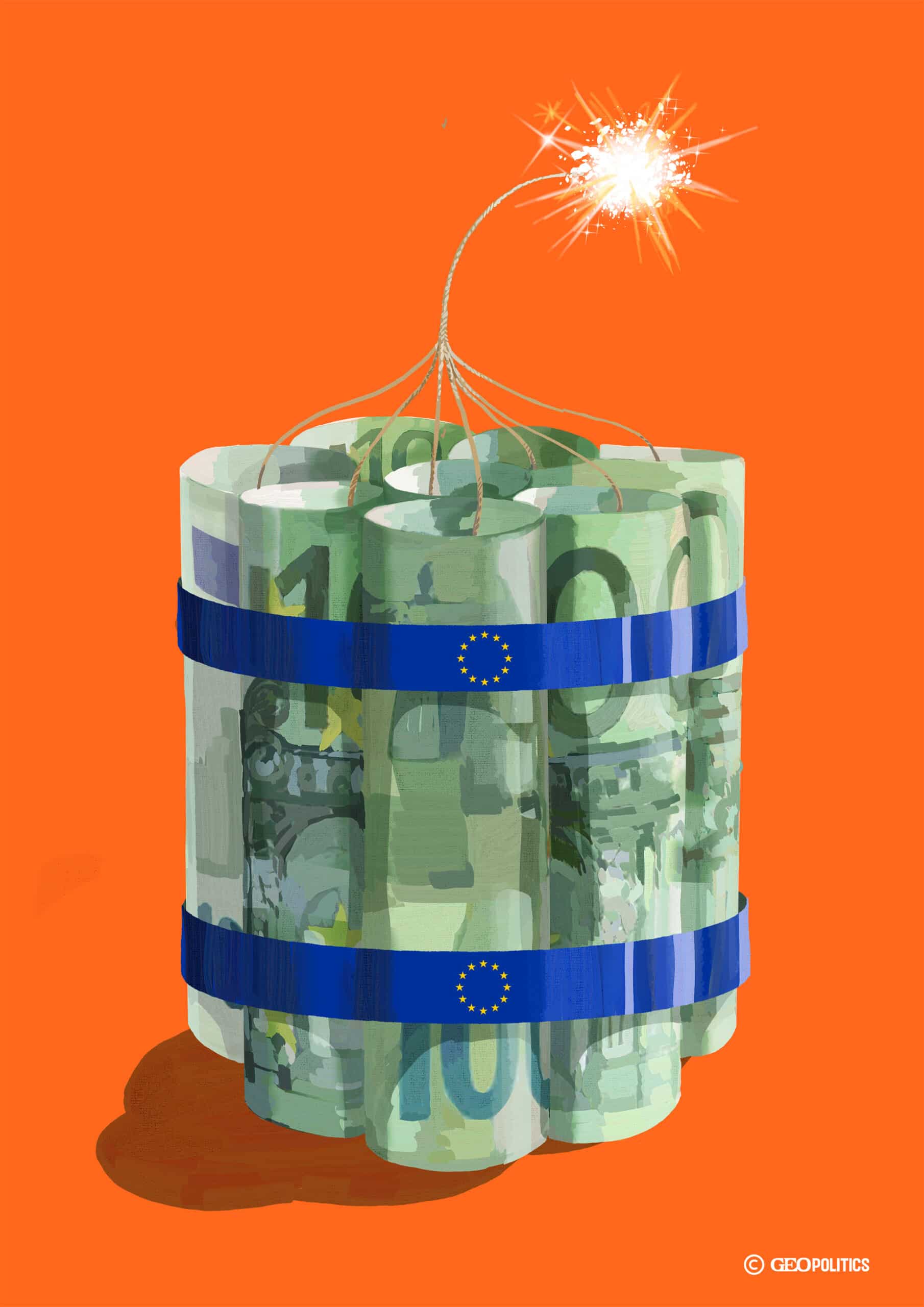
On May 4, an unusually open conflict erupted within a European family, usually conscious of its public image. The spokesperson of the EC, speaking on behalf of Ursula von der Leyen, contradicted the statement of Marta Kos, the EU Enlargement Commissioner, who said a day earlier that Serbia’s disbursements under the Growth Plan – a cash-for-reforms instrument – have been suspended due to backsliding in the judiciary and insufficient alignment with the EU foreign policy. This unusual spat exposed the well-known reluctance to act upon the authoritarian tendencies of Serbia’s President Aleksandar Vučić. During his 14 years in power, Vučić has brought Serbian media to heel; his party has captured state institutions, discredited the opposition, and ignored electoral schedules, calling for early elections at propitious times.
We have written before in this journal that authoritarian regimes tend to learn from one another, especially when it comes to the skills needed to subvert the European Union’s machinery. So how did Vučić do it? Is it something special that Serbia has (and others don’t), or is there something amiss with the EU’s own way of functioning that makes such flagrant abuse possible?
Serbia has been an EU candidate state since 2012, the same year Vučić came to power. As such, it benefits from the generous package of pre-accession support, known in EU jargon as IPA (Instrument for Pre-Accession Assistance). This is a large pot of money (the 2014-2020 tranche for Serbia constituted EUR 1,539 billion) that is intended to help Serbia’s public institutions and policies adjust to the demands of integrating into the EU’s internal regulatory and economic frameworks. Some of these funds are earmarked for specific programs, but the large chunk is up to Serbia’s government to manage through its budget (while demonstrating progress towards certain general benchmarks). Without a doubt, this money fed into a complex system of patronage that Vučić has constructed around his party, Serbian Progressive Party (SNS), and his political cronies.
The European Union’s primary concern when beginning its painstaking journey towards membership is to ensure what is enigmatically called “the absorption capacity.”
It is true that so-called “fundamentals” – things like the rule of law, democracy, and human rights – represent the first chapter of the EU accession hurdles, and without meeting them, no state can hope to join the Union. But it is also true that the European Union’s primary concern when beginning its painstaking journey towards membership is to ensure what is enigmatically called “the absorption capacity.” Translated from Bruxelloise jargon, the term refers to the capacity of bureaucrats to manage vast amounts of EU money invested in infrastructure projects in a way that complies with EU financial management rules, supposedly in a less corrupt, more transparent way.
This is why one of the European Commission’s (EC) primary considerations in a candidate or associate country is to redress how the country’s finances, procurement, and audit institutions function, in compliance with the relevant standards (this is known as public finance management, or PFM.) Not a bad thing in itself, granted.
An uncomfortable truth: with all the talk about values, the EU is, first and foremost, about money and the economy.
But the prioritization of these institutions reveals an uncomfortable truth: with all the talk about values, the EU is, first and foremost, about money and the economy. One can even say this is the part of the organization’s atavistic DNA: after all, the organization formerly known as the European Community of Coal and Steel was built around the idea that economic interdependence would prevent wars. That “theory of change,” to use the programmatic jargon, prevails to this day. But this is not the only fundamental assumption of EU programming.
The second one is about virtuous bureaucracies as opposed to dangerous and populist political leaders. As Mario Draghi – someone who probably knows the EU better than anyone else – has aptly observed in his recent speech, the EU bureaucracy is structured in a way to split and fracture seemingly intractable conflicts and “wrap them in layers of procedure that deprive them of their political charge.” Yes, the process may be arcane, and the panoply of the European abbreviations may have generations of EU institution interns wake up in cold sweat at night, but most of the time, this torturous pipeline paved with A4 paper prevents disagreements from escalating into confrontation.
The push towards bureaucratic uniformity and efficiency is also characteristic of the EU efforts to prepare the prospective members, and in many cases, this brings tangible benefits to citizens, including improved access to services, reduced corruption, and, in some cases, clearer, less nepotistic ways to join civil service for young people and more meritocratic procedures for advancing within it. The European Principles of Public Administration – the bible for paper-pusher-fixers drafted by OECD/SIGMA, an official consultancy/think-tank – goes into very specific detail about participation, transparency, and service-orientation of bureaucracies. But fundamentally, the EU wants to see the bureaucracy that can “absorb” its IPA and infrastructural projects – simply put, to spend money in full and on time, while being able to show that, say, a bridge has actually been built.
Once conflicts ease and finances are (relatively) well managed, money starts moving, the economy whirs into action, delivering prosperity to citizens and stability to the continent. This model worked marvelously for Portugal, Spain, and Greece, all of which exited dictatorial or authoritarian rules to become, in many ways, models of societal transition towards democracy and economic revival. But in Central and Eastern Europe, something broke.
First of all, there has been less money to go around in the EU-27, than before. Reunification of Germany cost the EU a significant chunk of its capacity to redistribute, and the economic crisis of the 1990s and then 2008 did the rest. Secondly, many countries have lacked the kind of genuine commitment to a democratic future that post-Franco Spain or post-Salazar Portugal may have exhibited. Thirdly, socialist systems made many Eastern Europeans deeply cynical about any kind of bureaucracy (and politics, for that matter).
The EU was very slow to react to the likes of Viktor Orbán and Andrej Babiš diverting EU structural funds destined for the new members to build their financial empires and political bases.
But more importantly, the EU was very slow to react to the likes of Viktor Orbán and Andrej Babiš diverting EU structural funds destined for the new members to build their financial empires and political bases. What mattered most was that the money got spent and bureaucracies seemed capable of managing growth for a while.
There is another assumption lurking conspicuously in the EU treaties: that a country, once democratic and within the EU, would stay democratic. And while there is a provision for a country to leave the EU (see Brexit), there is no provision to expel it for the lack of compliance with the “fundamentals” of the treaty, and even the mechanisms to punish non-compliance – like the apparently failed attempt to halt Growth Plan disbursements to Serbia – are relatively recent.
Two components underpin that assumption of prevailing democracy. On the one hand, why would anyone leave the paradise of prosperity and stability that is the EU? Yes, Brexit has seriously undermined this point, but the grim economic aftermath in the UK has significantly cooled the radical fan clubs of other exit movements.
On the other hand, even if an elected political party were to preside over democratic backsliding, from the long-term perspective of the EC, election cycles would redress such accidents sooner or later, and a strong bureaucracy would keep things running in a relatively orderly fashion before elections did their magic.
The gradual installation of Orbán’s regime in Hungary and, to a lesser extent, the Law and Justice (PiS) government in Poland showed how these assumptions could be broken. Elected in free elections, both Fidesz and PiS had a democratic mandate to implement policy, and they used it to gradually undermine the checks and balances, and reduce civic space to the extent that it threatened the democratic nature of their countries – a relatively slow process that EC has proven incapable of stemming.
Relatively slow erosion of the democratic system, “under the threshold” of the EC’s regulatory reaction capability and the European Council’s willingness to expend political capital, can go unpunished until it is too late.
Having ignored the initial warnings from civil society and reacting weakly to further abuses, the EC gave the impression of impotence as Orbán began to hamper decision-making processes, almost with impunity. The lesson was clear: relatively slow erosion of the democratic system, “under the threshold” of the EC’s regulatory reaction capability and the European Council’s willingness to expend political capital, can go unpunished until it is too late.
When it comes to the candidate states, the prospect of membership seems like an attractive enough ‘carrot’ to keep the EU-compliant reforms going, and should these fail, it is easy to use a ‘stick’ – freeze the membership process. Even an individual EU state may stop a candidate from acceding, either through a decision by its government, its parliament, or a referendum, depending on national rules.
Leaders, like Vučić, people generally unencumbered by the ideals and sentiments, saw the opportunity to break that system and took it. Application to become an EU member in 2009 and getting the candidacy in 2012 has brought an economic boom to Serbia,
But the leaders, like Vučić, people generally unencumbered by the ideals and sentiments, saw the opportunity to break that system and took it. Application to become an EU member in 2009 and getting the candidacy in 2012 has brought an economic boom to Serbia, whose economy has suffered after wars, NATO bombing, and economic sanctions, further aggravated by corruption and inefficiency. The initial EU-backed reforms to redress finances and bureaucracy, however imperfectly implemented, brought greater predictability for investors. Italian car giant FIAT took over and refurbished a massive Yugoslav-era car factory in Kragujevac, Italian and Austrian banks opened offices, and money started to flow into the economy.
But Vučić also used the upcoming prospect of joining the EU common market to court non-democratic sponsors. UAE’s Etihad Airways bought a 49% stake in Serbia’s flag carrier, and Abu Dhabi’s flashy property developers started to reshape Belgrade. Chinese companies started fixing railways. All of these investments come without any conditions, and some – analysts argue – come with kickbacks and benefits for elites, while enhancing China’s grip on strategic assets.
As a result, when the EU had equipped itself with appropriate instruments to punish democratic and rule-of-law shortfalls, and even political consensus started to crystallize, Serbia’s Finance Minister could just shrug off the loss of EU loans and grants as insignificant to the overall budget.
People I spoke to in Serbia say this hijacking of EU-generated benefits to push non-democratic investors has objective economic reasons: EU growth has been suboptimal in the past decade, while the COVID-19 pandemic, the hydrocarbon shock from Russia sanctions, and the expansion of military spending made things worse. Those who try to justify the EU’s lenience towards Vučić’s authoritarian antics say keeping Serbia in the EU anteroom for too long has gradually reduced the attractiveness of the membership carrot.
Whatever the reason, Serbia’s leadership seems to have faced down the massive public protests. If anything, the “mopping up” of the opposition movement got uglier, as witnessed by the dirty media campaign to blame the death of a student on protesters.
If we are to judge by the President of the Commission’s chastising of Commissioner Kos, Brussels political top-dogs want Serbia in, rather than out.
People like Georgia’s oligarchic patron, Bidzina Ivanishvili, are keenly observing this situation. As we argued earlier, the Georgian Dream’s (GD) initial incendiary tactics against the EU have resembled those of Vučić’s SNS (and Orbán’s Fidesz). Since late 2024, GD has been on the path of hardline repression, largely without the EU being able to oppose it in any real sense. Freezing of the accession process, a rather symbolic restriction of visa-free travel for GD officials, and occasional sermons were deemed sufficient.
But some feel that GD may be carefully exploring a reset. The government officials from Tbilisi engaged in conversations with the U.S. officials, mostly on economic matters so far. Yet, several meetings took place with the Council of Europe officials – guardians of the human rights convention that the EU relies on for the professional assessment of the state of the legislation and the judiciary. Rumors are circulating in Tbilisi that GD may offer a “gesture” of sorts, such as releasing more prisoners or putting some of the most repressive laws on ice. A couple of police officers have recently been prosecuted for beating journalists and politicians, but this belated move was accompanied by an official rejection that any systemic violence took place in 2024, when hundreds were beaten in a pattern that the public defender deemed torture.
Could Tbilisi count on the return to Serbia-level relations with the EU? Serbia has a couple of things going for it: it is in the heart of Europe and has maintained good relations with the Kremlin and China for more than a decade. It also holds the key to the Balkan regions’ trouble spots: Kosovo and Bosnia and Herzegovina. In addition, rare-earth mining in Serbia is crucial to the independence of Europe’s supply chain, as Ursula von der Leyen has stressed. Belgrade also has a formidable defense industry, which, apparently, has been quietly arming Ukraine. In other words, pragmatically, Brussels would rather have Belgrade in than out (although not all EU member states may feel the same).
In the meantime, two contradictory trends have taken place within the EU. The traumatic experience of obstruction by Orbán’s Hungary has sharpened the EU’s internal mechanisms to punish repeat offenders, and the accession rules put more emphasis on compliance. There has been talk about going further and partially suspending unanimity voting, and with Orbán gone, some adjustments may even materialize – in time for Serbia’s accession. Concurrently, a type of “negative convergence” took place: some of the things that Orbán, Vučić (and Ivanishvili) said and did are no longer taboo in Brussels, largely due to the growing policy rapprochement between the extreme right and mainstream right (EPP) parties. Decisions taken against the Green Deal, EPP’s insistence on continuing to investigate the EU-funded NGOs for corruption (despite the Court of Auditors’ clean sheet), and the degree to which the talk of “values” is being dropped from the EU communications create a more welcoming ground for accommodating the parties and regimes that are less-than-savory if we go by the letter of the EU treaties.
A real opportunity for the Georgian Dream to come back from the cold? The keyword here is interest and pragmatism. Brussels no longer projects itself as a starry-eyed idealist, perhaps. But acting as hard-nosed pragmatism requires an implicit and explicit transaction.
A real opportunity for the Georgian Dream to come back from the cold? The keyword here is interest and pragmatism. Brussels no longer projects itself as a starry-eyed idealist, perhaps. But acting as hard-nosed pragmatism requires an implicit and explicit transaction. What Vučić has to offer is clear. What Mr. Ivanishvili may offer Brussels is much less obvious.