22 October, 2026
|
25 minutes to read

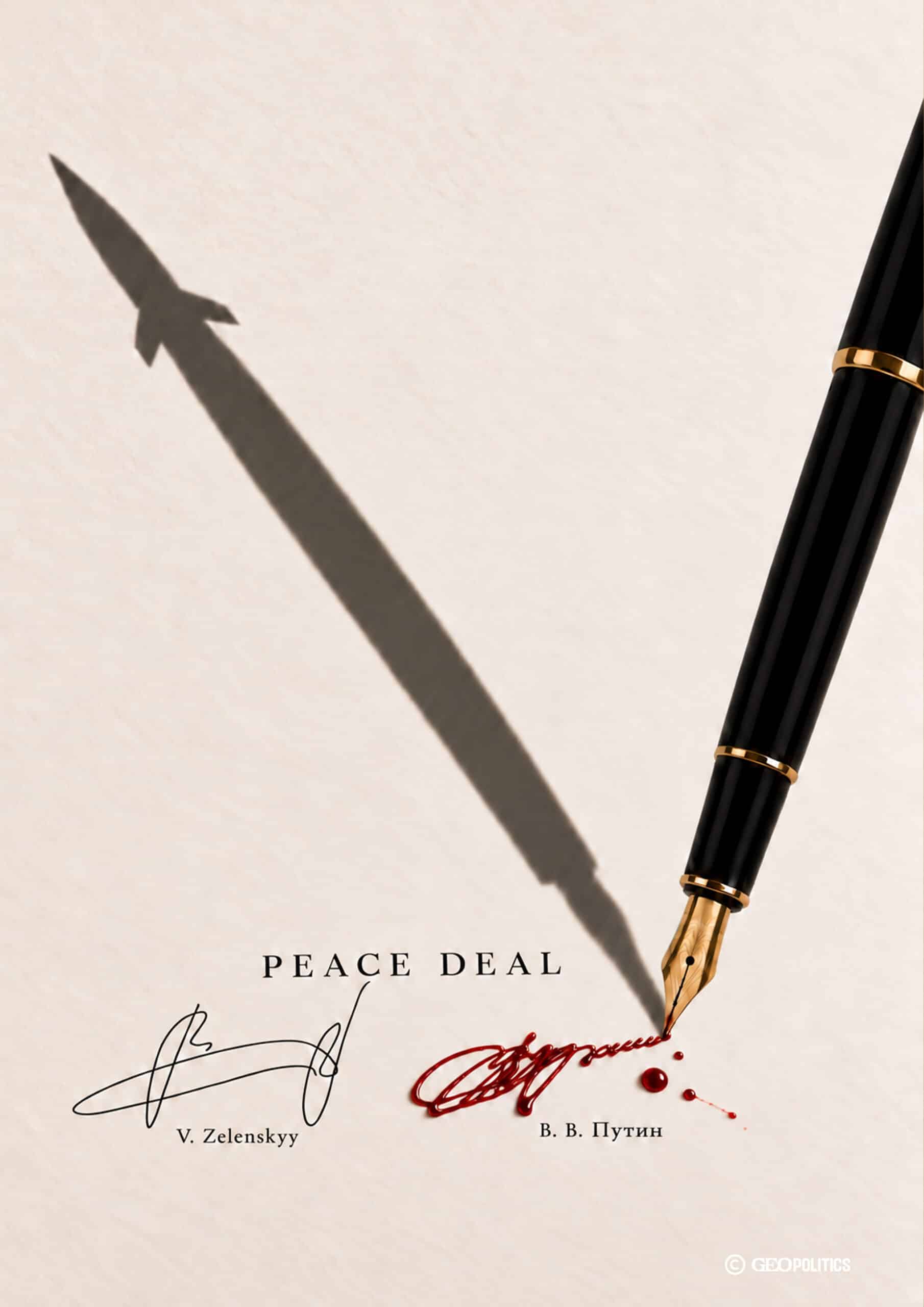
On October 9, Donald Trump announced that after a call with Vladimir Putin, he had agreed to let Russia release large volumes of diesel onto world markets, waiving sanctions designed to starve the Kremlin’s war budget. The next day, after Volodymyr Zelenskyy called the decision weak, Trump said it was time for Ukraine to get a new president. Within two days, the Kremlin echoed the demand and rejected Zelenskyy’s offer to hold elections under a 60-day ceasefire, with Dmitry Peskov offering to hold fire only on election day and reiterating that Moscow does not want a ceasefire at all. In one week, Washington eased pressure on Russia to manage fuel prices before the midterms, publicly questioned the legitimacy of Ukraine’s elected leader, and watched the Kremlin pocket both concessions without offering anything in return.
The episode exposes the gap at the heart of Washington’s current mediation. The U.S. treats the war as a commercial dispute over territory, prices, and sanctions that the right mix of incentives can close. Moscow pursues an objective no transaction can deliver: a European security order rebuilt on spheres of influence, which Russia has sought since the Soviet collapse and which Putin now believes is within reach. The Kremlin sees Donbas territory and control over Black Sea trade through Crimea as instruments of that goal, and the goal itself is Ukraine’s subordination to the Kremlin’s sphere of influence and the West’s acceptance of it. For that reason, no stable middle ground exists. In Moscow’s eyes, any arrangement short of Ukraine’s capitulation is a pause, which is exactly how Peskov justified rejecting the 60-day ceasefire: Kyiv would use it to regroup. Sergei Lavrov made the same point from the UN General Assembly podium in September, declaring that the aims of the war would be achieved “no matter the circumstances.” Putin will accept a compromise only when he concludes that his maximal aim is out of reach, and an American policy that pressures Kyiv while relieving Moscow tells him the opposite.
The second might silence the guns in Ukraine, but a Russia rewarded for its aggression and released from that war could afford both a near-term test of NATO and the long-term rebuilding of its military power, raising the risk to Europe now and over the coming decade.
The stakes reach well beyond Ukraine. Pressing Kyiv to capitulate would hand Moscow at the negotiating table a victory it has failed to win on the battlefield and can ill afford to achieve. The war can end in one of two ways. Moscow can be compelled to accept peace, because military and economic pressure convinces it that its aims are out of reach, or it can be handed a capitulation deal that grants them. The first could secure a lasting peace. The second might silence the guns in Ukraine, but a Russia rewarded for its aggression and released from that war could afford both a near-term test of NATO and the long-term rebuilding of its military power, raising the risk to Europe now and over the coming decade.
Washington and Kyiv have been in similar rupture before. In February 2025, Trump called Zelenskyy a “dictator without elections”; the Oval Office meeting collapsed days later, and Washington briefly suspended intelligence sharing and arms deliveries. The relationship, however, recovered. Kyiv signed the minerals agreement in April, and by September 2025 Trump was declaring that Ukraine, with European support, could win back all its territory. The swings continued into this year. At the NATO summit in Ankara on July 8, Trump promised to grant Ukraine a license to produce Patriot interceptors; on July 31, days after hosting Zelenskyy at the White House, he told his cabinet that “we have not agreed to that,” offering as his only explanation that Washington must be very careful about letting anyone build such advanced weapons. The retreat came while Ukraine faced a chronic shortage of PAC-3 interceptors, the only weapons in its arsenal able to stop Russian ballistic missiles. If October 2026 follows the same cycle, the current crisis is noise, and Europe and Kyiv should absorb the insults and wait for the next swing.
If those logs hold up, a restriction that stops at Ukraine’s border is a policy decision, not a technical fault.
The evidence, though, points the other way, and the first difference lies in the instruments. In 2025, the pressure was largely rhetorical. In October 2026, it reached Ukraine’s war machine within days. According to CNN reporting, Trump threatened to cut off intelligence sharing and weapons purchases unless Kyiv halted its refinery strikes. On October 13, Zelenskyy said Ukraine had received no advance warning of Russian ballistic missile strikes on Kyiv and Kharkiv, and Ukraine’s air force said that partners resumed warnings only after a two-day gap. The next day, SpaceX restricted the Pentagon-funded Starshield service for terminals moving faster than 160 kph, disabling the interceptor drones Ukraine uses against jet-powered Shaheds. Washington denies cutting intelligence, and Elon Musk says the U.S. government governs the network’s operating limits. Kyiv has since tested the official explanation: on October 17 Zelenskyy told reporters that vehicles carrying Ukrainian terminals ran at more than 180 kph on EU territory without interruption, and that Ukraine holds the logs. If those logs hold up, a restriction that stops at Ukraine’s border is a policy decision, not a technical fault.
The second difference is the target. Washington is constraining the one Ukrainian instrument that was imposing measurable costs on Russia, and it was working. Ukrainian strikes had pushed Russian refineries down to about 60 percent of capacity and halted seaborne diesel exports almost entirely, according to Kpler data cited by the Financial Times. Trump had pressed Kyiv to stop since at least September 13, when he said the strikes were causing a diesel shortage and that there were “plenty of other targets.” When Zelenskyy ordered a resumption of strikes on refineries, Trump branded Kyiv’s actions a disgrace.
The third difference concerns Moscow. In 2025, the sanctions regime stayed in place. In 2026, Congress wrote it into law: the Graham Act passed the Senate 86 to 11 and the House 262 to 159, codifying existing sanctions and authorizing tariffs of up to 500 percent on Russian goods and 100 percent on major buyers of Russian energy, subject to a national interest waiver. Three weeks after signing it, Trump licensed Russian diesel exports, and on October 16 he signed an order waiving the law’s sanctions and tariffs aimed at Russia’s energy revenues. Kirill Dmitriev called the suspension of the Graham Act “truly historic.”
A fourth difference runs through commerce alongside the diplomacy. According to The New York Times, Putin raised a multibillion-dollar deal for Lukoil’s global assets with Steve Witkoff and Jared Kushner at the Kremlin on September 5, a deal pursued by a group that includes Middle Eastern firms with business ties to their families. However, commerce alone cannot explain the choice. If the war were a transaction, Ukraine would be the better counterparty. The minerals agreement Trump demanded created a joint Reconstruction Investment Fund with preferential U.S. access to new projects, due to begin investing in 2026. Ukraine holds deposits of at least 20 of the 50 minerals Washington classifies as critical, its reconstruction will require investment on a scale few markets can match, and its combat-proven drone industry offers joint production that no other partner can provide. A purely transactional White House would be bidding on Kyiv.
The fifth difference is doctrine. Unlike in early 2025, the administration now has a written National Security Strategy that makes the Western Hemisphere its top priority under a “Trump Corollary” to the Monroe Doctrine, names strategic stability with Russia as an American interest, and places the burden of European security on Europe’s shoulders. However, there are still reasons to expect this policy could be reversed. Trump has reversed himself on Ukraine repeatedly, senators from both parties have urged him to abandon the diesel deal, and the November 3 midterms may explain much of the fuel price logic. Weighed against the five differences, these factors look like brakes on a direction of travel more than signs of another reversal.
Moscow read the strategy exactly that way, with Dmitriev publicly assigning the Western Hemisphere to Trump, Europe to Putin and Asia to Xi. Convergence on a principle requires no coordination, and the evidence supports the first claim without proving the second. The rhetoric resembles 2025; the instruments, the targets, and the doctrine do not.
The more probable reading is that October marks a change of course. What connects the instruments, the target, the waivers, and the doctrine is a convergence between the White House and the Kremlin on a principle: a world organized into great-power spheres, in which the sovereignty of the states between them is negotiable. Moscow read the strategy exactly that way, with Dmitriev publicly assigning the Western Hemisphere to Trump, Europe to Putin and Asia to Xi. Convergence on a principle requires no coordination, and the evidence supports the first claim without proving the second. The rhetoric resembles 2025; the instruments, the targets, and the doctrine do not.
Russia’s demands target the instruments of Ukrainian statehood, and their scope has widened as the war has gone on. The “denazification” Putin named as a war aim in February 2022 has always meant regime change in Kyiv. In June 2024, he required Ukraine to cede all four provinces Russia claims, and at the Istanbul talks in June 2025, Moscow’s memorandum added neutrality, limits on Ukraine’s army, and official status for the Russian language. Through 2026, the demands reiterated full Ukrainian withdrawal from Donbas: in May, Yuri Ushakov said that trilateral talks were inappropriate until Kyiv leaves the part it still controls. In October, Ukraine’s elected president was added to the list, when the Kremlin took up Trump’s call for a new leader within two days.
Moscow has said plainly that it will accept nothing less. Lavrov’s promise at the UN that Russia’s aims would be achieved regardless of circumstances was followed on October 16 by Putin, in military uniform, naming the capture of Donetsk as one of his main military objectives, on the same day Washington waived the Graham Act. Each demand is built so that meeting it would weaken Ukraine’s capacity to resist the next one. Zelenskyy has made the argument himself: leaving Donbas and its 200,000 residents would open the road into central Ukraine and would not stop the Kremlin from making new demands. A capped army removes the means of defense, neutrality removes any guarantor, a leadership chosen under Russian pressure removes political agency, and ending the strike campaign removes the only lever that makes Russia pay. Ukraine’s refusal to comply is the only policy that keeps the Ukrainian state in existence.
Even if Kyiv were pressured into accepting these terms and signing a settlement, the consequences would reach far beyond Ukraine. A settlement brokered by Washington on Moscow’s terms would ratify two principles: borders may be redrawn by force, and a great power may veto its neighbors’ alliances. Those principles negate the foundations of European security since 1975, from the Helsinki Final Act’s commitment to the inviolability of frontiers, through the 1990 Charter of Paris and its recognition of every state’s freedom to choose its alliances, to NATO’s open door. Moscow has never hidden that its demands extend beyond Ukraine. Its December 2021 draft treaties required NATO to renounce further enlargement and withdraw forces and infrastructure to 1997 positions, and at this year’s General Assembly Lavrov invited states to help build a new continent-wide Eurasian architecture, while accusing the West of destabilizing the world through force and double standards.
Ukraine’s signature on Russia’s terms would be the first treaty of a Europe divided into spheres, countersigned in Washington.
If indeed the White House shares the principle of spheres of influence, Ukraine’s capitulation would become the founding precedent of the new order, endorsed by the power that built the old one. Every state between Russia and the European Union would draw the lesson, Moldova and Georgia first among them, and so would the Baltic states that Russian propaganda has long cast as Moscow’s lost provinces. Through American mediation, the Kremlin would have secured the revision of the post-Cold War settlement that it could not impose through three decades of pressure and more than four years of full-scale war. Ukraine’s signature on Russia’s terms would be the first treaty of a Europe divided into spheres, countersigned in Washington.
The distinction that matters is between gaps of political will and gaps of capability.
European governments understand the stakes better than the White House does, or at least care more about them, and they can replace much of what Washington provides, though not all of it and not at the same speed. The distinction that matters is between gaps of political will and gaps of capability. Money is a problem of will, and Europe has already shown it can solve it, at least till now. Space-based intelligence and missile warning are problems of capability, and no amount of will closes them in the time that matters.
On intelligence, Europe has come further than most observers expected. In January, Emmanuel Macron said France now provides two-thirds of the intelligence Ukraine receives from partners, a year after Kyiv depended overwhelmingly on American capabilities, and a Western official told the Financial Times that Ukraine could reduce its remaining dependence significantly within months. Shares of intelligence are a poor measure of what matters most, however. Early warning of ballistic missile launches comes from the American Space Based Infrared System, and Europe has nothing equivalent, nor a ready alternative to Starlink that Ukrainian soldiers could fit to their drones. An EU official conceded that Europe cannot replace Starlink or Starshield until its own systems mature, possibly in early 2027, and even then at a lower level. The October warning gap showed the cost of that dependence in two days. It compounds a shortage of interceptors against ballistic missiles, which is why Zelenskyy asked EU leaders this week for more Patriots. The European alternative, the Freyja project, expects its first combat test only in 2027.
On money, the obstacles are political, and Europe has the tools to route around them. The EUR 90 billion loan for 2026 and 2027 was agreed through enhanced cooperation, with Czechia, Hungary and Slovakia exempted from any obligation. For the first time, Slovakia refused to endorse the summit’s Ukraine conclusions, with Robert Fico insisting Ukraine needs money for reconstruction rather than weapons. Bulgaria’s new government under Rumen Radev halted arms donations in June, with its defense minister arguing that Ukraine needs more people than weapons, although Radev has promised not to obstruct common EU decisions. Hungary’s new prime minister, Péter Magyar, lifted Orbán’s block on the loan while keeping Hungary out of it, and he opposes both military aid and fast accession even as he calls Russia a security risk for Europe. The next test is already on the table: Zelenskyy has asked for EUR 70 billion more next year, Ursula von der Leyen says the request has to be covered, and Belgium still blocks the use of roughly EUR 200 billion in frozen Russian assets. Governments that refuse to contribute can slow European funding, but the formula used for the EUR 90 billion loan, which let willing members proceed while Budapest, Bratislava and Prague opted out, shows they cannot block it. Europe can finance Ukraine’s defense; it cannot yet replace American strategic capabilities.
The case for pressing Kyiv into a settlement must answer an obvious objection: a Russia freed from the war in Ukraine could turn its forces and its war economy against another target. Advocates of a quick deal answer it with Russia’s exhaustion. They argue that such a depleted country would lack the means to resume the war or start a new one, so a settlement, however unjust, would hold, and Moscow would need a decade to rebuild before it could threaten anyone else, a decade Europe would use to rearm. The argument rests on two assumptions, but neither is strong: that the danger to NATO begins only once Russia can fight a large war, and that Russian strength must therefore be measured against Europe’s.
The escalation Moscow is preparing requires no full-scale war. A limited military confrontation on Europe’s periphery would demand only a fraction of the forces now committed in Ukraine, and a Russia freed from that war could afford two things at once: a near-term test of NATO and the long-term rebuilding of its military power. Capitulation might pause the fighting in Ukraine, but it would raise risks to Europe in the short term and in the long term.
Russia is already climbing an escalation ladder against Europe, and it has tested the cost of each rung before stepping onto the next. The lower rungs are hybrid. Estonia says Russian intelligence ordered the August arson attack on Milrem Robotics, a Tallinn company whose unmanned ground vehicles serve Ukraine’s forces; Germany accuses Moscow of orchestrating an attempted drone attack on Leipzig airport; NATO shot down a drone over Lithuania for the first time in September; and the IISS has recorded a threefold increase in hybrid incidents across Europe between 2022 and 2025.
On September 13, Russia moved closer to the line. A Russian drone struck a train at Yahodyn on the Polish border as European officials returning from the Yalta European Strategy conference in Kyiv were crossing, among them Boris Johnson and security advisers from several EU governments. Radosław Sikorski said the strike hit a few hundred meters from Polish territory, and Donald Tusk warned that the escalation could reach Poland itself. Whether the diplomatic train was the intended target remains unproven: the Ukrainian rail operator called it quite possible, and Russia claimed to have hit infrastructure used for military cargo. The signal holds either way, since Moscow chose to strike a node that Western officials depend on, within sight of NATO territory, during a high-profile departure. On the same day, Washington pressed Kyiv for the refinery strikes. On September 30, Russia added a declaratory step: Maria Zakharova named European factories producing arms for Ukraine as possible military targets, and Putin said he was not announcing strikes, but that this was a threat.
Two scenarios follow from this trajectory. The lower rung is a strike on a defense plant in a NATO country that produces weapons for Ukraine. It sits in a gray zone that allies have already begun to dispute: EU Defense Commissioner Andrius Kubilius said such a strike would be an Article 5 case, and a NATO diplomat retorted that Kubilius does not decide what triggers it. That variant would test whether allies even agree that the treaty applies. The higher rung is a limited standoff strike, by missile or drone, on a military target in a frontline state that kills NATO soldiers: a logistics hub that moves equipment to Ukraine, or a base where Ukrainian troops train, framed by Moscow as a legitimate target of a party to the war. A limited ground incursion, although less plausible, cannot be excluded and needs further analysis. In any case, the higher rung is the most consequential scenario because it removes all ambiguity. It would test whether allies act on a commitment they cannot deny, and either answer would serve Moscow. Its prize is larger, since a failure in a clear case would destroy the credibility of Article 5 outright.
Escalation against NATO does not require Russia to be able to defeat Europe, occupy its territory, or bomb its capitals. It requires Moscow to know where European willingness to escalate ends, and to strike just short of that line.
The higher rung also shows why the military balance between Europe and Russia is the wrong variable for measuring the near-term risk. Escalation against NATO does not require Russia to be able to defeat Europe, occupy its territory, or bomb its capitals. It requires Moscow to know where European willingness to escalate ends, and to strike just short of that line. A strike on a NATO military target that causes casualties would be an unambiguous Article 5 case, and its clarity is the point. It would force all 32 allies to decide whether to respond militarily and, if they agreed, what that response would be. No ally would march on Moscow. Few would agree to strike Russian territory, particularly after Putin’s warning that an attack on Kaliningrad could bring his entire arsenal, including nuclear, into play.
Even if consensus held, the response allies could realistically agree on would stay within the attack’s theater: air defense, reinforcement of the targeted ally, perhaps strikes on launch sites near the border, and further sanctions. A peripheral military engagement along one stretch of the border between NATO and Russia would cost Moscow some equipment and some prestige, while leaving its territory, its economy and its war machine untouched. Measured against the prize, a demonstrated ceiling on Article 5, that price is low, and the Kremlin can calculate it in advance. This is what the absence of a coordinated NATO strategy for imposing costs means in practice: the Alliance treats each incident as a one-off and leaves every ally to bear Russian pressure primarily on its own, so the costs it is actually prepared to impose, even when united, fall short of what would deter Putin. Either way Moscow gains. A failure of consensus would undermine NATO’s credibility as a deterrent, and a bounded response would expose its ceiling.
Ukraine’s military intelligence assesses that Russia is preparing for a possible war with NATO by 2030. The historical record points the same way. Each pause Moscow obtained in the last two decades became a staging ground for the next offensive.
The long-term risk lies in what Russia would rebuild once the war in Ukraine no longer consumes its forces. NATO and EU officials express optimistic views that Russia is currently unable to start an invasion of a NATO country, but only thanks to the Ukrainian side. Ukraine’s army ties down Russian ground power, and capitulation would free that force, along with a defense industry already on a war footing. Ukraine’s military intelligence assesses that Russia is preparing for a possible war with NATO by 2030. The historical record points the same way. Each pause Moscow obtained in the last two decades became a staging ground for the next offensive: the war against Georgia in 2008, which ended with Russian troops on Georgian soil and no cost to Moscow, preceded the seizure of Crimea and the war in Donbas in 2014, and the Minsk agreements that froze that war preceded the full-scale invasion of 2022. The Danish Prime Minister warned that if Ukraine falls, the door opens for Russia to advance into other parts of Europe. Whether the Kremlin would accept the risk of the higher rung depends on the conditions it reads as a green light.
Each condition Moscow would read as a green light would be strengthened by the abandonment of Ukraine. The first is a judgment about Washington. A Kyiv Post analysis put it precisely: Russia would most likely strike if convinced that NATO’s response would stop short of a direct strike on Russian territory, and what matters to the Kremlin is less America’s formal commitment than its willingness to back a rapid and forceful response to a single limited strike. An administration that waives sanctions on Moscow and switches off capabilities in Kyiv supplies that conviction. The second is the record of costless incidents: shot-down drones, protests, and expulsions have imposed no meaningful price, and a settlement on Russia’s terms would teach the Kremlin that even a war of conquest goes unpunished. The third is capacity. As long as Ukraine ties down the bulk of Russia’s ground forces, a strike on NATO risks opening a second front Moscow could not sustain; a capitulation would lift that constraint while European programs such as IRIS² and FREYJA remain years from maturity. The same analysis names the indicator to watch: a shift in Kremlin rhetoric from claiming the right to strike to stating that Europe was warned.
The restraints are real and should be weighed honestly. For now, most of Russia’s deployable ground forces remain committed in Ukraine, which is precisely the restraint a capitulation would remove. Trump’s record of reversals cuts both ways, and a strike that killed American or allied soldiers could provoke a response from Washington that Moscow cannot predict. A clear attack could unite Europe instead of dividing it; even Magyar, no friend of Kyiv, calls Russia a security risk. Putin’s nuclear warning over Kaliningrad suggests he expects some response and is building a shield around any limited move. None of these factors predicts when or whether Russia will act. They show that most of the conditions Moscow would read as a green light are moving in its favor, and that the variable Europe controls most directly is the one Russia watches most closely: the credibility of its own willingness to respond. The question is less whether Russia can attack NATO than whether it believes NATO has already told it the price.
A Ukrainian capitulation would feed two risks at once. It would free Russian forces, confirm that Washington will not pay costs for European security, and teach Moscow that pressure on a weaker neighbor, applied patiently enough, produces Western acquiescence. Each of those lessons lowers the expected price of testing NATO. Peace in Ukraine on Russia’s terms would therefore raise the probability of conflict with the Alliance, despite Russia being too weak to fight Europe head-on and because its possible costs cannot exceed its expected gains. Russia does not need to outgun Europe; it only needs to exploit its limits.
For Ukraine, a forced capitulation would cost its sovereignty; for Europe, it would mean a higher risk of escalation in the short and long term. What the United States would gain is far harder to establish. If the White House does share Moscow’s vision of a multipolar order divided into spheres of influence, the bargain is lopsided. No power seriously contests American preeminence in the Western Hemisphere, so Washington would be conceding Europe’s security order in exchange for a sphere it already holds. The commercial dividends on the table, from Russian diesel to Lukoil’s assets, are small compared with that concession, and Russia’s conduct offers no support for the hope of prying Moscow away from Beijing. The costs, by contrast, would be strategic: the credibility of American guarantees, which allies in Asia watch as closely as those in Europe, and the cohesion of an alliance that has multiplied American power for more than seven decades. The rationale behind this exchange deserves further analysis; on the evidence available today, it is difficult to identify one that serves American interests.
A region where democratic breakaways fail, and captured states are locked in place, would offer Europe no stable peace, only a wider belt of instability along its border. Ukraine’s capitulation would close the exit for every state still trying to leave Russia’s sphere.
The consequences would also spread across the wider region between Russia and the European Union. Moldova and Armenia, the two states now trying to loosen Moscow’s grip, would face a Kremlin emboldened by success and a West that had just shown how little its commitments are worth. Both depend on the credibility of a European path to sustain their reforms and the public consent that democratic consolidation requires. A forced capitulation in Ukraine would raise the pressure on them while draining the hope that sustains their choices, and fragile democracies caught in that combination rarely stabilize. Captured states would lose even the prospect of escape. Georgia, where the Georgian Dream government has suspended the country’s EU accession path, and Belarus, already folded into Russia’s military posture, would be pulled deeper into Moscow’s orbit and pressed to serve as platforms for an expanding axis of autocracies. A region where democratic breakaways fail, and captured states are locked in place, would offer Europe no stable peace, only a wider belt of instability along its border. Ukraine’s capitulation would close the exit for every state still trying to leave Russia’s sphere.
The central argument of this article follows from these costs. A durable peace requires a Russia compelled to accept that its aims cannot be achieved, while a Russia handed a capitulation would have every reason to push further, against Ukraine’s neighbors and against NATO itself. Compelling Moscow remains within reach. Ukraine’s strike campaign is already imposing costs on Russia’s war economy that no Western capital pays for, and Europe should defend it as its own leverage. Congress can contest every Graham Act waiver, since each requires a national interest certification. Europe can fund the EUR 70 billion Kyiv needs, break the deadlock over frozen Russian assets, and treat ballistic missile interceptors, satellite communications and early warning as emergency priorities. NATO, for its part, needs a cost-imposition strategy agreed in advance and applied to incidents in the aggregate, so Moscow can no longer calculate the price of each probe as zero, and allies should settle publicly, before Russia tests it, how they would respond to a strike on their territory.
Ukraine’s refusal to capitulate is Europe’s first line of defense, and the window in which Europe can still hold that line without fighting for it is narrowing. If Europe does not name the price of attacking it, Moscow will discover it by experiment.