25 April, 2026
|
13 minutes to read

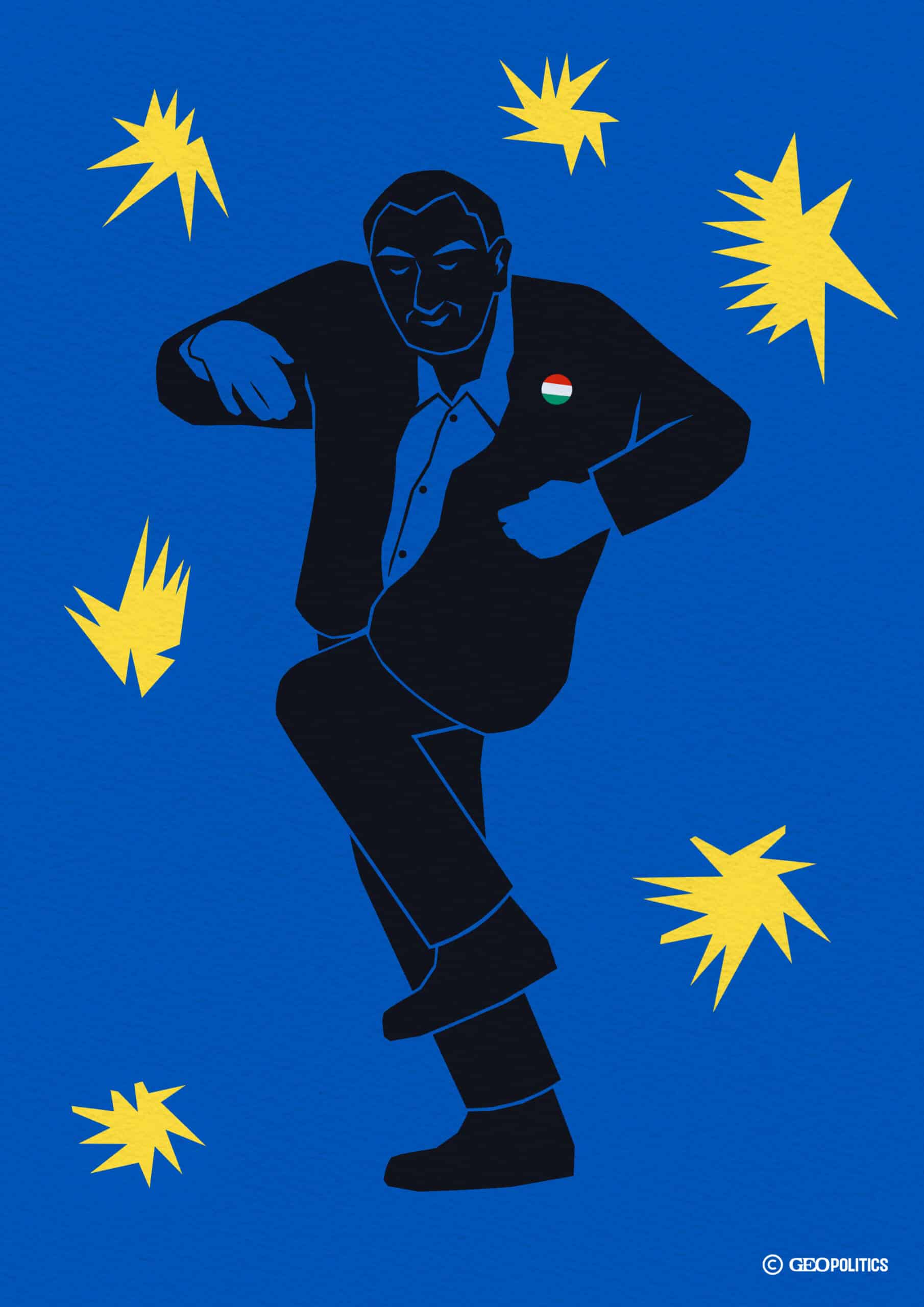
As the election results poured in after the April 12 elections, the sigh of relief was heard far afield from Hungary. Péter Magyar’s landslide win, which gave him a supermajority, has rekindled hopes among the Georgian opposition that the Georgian Dream (GD) may also be compelled to loosen its grip on the captured state, just like its ally, Fidesz, had to yield to the will of the Hungarian voters. In the United States, too, opponents of President Donald Trump have locked onto what they felt is a “cautionary tale” for the MAGA movement.
Indeed, Viktor Orbán has emerged as one of the leading ideologues of “illiberal democracy,” tinted by reactionary ideas about family, immigration, and gender. Orbán-backed foundations seem to have bankrolled the Conservative Political Action Conference (CPAC), the MAGA movement’s international roadshow, which Georgian Dream leaders have also repeatedly attended. But is Orbán’s dramatic fall a precursor of the collapse of his ideology? The jury is still out. For one, many lessons about Fidesz’s failure (and Tisza’s rise) seem too specific to the Hungarian context and may prove difficult to replicate. Secondly, it is still unclear whether Tisza’s success represents a failure of Orbán’s ideology elsewhere – or, indeed, in Hungary itself.
It is hard to ignore that some contextual conditions of Tisza’s victory in 2026 closely resemble those of Fidesz in 2010. Now, as then, Hungary is badly managed: people fear galloping inflation, and Budapest trails the EU in GDP per capita and individual consumption. Public services, education, and healthcare are chronically underfunded and crumbling, just as Hungarians see their leadership mired in corruption and collusion. Then, as now, a charismatic, young, conservative, and lawyerly politician launched a nationwide movement and captured a supermajority with 53% of the ballots cast. Then, as now, over 6 million Hungarians voted in a massive turnout. As an insightful commentator of Hungarian politics, Kim Lane Scheppele noted, Magyar “will remind those with long memories of that young Orbán — handsome and charismatic with the fluency of a lawyer and an ability to speak easily to diverse crowds.”
But similarities don’t stop here. It has been well demonstrated that Orbán’s four supermajorities allowed him to fine-tune the electoral system in ways that nearly guaranteed Fidesz’s success. Orbán locked down the countryside conservative voters and Hungarians abroad, whom he granted citizenship. Fidesz’s parliament has gerrymandered districts to check even the most influential opposition coalitions. The electoral system was designed to reward the leading party; despite receiving 54% of the vote in 2022, Fidesz won 70% of seats.
If Magyar and his Tisza managed to pick the lock Orbán put on Hungarian politics, that is in large part because they shared Fidesz’s unique fingerprint. Tisza replicated Fidesz’s nationwide network of local chapters (this time amplified through social media), placed the weight of its campaign in the countryside, attacked corruption, and promised tangible improvements, as Orbán once did. A former Fidesz man himself, Magyar also famously managed to preempt or neutralize multiple character assassination plots. He did not feel compelled to fight an average Fidesz supporter on identity politics. Conservatively minded, with a campaign that promoted national identity and unity, Magyar could not be painted as a Brussels stooge or “woke” either.
Viktor Orbán has prided himself on redefining the concept of Hungarian nationalism and linking it closely to land, family, and faith in a vision of polity that is distinctly majoritarian (and “democratic” in that sense) and downgrades the rights of minorities as subservient to the will of the majority (hence, “illiberal”). This message has been readily echoed by, for example, Georgian leadership. Typically, Speaker Shalva Papuashvili said that “democracy is not apartheid, where a minority rules over the majority. Democracy is where the will of the majority is decisive.”
As Filip Milačić convincingly argued, in Orbán’s vision, the quest for each individual’s dignity (equal rights) was overruled by the quest for the collective dignity of the Nation, narrowly defined in ethno-religious terms. This often pushed the liberal-minded opposition into identifying with the minority cause, making it an easy target for the ruling party-controlled propaganda and media machinery.
In the past, Orbán has managed to successfully cast (non-Christian) immigrants and sexual minorities as threats to the Hungarian national identity and dignity. But his attempt to portray Brussels and Ukraine as military threats has apparently failed to resonate. By contrast, Magyar succeeded in portraying Orbán as too focused on his international acclaim, too isolated from Europe to continue receiving EU subsidies, too negligent of ordinary people’s needs, and a threat to the Hungarian national project.
Just as Fidesz’s campaign traditionally picked the shrill tone and tried to raise the temperature of the campaign, Magyar’s cool demeanor and Tisza’s campaign have left the door open for Hungarians who backed Fidesz.
Milačić claims the opposition leader redrew the frontier of the political confrontation from “Hungarians vs. outsiders” to “(All) Hungarians vs. Orbán” – and that framing worked. Importantly, just as Fidesz’s campaign traditionally picked the shrill tone and tried to raise the temperature of the campaign, Magyar’s cool demeanor and Tisza’s campaign have left the door open for Hungarians who backed Fidesz. One nation, in other words, against an authoritarian leader way past his prime, who overstayed his welcome.
EU money for Fidesz served the same function as the hydrocarbon resources for the Middle Eastern or Central Asian dictatorships. Through blatant corruption, the regime siphoned off the EU funds to cronies, and kept its voter base happy, too – at least for a while, from 2013 to 2020.
Orbán has obstructed, insulted, and frustrated the European institutions at every turn, especially after Russia’s full-scale invasion of Ukraine, yet this should not obscure the fact that his political longevity has been quite considerably fueled by the EU funds. Central European University (CEU) scholars have calculated that annual transfers have constituted around 3% of Hungarian GDP, exceeding the Marshall Plan funding. They argue that EU money for Fidesz served the same function as the hydrocarbon resources for the Middle Eastern or Central Asian dictatorships. Through blatant corruption, the regime siphoned off the EU funds to cronies, and kept its voter base happy, too – at least for a while, from 2013 to 2020.
That very fact speaks perhaps as much about the deep dysfunction of the European Union as a politico-economic mechanism as it does about the nature of Orbán’s regime. Yet, it also gives clues to why the Hungarians opted for the radical political change.
After all, Orbán’s grandiloquent ideological politics cost Hungary more than half of its allocated EU funds in December 2022. His courting of Vladimir Putin’s Russia did not deliver economic dividends – at least not sufficiently to trickle down and patch up the crumbling infrastructure or health system. Simply by being elected with a massive mandate (and by being a tad less obstructive than Orbán), Magyar can realistically promise that the EU funds would start flowing again in the weeks after the new government takes office. That, and a promise to root out the “mafia state,” are widely appealing.
Yet, in the run-up to the elections, the Fidesz government has privatized much of the defense industry to the party loyalists, who are likely to benefit from the EU loans – again.
Yet the signs are that Orbán may want to benefit from EU funds, too. Hungary has applied for EUR 16 billion in EU defense loans. This money is likely to be approved, now that Orbán is gone. Yet, in the run-up to the elections, the Fidesz government has privatized much of the defense industry to the party loyalists, who are likely to benefit from the EU loans – again.
It is undeniably good news for the EU that Hungary is likely to abandon Orbán’s ideologically tinted positioning and return to doing pragmatic politics. The initial indications about Tisza’s new cabinet point to another reprise of the Central European technocratic phase: CEOs of local and international companies, former international civil servants, will likely be tapped to revive key government sectors. But the Hungarian result is more ambiguous than the initial euphoria may suggest, in several ways, and rather than copying Tisza’s tactics, those who hope to unseat the authoritarian populist leaders and regimes should look deeper.
So the lesson is that pragmatic adaptation to the system requires scouting out its weak points: sometimes that means ideological or institutional mimicry of the ruling party to trick the system; at other times, innovating to exploit the open spaces.
First, the scale of Tisza’s success is largely determined by its compatibility with Fidesz’s matrix of operation. Magyar did not campaign extensively in the countryside because he is particularly beholden to the fate of the “ordinary Hungarian,” but because Fidesz set up the election system in a way that whoever won the countryside, won the elections. The failure of the popular, united, but very urban-based opposition in 2022 to gain enough seats despite electoral success taught Magyar a lesson. Similarly, Tisza’s reliance on social media was largely due to Orbán’s methodical locking up of the mainstream media for the opposition. So the lesson is that pragmatic adaptation to the system requires scouting out its weak points: sometimes that means ideological or institutional mimicry of the ruling party to trick the system; at other times, innovating to exploit the open spaces.
One thing that the opposition movements can learn is not to believe in the inevitability of autocratic systems and to try again; each failure could still chip away at the autocrats’ armor.
Second, time is a factor: leaders age, and people get tired of them, seeking fresh faces. Viktor Orbán is, in many ways, a talented politician, but his 16-year rule has blunted the attraction of his rhetorical flourish. His foreign engagements and attempts to punch way above his (political) weight internationally made him seem out of touch with Hungarians – a trait especially irritating to voters, when combined with the apparent crony network he cemented. One thing that the opposition movements can learn is not to believe in the inevitability of autocratic systems and to try again; each failure could still chip away at the autocrats’ armor.
Third, the economy matters: Fidesz thrived when the European economy was growing or was heavily subsidized during the post-COVID recovery. When growth slowed and subsidies dried up, patron–client networks came under strain: siphoning money from Brussels is one thing, but taking it away from hospitals to line one’s pockets is enough to rile even formal supporters. It can be very difficult to remove autocratic regimes through elections that either have their own assets to finance the system (like oil-rich states) or benefit from an international context that provides windfall profits (such as regimes profiting from Russia’s war).
Hungarian experts pointed out that the membership in the EU and NATO made Belarus or Georgia-style police repression unthinkable, not because of Orbán’s inherent virtues, but because a decisive break with those institutions would not have been pragmatic in economic and security terms.
Fourth, competitive authoritarianisms can still absorb change through elections – especially in the EU context – but not a consolidated authoritarian rule. In the end, Orbán has delivered on the “democratic” part of his ideological promise: when the majority turned against him, he yielded. Many, especially those east of Budapest, were surprised that Orbán did not use the security or police apparatus more forcefully to obstruct the growth of Tisza, falsify the election results, or contest the election results. Indeed, some analyses of the results were too close to call. True, security services tried to infiltrate Tisza, and on election day, the Fidesz spokesperson made fraud allegations, but the scale of victory rendered those obsolete. In a recent webinar, Hungarian experts pointed out that the membership in the EU and NATO made Belarus or Georgia-style police repression unthinkable, not because of Orbán’s inherent virtues, but because a decisive break with those institutions would not have been pragmatic in economic and security terms.
The rise of the illiberal ideology under Orbán was a symptom of Hungary’s malaise, but his 16-year rule only made things worse. Since its independence, the country has been very badly run. State capture by a single party, severe pressure on the media and civil society, capture of significant portions of the Hungarian economy by Orbán’s cronies, and the collapse of an independent civil service and public services would be very hard to redress in a sustained and sustainable way. Magyar and his new cabinet have a job cut out for them, and Poland’s example shows clearly that backsliding on the rule of law, loss of popular confidence in the institutions, and abandonment of the deliberative culture in politics are very hard to reclaim.
There are fears that Magyar’s similarity to Orbán may lead him and his party into similar temptations, especially since they control the supermajority and Fidesz is their largest opponent in parliament. Informed experts wonder whether Orbán may make a comeback in the very short term as Hungary’s president – a position that his party made unimpeachable in the run-up to the elections.
Tisza’s landslide win did not in itself undermine the key thesis of illiberal democracy – that the majority rule prevails over individual rights. That would be for the Magyar government to affirm through deeds, in the coming months. Populist leaders abroad will continue to use Orbán’s political vocabulary and may even engage him as a well-paid consultant, if he chooses that path.
Crucially, Hungary taught autocrats that can afford a hard security crackdown against the opposition, that they should do so early, because even charisma and talent, even 16 years of shaping the law to the whims of one party, do not guarantee eternal rule in competitive authoritarianism.
The reverse lesson is addressed to the EU: its normative power and economic attraction are working, and even Orbán appears to prefer being out of power but still inside the EU, perhaps hoping to retain some of his financial gains and eventually reverse his political fortunes. This raises complex questions about accession: what lessons is Serbia’s Aleksandar Vučić likely to draw? Already far more heavy-handed than Orbán in dealing with the opposition, is he likely to lean further toward autocracy? Should the EU admit Serbia—imperfect as it is—as a member to prevent such a scenario? And what about Moldova or post-war Ukraine?
The EU should also take a long, hard look at the perverse incentives its financial support mechanisms have nurtured, and helped prop up anti-EU regimes in Hungary, Czechia, and elsewhere in Central and Eastern Europe.
The EU should also take a long, hard look at the perverse incentives its financial support mechanisms have nurtured, and helped prop up anti-EU regimes in Hungary, Czechia, and elsewhere in Central and Eastern Europe. Has the Commission been too locked on nurturing the “absorption capacity” of its new(ish) members and candidates and too prone to ignore the red flags on the rule of law and democratic participation? This is a discussion worth having. But it is also the one we are unlikely to have, given the heady aftertaste of the Hungarian success.