22 July, 2026
|
30 minutes to read

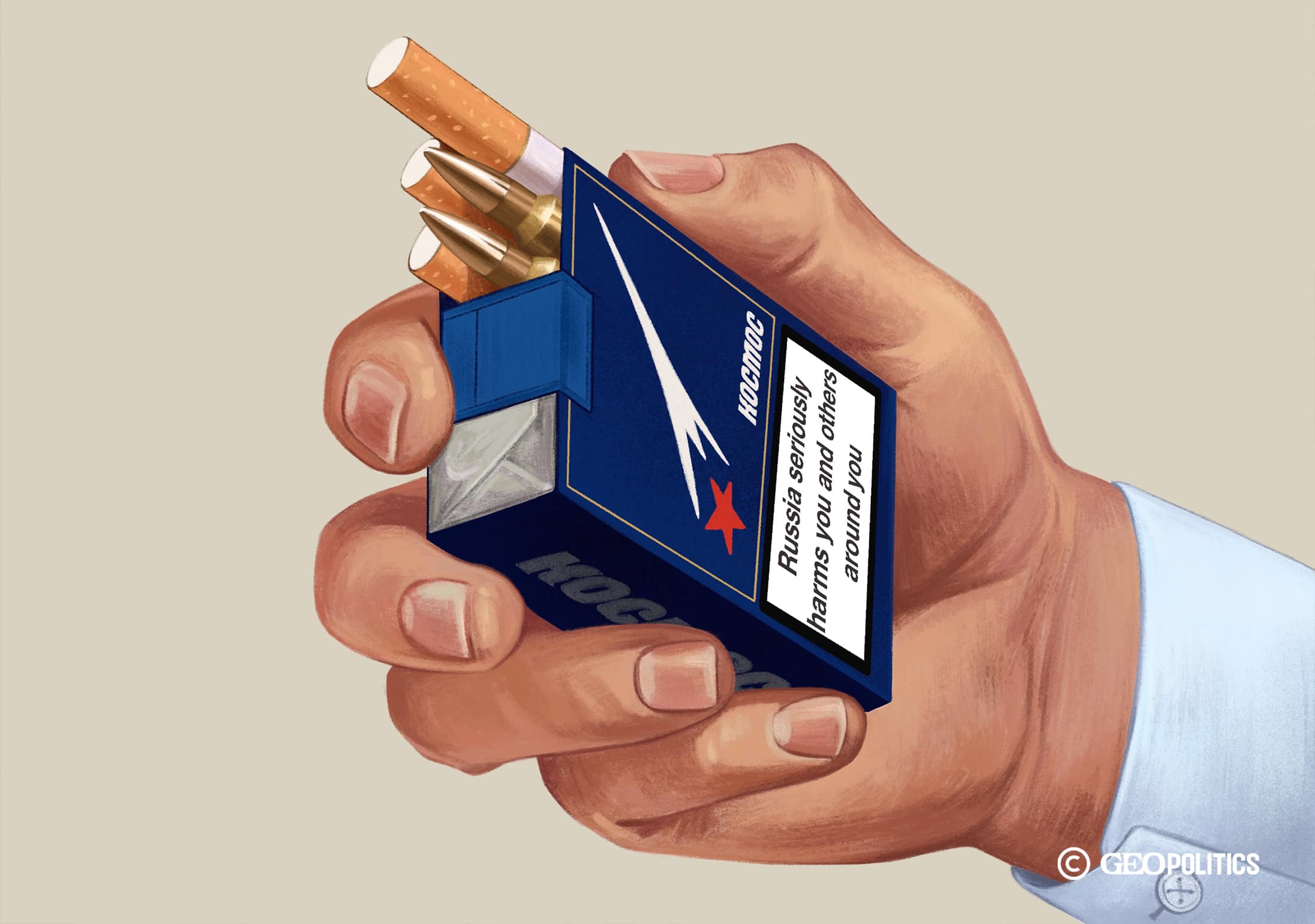
On June 23, 2026, Alan Gagloev resigned as the de facto president of Georgia’s occupied Tskhinvali Region/South Ossetia and accepted a position as an adviser to Vladimir Putin. The transfer came one day after his meeting with the Russian president and several weeks after Moscow and Tskhinvali signed a new treaty on deepening their allied relations.
These developments raise a legitimate question in Georgia. Is Moscow preparing to formally annex Tskhinvali Region/South Ossetia? While the issue of formal annexation has long been on the agenda, it is worth examining the factors that could make it more relevant in the coming months. Taking a look at the history of Russia’s absorption of Tskhinvali Region/South Ossetia and the mistakes the Georgian Dream has made will also shed more light on possible answers to this question.
The transfer of Gagloev to Moscow left little doubt about the fictitious nature of South Ossetia’s “independence.” The leader of a territory recognized by only five UN member states resigned to take an advisory post in the Kremlin, the government that already exercises effective control over it. Gagloev presented the move as a career transition, but the step from “president” to Kremlin adviser exposed the hierarchy more clearly than any formal explanation would.
Gagloev’s departure also ensured that Marat Kambolov became acting president. Kambolov is a Russian citizen and former Russian official who worked at the Kurchatov Institute, an institution headed by Mikhail Kovalchuk, a member of Putin’s inner circle. He arrived in Tskhinvali Region/South Ossetia shortly before being appointed de facto prime minister, placing him first in the line of succession when Gagloev left for a “better job.”
The history of Russian officials being parachuted into Tskhinvali is nearly as long as the road from Tskhinvali to Moscow. Anatoly Barankevich, a career Russian Army officer who had served in Afghanistan and Chechnya, became the de facto defense minister in 2004 and later secretary of the Security Council. Mikhail Mindzaev, previously deputy chief of staff of the Interior Ministry in Russia’s North Ossetia, was appointed de facto interior minister in April 2005 and remained in office through the August 2008 war. Russian officers subsequently occupied the defense portfolio in an almost uninterrupted sequence, including Major General Vasily Lunev, former Russian military intelligence official Yuri Tanaev, and Colonel Valery Yakhnovets. When Yakhnovets was appointed in July 2010, Freedom House described him as the fifth consecutive Russian military officer to hold the position.
Russian penetration was equally visible in the civilian administration. From 2005 until 2012, three consecutive de facto prime ministers arrived from Russia with limited previous political involvement in South Ossetia. Yuri Morozov, previously the commercial or financial director of an oil company in Kursk, was appointed prime minister in July 2005. Following the August 2008 war, Morozov was replaced by Aslanbek Bulatsev, formerly head of the Russian Federal Tax Service’s administration in North Ossetia. Bulatsev was succeeded in August 2009 by Vadim Brovtsev, a Russian construction executive from Chelyabinsk whose appointment was reportedly intended to accelerate reconstruction and impose greater control over the expenditure of Russian assistance. Freedom House reported that Brovtsev had been appointed under pressure from Moscow and that Russian intervention subsequently prevented Eduard Kokoity from removing him.
The post-2008 war cabinet further demonstrated the scale of the practice. Alexander Bolshakov, a former vice- governor of Russia’s Ulyanovsk Oblast, became head of Kokoity’s administration, while Aleksey Panteleev, another former Ulyanovsk official, was appointed finance minister. Contemporary reporting said that these appointments had been agreed with the Russian authorities and were intended to strengthen control over the ten billion rubles allocated by Moscow for reconstruction. Anatoly Kusraev, who had previously worked in the government of North Ossetia and headed the Vladikavkaz Scientific Centre, was appointed education minister in the post-war administration. Russian officers also occupied senior positions in the de facto security and intelligence structures, a pattern documented by the International Crisis Group and the Independent International Fact-Finding Mission on the 2008 war.
By 2010, the International Crisis Group found that Moscow staffed more than half of the de facto government, provided security, and financed approximately 99% of South Ossetia’s budget. The prime minister, deputy prime minister, and the ministers responsible for defense, economic development, and finance had all been transferred from Russia, while Russian officers had controlled the principal security structures for years. These appointments placed the security apparatus and the administration of Russian financial assistance under Moscow’s supervision, restricted the autonomy of local political groups and enabled Russian officials to intervene directly in disputes over reconstruction money and political power. The conflict between Kokoity and Brovtsev, in which Moscow reportedly protected the Russian-appointed prime minister from removal, illustrated how this arrangement worked in practice.
Marat Kambolov’s rapid advancement in 2026 therefore followed an established model. Born in North Ossetia, he spent much of his career in senior positions within Russian federal institutions, including the ministries responsible for education and nationalities, before serving as director of the Kurchatov Institute from 2021 to 2025. He was appointed Gagloev’s adviser on May 27, 2026, became de facto prime minister on June 16 and assumed the functions of de facto president one week later, after Gagloev resigned and accepted an advisory position in Putin’s administration.
The history of Russian “parachutists” provides substantial evidence of Moscow’s effective control over Tskhinvali Region/South Ossetia, although the legal case for occupation rests on a wider combination of military, political, economic and administrative control. In its 2021 judgment in Georgia v. Russia (II), the European Court of Human Rights found that Russia had exercised continued effective control over South Ossetia after the cessation of active hostilities in August 2008, citing Russia’s military presence and the local authorities’ military, economic and political dependence on Moscow. South Ossetia’s financial dependence on Russia, the subordination of its security institutions and the continuing presence of Russian forces therefore constitute the second pillar of occupation alongside Moscow’s direct influence over the composition of the de facto government.
Tskhinvali Region/South Ossetia is among the clearest examples of Russian control over an occupied territory. Russia finances its institutions, protects the occupation line, distributes passports, operates military bases, and shapes its political leadership.
Tskhinvali Region/South Ossetia is among the clearest examples of Russian control over an occupied territory. Russia finances its institutions, protects the occupation line, distributes passports, operates military bases, and shapes its political leadership. The Russian ruble is used as currency; residents depend heavily on Russian social payments; the South Ossetian budget is almost 90% dependent on Russian transfers; and access to the outside world runs through the Roki Tunnel into North Ossetia.
Russia’s integration of the Tskhinvali Region/South Ossetia began before the 2008 war through passportization, financial dependence and the transfer of Russian officials into local institutions. After Russia simplified its citizenship procedures in 2002, most residents acquired Russian passports, while the Russian ruble became the territory’s currency and Moscow financed an increasing share of its public expenditure. Russian officers were appointed to the defense, interior, and intelligence structures, and Russian administrators began occupying senior civilian positions. By August 2008, Russia had created a territory whose population, economy, and security institutions were closely connected to the Russian state, even though Moscow still formally presented itself as a peacekeeper and mediator. The war removed the remaining restraints on this process. Russia recognized South Ossetia on August 26, 2008, established diplomatic relations with the de facto authorities, and began converting its existing control into a system of bilateral treaties.
The foundational document was the Treaty on Friendship, Cooperation and Mutual Assistance, signed on September 17, 2008. It provided the legal façade for Russia’s permanent military presence, security guarantee and construction of military bases. It also envisaged coordination in foreign policy, banking, taxation, customs, energy, communications, social protection and pensions, together with the gradual approximation of legislation. The agreement was followed in April 2009 by a treaty placing the claimed South Ossetian border under the protection of Russia’s Federal Security Service. Russian border guards subsequently assumed control over the occupation line with the rest of Georgia, constructed bases and observation posts, and supervised borderization. Additional agreements regulated the Fourth Russian Military Base, customs cooperation, taxation, foreign relations, pensions, healthcare, transport, and Russian investment. Each document transferred another practical function of government to a corresponding Russian institution.
The Treaty on Alliance and Integration, signed on March 18, 2015, brought these separate arrangements into a single system. It created a common defense and security space, assigned Russia responsibility for South Ossetia’s defense, and claimed borders. It provided for parts of the South Ossetian military and security services to enter Russian structures, established a joint interior ministry coordination center, and required South Ossetian customs authorities to apply Russian and Eurasian Customs Union legislation, software, and operating procedures. It simplified the acquisition of Russian citizenship, removed restrictions on movement between Russia and South Ossetia, and tied public salaries and pensions to levels in Russia’s North Caucasus Federal District. Education regulations were to correspond with Russian law, qualifications were to be mutually recognized, and Russian financing was extended to healthcare and social insurance. The subsequent 2017 military agreement absorbed South Ossetian servicemen into Russia’s Fourth Military Base, where their service became subject to Russian military legislation. By this stage, Moscow controlled external security, border protection, military command, and customs while financing the institutions responsible for welfare and internal administration.
The 2026 Treaty on Deepening Allied Interaction advances this system by further opening public institutions to officials from the other side. Its adoption paved the way for the arrival of Marat Kambolov, a Russian citizen with a career in Russian federal institutions, and the transfer of Gagloev to the Kremlin.
The symbolic landscape of Tskhinvali reflects the same transformation. After the 2008 war, the Moscow city government financed the construction of the Moskovsky, or Moscow, microdistrict, capable of housing several thousand people. It was built on territory incorporated into Tskhinvali after the destruction and depopulation of the Georgian village of Tamarasheni. The streets in the new district were named after Vladimir Putin and Dmitry Medvedev, the two Russian leaders associated with the war and Russia’s recognition of South Ossetia. In 2019, the occupation authorities renamed a central Tskhinvali Street after Putin, explaining that the decision expressed gratitude for Russia’s actions in August 2008 and its subsequent recognition of the territory. In 2026, a street in Tskhinvali was named after Russian officer Denis Vetchinov, who died during the 2008 war. Tskhinvali also observes Moscow time, uses the Russian ruble, and organizes its political calendar around Russian state commemorations. These names and practices capture the result of the treaty process: a Georgian territory whose institutions, public space, and everyday life have been steadily reorganized around Russia.
Tskhinvali Region/South Ossetia’s geography makes this absorption especially consequential for Georgia. Much of the administrative boundary line does not follow a river, mountain range, or other substantial natural barrier. It cuts through fields, communities, and local roads. Villages that once formed a connected social and economic area have been separated by fences controlled by Russian forces.
Tskhinvali Region/South Ossetia’s geography makes this absorption especially consequential for Georgia. Much of the administrative boundary line does not follow a river, mountain range, or other substantial natural barrier. It cuts through fields, communities, and local roads. Villages that once formed a connected social and economic area have been separated by fences controlled by Russian forces. Their location gives Russia a military and psychological instrument extending far beyond South Ossetia’s small territory. Russian troops are positioned close to Gori and near infrastructure connecting eastern and western Georgia. Any significant escalation could disrupt Georgia’s internal connectivity and threaten the route on which its transit function depends.
The demographic consequences are equally important. Thousands of ethnic Georgians were expelled during successive phases of conflict, particularly during and after the August 2008 war. Georgian villages were burned and looted, and their residents were prevented from returning.
This outcome helped produce a territory with few internal constituencies supporting reintegration with Georgia or peaceful restoration of territorial integrity. The removal of much of the ethnic Georgian population, the isolation of those who remained, Russian passportization, and decades of dependence on Moscow have steadily narrowed the social space for a Georgian policy of engagement.
The aspiration to join Russia has been part of South Ossetian politics since the collapse of the Soviet Union. On January 19, 1992, the de facto authorities organized a referendum containing two questions: whether South Ossetia should be independent and whether voters supported the decision to reunite with Russia. The organizers reported 99.9% support for both propositions. Neither Georgia nor the international community recognized the vote. The combination of independence and incorporation into another state revealed an ambiguity that has remained unresolved ever since. Independence offered South Ossetian leaders their own offices, budgets, and institutions, while accession to Russia remained the declared national objective.
A second referendum was held in November 2006, although this time the question concerned preserving Tskhinvali Region/South Ossetia’s status as an independent state and securing international recognition. The de facto election commission reported that 99.88% voted in favor. Two years later, Russia recognized this supposed independence following the August 2008 war. The recognition created a formal obstacle to immediate incorporation. Moscow had justified the war and its subsequent policy through the claim that South Ossetia constituted an independent state. Annexing it soon afterward would have exposed recognition as a transitional mechanism for acquiring Georgian territory. Russia consequently gained military and administrative control while retaining the legal fiction that it was protecting a sovereign ally.
The accession question returned after the signing of the 2015 Treaty on Alliance and Integration. President Leonid Tibilov proposed a referendum to amend the constitution and authorize the de facto president to request South Ossetia’s admission to Russia. He initially suggested that the vote could take place before August 2016. Vladimir Putin responded cautiously, raising questions about the wording and offering no commitment that Russia would accept the result. Tibilov and parliamentary speaker Anatoly Bibilov eventually postponed the referendum until after the 2017 presidential election. The vote held in April 2017 dealt instead with changing the territory’s name to the “Republic of South Ossetia, the State of Alania.” The new name mirrored that of Russia’s Republic of North Ossetia-Alania and symbolized a future unification.
Anatoly Bibilov revived the proposal after Russia invaded Ukraine in February 2022. On March 30, he announced that legal preparations for accession would begin. After losing the de facto presidential election, Bibilov signed a decree scheduling the referendum for July 17, 2022. His successor, Alan Gagloev, suspended the decree on May 30 and stated that a referendum should proceed only after consultation with Moscow. The Russian Foreign Ministry welcomed the suspension, noting that Bibilov’s initiative had not been coordinated with Russia. This response clarified where the effective decision lay. South Ossetian leaders could campaign on accession, announce votes, and appeal to the unity of the Ossetian people, but incorporation required a political instruction from the Kremlin.
Formal annexation would bring few immediate gains because Russia already controls the territory’s borders, defense, military bases, customs system, principal revenue streams and external relations.
Several considerations explain Moscow’s reluctance. Formal annexation would bring few immediate gains because Russia already controls the territory’s borders, defense, military bases, customs system, principal revenue streams and external relations. It would create another heavily subsidized federal subject and invite additional international costs (not that they matter for Russia any longer, or that Georgia is pushing for it). It would also remove an instrument of pressure over Georgia. An unresolved South Ossetia can be presented as a territory whose final status depends on Tbilisi’s foreign policy. Annexation would reduce Moscow’s ability to alternate between threats, integration measures and vague suggestions of a future settlement. In 2022, there was an additional consideration. Moscow had an interest in preserving Georgian Dream’s accommodating policy and in avoiding action that might provoke a stronger anti-Russian reaction in Georgia.
The unresolved status supports a political economy that has benefited Russian contractors, South Ossetian officials, and financial intermediaries.
Money is another reason. The unresolved status supports a political economy that has benefited Russian contractors, South Ossetian officials, and financial intermediaries. Russian assistance after the 2008 war was enormous relative to the territory’s population and administrative capacity. Putin stated that Russia provided more than 43 billion rubles between 2008 and 2014. In the 2017 South Ossetian budget, 7.3 billion rubles out of total revenues of 8.1 billion came from Russia. Such transfers entered a jurisdiction closed to international monitoring, lacking independent media and courts, and governed through overlapping Russian and local patronage networks.
The reconstruction program produced some of the clearest evidence of abuse. In December 2008, an initial tranche of 1.5 billion rubles was reportedly distributed among contractors within four days because officials had been instructed to spend the money before the end of the year. South Ossetian investigators later said that some companies took the funds and disappeared without carrying out the work. Russia’s Audit Chamber found that construction in South Ossetia cost approximately one-third more per square meter than comparable construction in the Russian North Caucasus. A later audit found that more than one billion rubles had been spent with irregularities. By 2013, the South Ossetian prosecutor’s office had opened 64 criminal cases concerning Russian assistance, including 32 transferred to Russian prosecutors because the suspects were located in Russia.
One case even produced criminal convictions. Pavel Begeba, deputy head of the Russian federal Southern Directorate responsible for reconstruction, was accused of arranging inflated payments connected to the rebuilding of a wastewater treatment facility in Tskhinvali. Investigators found that he and an associate received a 12-million-ruble bribe in exchange for facilitating a state contract and accepting work priced at more than 32 million rubles. In 2016, a court in Yekaterinburg sentenced Begeba to nine years in prison. Two accomplices were also convicted, while another suspect was placed on an international wanted list. The Begeba case established in court that South Ossetian reconstruction funding had been used for bribery and embezzlement. Other investigations produced fewer public results, despite the scale of the violations identified.
South Ossetia later acquired a broader role as a financial gateway for other Russian-controlled territories. After the creation of the Donetsk and Luhansk “people’s republics” in 2014, internationally recognized banks could not deal with their institutions without incurring legal and sanctions risks. The International Settlements Bank, registered in South Ossetia in 2015, became the correspondent bank for financial institutions in Donetsk and Luhansk. Russian banks could transfer rubles to South Ossetia, after which the South Ossetian institution could move them to the occupied Ukrainian territories. A Washington Post investigation found that transfers between Russia and the separatist territories were routed through this arrangement. A Donetsk lawyer involved in foreign trade described South Ossetia as functioning, in substance, like an offshore company.
The scale extended beyond ordinary payments. The Luhansk de facto state bank reported almost 49 billion rubles in foreign economic transactions during 2017, using correspondent accounts in the South Ossetian International Settlements Bank. Investigations identified numerous companies registered under South Ossetian jurisdiction to conduct trade between the occupied Donbas and Russia. Vneshtorgservice, a company registered in Tskhinvali and associated with Ukrainian oligarch Serhiy Kurchenko, took control of major coal, steel, and industrial enterprises seized in Donetsk and Luhansk. South Ossetian registration allowed goods, payments, and contracts originating in an internationally isolated war economy to be presented as transactions involving a jurisdiction recognized by Russia.
The same financial infrastructure later appeared in a sanctions-evasion operation involving North Korea. In September 2024, the United States Treasury sanctioned the International Settlements Bank, then operating as MRB Bank, and described it as part of a network that supports illicit payments between Russia and North Korea. According to the Treasury, the Russian Central Bank orchestrated an arrangement in which MRB Bank, based in occupied South Ossetia, acted as a cut-out for a sanctioned Russian bank and established a secret relationship with North Korea’s Foreign Trade Bank. MRB opened accounts for North Korean institutions and facilitated payments that ordinary Russian banks could not process openly.
These cases show three ways in which the unresolved territory generates financial utility. Russian subsidies can be distributed through procurement systems with limited scrutiny. Companies can register in South Ossetia and engage in intermediate trade involving other unrecognized or occupied territories. Banks can use the jurisdiction as a cut-out when direct transactions with Russia would expose the parties to sanctions or legal action. Formal annexation would place these activities more directly inside Russia’s declared jurisdiction and reduce the deniability provided by a nominally independent state.
The financial argument, therefore, can not be ignored. Strategic leverage over Georgia, diplomatic costs, and the absence of any administrative necessity for annexation remain central. The territory’s financial opacity adds a practical advantage to the status quo. A Kremlin-connected political consultant quoted in June 2026 described South Ossetia as a grey zone used for money laundering and illicit cash schemes, suggesting that this had contributed to earlier hesitation over annexation. The documented record of reconstruction fraud, shell-company trade, Donbas financial intermediation, and the North Korean banking arrangement gives substance to that assessment.
The Tskhinvali Region/South Ossetia’s repeated referendums consequently serve several political purposes without settling the issue. Local leaders use accession to demonstrate loyalty, mobilize voters and compete for Moscow’s favor. Russia uses the possibility of accession to pressure Georgia while preserving the administrative and financial conveniences of a separate jurisdiction. The referendum is always close enough to remain credible and always dependent on a signal from Moscow. This arrangement has allowed South Ossetia to become almost completely integrated into Russia while its formal status remains deliberately unfinished.
As discussed above, the formal annexation of Tskhinvali Region/South Ossetia would change relatively little on the ground. It could, however, acquire political value if Putin sought an easily deliverable territorial gain to compensate for Russia’s difficulties in Ukraine, Ukrainian strikes deep inside Russian territory, and mounting economic and financial pressures, including disruptions in the energy sector. Under such circumstances, absorbing a territory already under complete Russian control could be presented domestically as another successful expansion of the Russian state.
The question, therefore, is whether the remaining counterweights would be sufficient to prevent such a step. Gagloev’s departure and Kambolov’s rapid elevation were widely interpreted as possible preparations for formal annexation. This requires examining the political, strategic and financial considerations that may still outweigh Putin’s interest in presenting another territorial acquisition as evidence of Russian expansion.
Russia paid no meaningful economic price for its invasion of Georgia in 2008, recognition of Abkhazia and the Tskhinvali Region/South Ossetia, or subsequent establishment of military bases there.
The prospect of a forceful international response is unlikely to constitute a serious counterweight. Russia paid no meaningful economic price for its invasion of Georgia in 2008, recognition of Abkhazia and the Tskhinvali Region/South Ossetia, or subsequent establishment of military bases there. The European Union briefly suspended negotiations on a new partnership agreement with Russia, but resumed them in November 2008, only two months after the war, even though Moscow had not returned its forces to their pre-war positions. No sanctions regime comparable to the measures adopted after the annexation of Crimea was created. Political and economic cooperation with Russia soon continued through the EU-Russia Partnership for Modernization, negotiations on a new agreement, and the wider Western policy of resetting relations with Moscow. The lesson for the Kremlin was straightforward: the occupation of Georgian territory generated condemnation and non-recognition, but little material punishment.
Political and economic cooperation with Russia soon continued through the EU-Russia Partnership for Modernization, negotiations on a new agreement, and the wider Western policy of resetting relations with Moscow. The lesson for the Kremlin was straightforward: the occupation of Georgian territory generated condemnation and non-recognition, but little material punishment.
The sanctions adopted after 2014 were constructed around Russia’s actions in Ukraine. Their legal basis, designation criteria and renewal procedures refer to the annexation of Crimea, destabilization of Ukraine and, after 2022, Russia’s full-scale invasion. They were never extended into a general sanctions regime covering Russia’s occupation of Georgian territory. This creates an important practical gap. If Moscow formally absorbed the Tskhinvali Region/South Ossetia, many Russian institutions and officials involved would already be sanctioned for their role in Ukraine. Additional Western measures might therefore be limited to new individual designations, diplomatic condemnation, and another declaration of non-recognition. Such steps would carry symbolic weight but impose few costs that Russia is not already bearing.
Georgian Dream has contributed to this separation by refusing to frame the occupations of Georgia and Ukraine as parts of the same Russian policy. The clearest example came in June 2014, only months after Russia annexed Crimea. In an interview with BBC World News, then-prime minister Irakli Garibashvili called comparisons between Crimea and Abkhazia and South Ossetia “a big mistake.” He argued that the situation in Georgia’s occupied regions was “absolutely different” and said that, according to his government’s analysis, Russia was not interested in annexing them.
Georgian Dream’s later policy strengthened the distinction. Georgia supported Ukraine’s territorial integrity in international organizations and observed the territorial restrictions specifically connected to Crimea, but it declined to join the broader economic sanctions imposed on Russia after the 2022 invasion. Georgian Dream leaders portrayed participation in sanctions as a threat to peace and repeatedly accused domestic critics and Western or Ukrainian officials of attempting to open a “second front” in Georgia. Georgia’s alignment with EU foreign and security policy subsequently declined, while direct flights, trade and other economic connections with Russia expanded. The Georgian government thereby weakened its ability to argue that aggression against Georgia and against Ukraine required a common deterrence system.
Secondly, the Georgian government is already pursuing policies favorable to Russian strategic interests. Georgian Dream has refused to join the economic sanctions imposed on Russia, while bilateral trade, transport, and tourism links have continued to expand. Direct flights were restored in 2023, following Moscow’s unilateral decision to lift its flight ban and visa requirements for Georgian citizens. Meanwhile, Georgia’s alignment with EU foreign-policy decisions fell to 40% in 2025, according to the European Commission. Relations with the United States have deteriorated, and the EU accession process remains effectively halted. The principal alternatives to dependence on Russia have therefore been weakened by the Georgian Dream itself.
Georgia is also vulnerable to Russian economic pressure. Russia remains a major destination for Georgian agricultural products, wine, spirits, and mineral water. In 2025, approximately 64% of Georgia’s wine-export revenue still came from the Russian market. During the first seven months of that year, Georgia exported goods worth approximately USD 412 million to Russia, including almost USD 90 million in wine, USD 78 million in spirits, and more than USD 78 million in mineral and flavored waters. These industries support producers and employment across several Georgian regions, enabling Moscow to generate domestic economic pressure through restrictions on a relatively narrow range of products. Russia has already demonstrated this capacity through its embargoes on Georgian wine and mineral water, imposed in 2006 and maintained until 2013.
Dependence also extends to strategically important imports. In January–July 2025, Georgia imported goods worth almost USD 1.09 billion from Russia. Petroleum products accounted for USD 326 million, natural gas for almost USD 133 million, and wheat for USD 39 million. These figures create direct exposure to Russian supplies in sectors affecting fuel prices, food security, and household expenditure. The vulnerability is particularly pronounced in wheat: in 2023, Russia supplied 97% of Georgia’s combined wheat and flour imports, demonstrating how concentrated the country’s dependence had become. These supplies could be diversified over time, especially given Georgia’s access to alternative energy and commodity suppliers. Instead, Georgian Dream has allowed dependence on Russian imports to become part of a wider economic relationship that it presents domestically as one of the benefits of avoiding confrontation with Moscow.
Moreover, Georgia’s recent export growth has also become partly tied to the commercial opportunities created by Russia’s isolation, including trade that may indirectly facilitate the circumvention of sanctions. Motor vehicles, almost entirely re-exports rather than Georgian production, generated USD 2.8 billion in export revenue in 2025 and accounted for more than one-third of the country’s merchandise exports. Kyrgyzstan received vehicles worth approximately USD 1.4 billion and Kazakhstan another USD 785 million, although neither market had previously imported cars from Georgia on anything approaching this scale. Between 2021 and 2025, Georgian vehicle exports to Kyrgyzstan increased almost eightyfold, while exports to Kazakhstan increased ninefold.
Georgia prohibited direct exports of covered vehicles to Russia and Belarus in 2023, and the government maintains that cars leave the country for their declared destinations. However, the abrupt redirection of trade after the ban has raised doubts about its final destination. An OCCRP investigation has documented dealers offering to transport sanctioned luxury vehicles through Georgia and Kyrgyzstan to Moscow. Kyrgyzstan itself has emerged as an established re-export hub serving the Russian automobile market. This trade pattern clearly shows that Georgian dealers, transport companies, customs brokers, and other service providers are earning substantial income from supply chains whose rapid expansion is closely connected to restricted Russian demand. This gives parts of the Georgian economy an additional material interest in preserving the commercial arrangements created by the war and further increases the potential cost of a serious confrontation with Moscow.
Tourism creates another channel of exposure. Russia was Georgia’s largest source of foreign visitors in 2025, accounting for 1.3 million visitors, or 23.2% of the total. Russian money transfers have declined from the exceptional levels recorded after the invasion of Ukraine, but Russia still accounted for about 14% of transfers received by Georgia in 2025. The combination of tourists, remittances, trade, and Russian citizens residing or operating businesses in Georgia has created a constituency with a direct interest in preserving uninterrupted relations. This gives Russia several points of pressure through administrative decisions that can create visible costs on specific sectors and social groups.
Russian officials openly acknowledge the political value of this course. In December 2024, Foreign Minister Sergey Lavrov praised the Georgian authorities for pursuing what he called a “sovereign policy” based on national interests and for refusing to become a Western “pawn.” In February 2025, Deputy Foreign Minister Mikhail Galuzin welcomed the Georgian Dream government’s “pragmatic line” and connected it directly with Moscow’s willingness to expand bilateral cooperation. In November 2025, Russian Security Council Secretary Sergei Shoigu praised the Georgian authorities for resisting what he described as destructive external influence. The message became still clearer in January 2026, when Foreign Ministry spokesperson Maria Zakharova commended the Georgian government for maintaining cooperation with Russia despite Western pressure, while pointing approvingly to rising trade and Russian tourist numbers.
This approval is significant because Moscow is praising Georgian Dream for the conduct that has damaged Georgia’s relations with its Western partners. Georgian Dream’s claims about a Western effort to open a “second front” in Georgia, to organize a revolution, or to use civil society to overthrow the government closely follow Russia’s description of Western policy in the region. Russian officials no longer need to demand an openly pro-Russian declaration from Tbilisi. They can support Georgian Dream’s language of sovereignty, peace and resistance to foreign interference while the practical result is a Georgia more isolated from the EU and the United States and more cautious in its dealings with Moscow.
Formal annexation of the Tskhinvali Region/South Ossetia would create public anger and would oblige the Georgian government to condemn Russia. However, it would not automatically restore Georgian Dream’s freedom of maneuver and realignment with the West. A meaningful turn away from Moscow would require sanctions, restrictions on bilateral links, accelerated diversification of trade and energy supplies, and a political rapprochement with the EU and the United States. Most importantly, it would require democratic reforms, which Bidzina Ivanishvili is so averse to. Each of these steps would carry costs that Georgian Dream has spent years portraying as threats to peace, economic stability, or national sovereignty. The government would also have to seek assistance from Western partners whom it has accused of supporting revolution, financing extremism, and attempting to involve Georgia in the war in Ukraine.
Conversely, the Georgian Dream will also find it easy to blame the formal annexation of the Tskhinvali Region/South Ossetia on the Georgian opposition. Through the work of the parliamentary investigative commission, the groundwork has already been laid for such a blame game, even paving the way for introducing criminal charges against Mikheil Saakashvili, the former governing United National Movement, and other opposition parties for “starting the war in 2008.”
For these reasons, Russia may conclude that annexation in the near future would not jeopardize Georgia’s present geopolitical course. Georgian Dream could protest diplomatically, appeal to the principle of territorial integrity, and continue its policy of economic engagement and strategic restraint. Moscow would have taken the territory while preserving much of the leverage that the unresolved conflict previously provided. Georgia’s dependence would then assume a different form: the hope of recovering South Ossetia would diminish, while the fear of further Russian action, including pressure concerning Abkhazia, trade restrictions or military escalation, would continue to constrain Tbilisi.
If Moscow annexed the Tskhinvali Region/South Ossetia, the Georgian government would face a choice between reversing the central assumptions of its own foreign policy and accepting another change in the status quo.
This is the trap created by Georgian Dream’s policy. Accommodation of Moscow has not generated a negotiating process over the occupied territories or reduced Russia’s military and political control over them. It has increased Georgia’s exposure to Russian leverage while weakening the Western relationships that could help the country absorb Russian retaliation. If Moscow annexed the Tskhinvali Region/South Ossetia, the Georgian government would face a choice between reversing the central assumptions of its own foreign policy and accepting another change in the status quo. Having made economic stability, regime security, and the avoidance of confrontation the foundations of its approach, Georgian Dream would have little room to choose the first option.