22 June, 2026
|
16 minutes to read

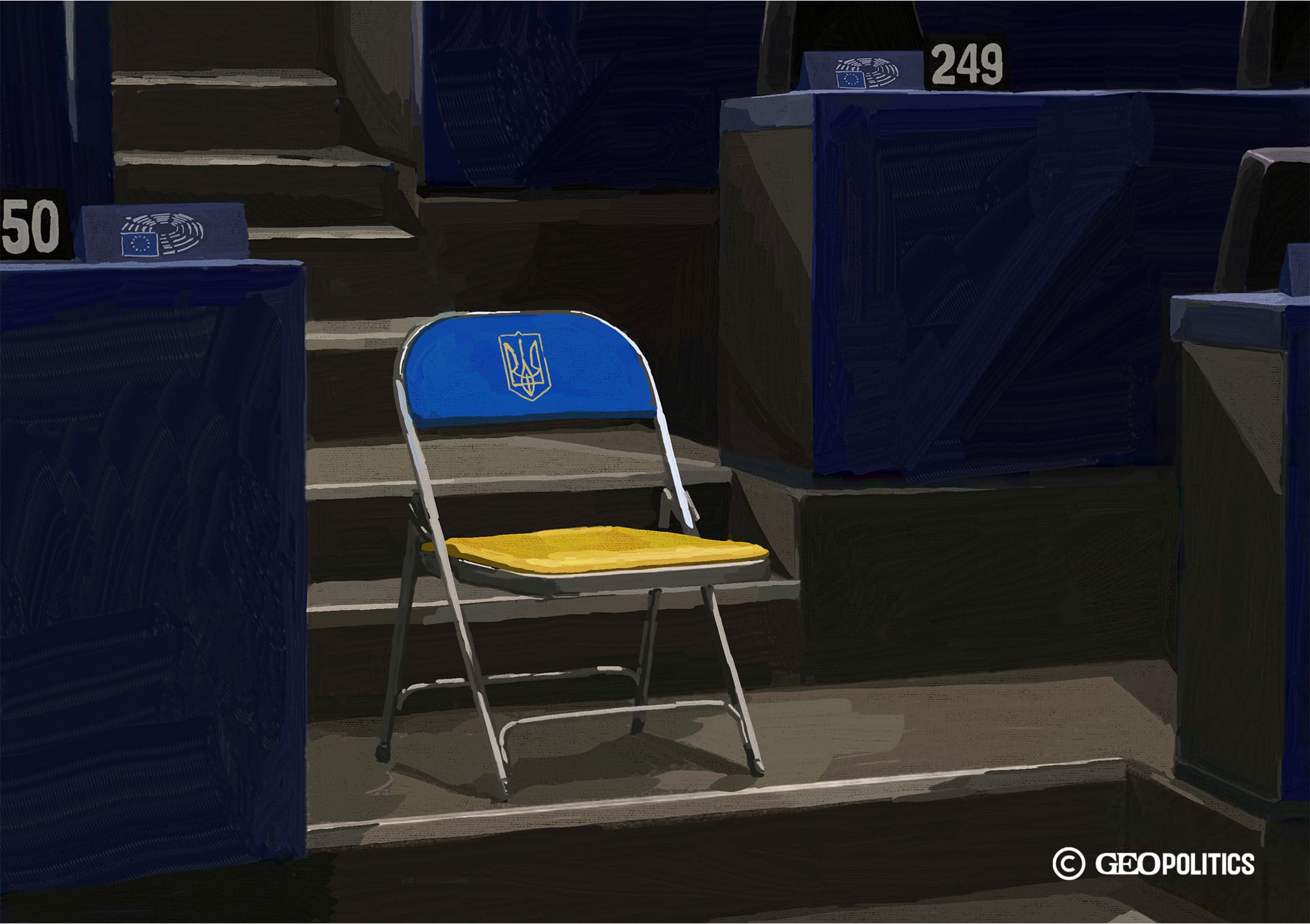
In May 2026, German Chancellor Friedrich Merz introduced a new concept into the debate on Ukraine’s future in the European Union – associate membership. Presented as an intermediate step between candidate status and full membership, the proposal seeks to deepen Ukraine’s integration into EU institutions and policies while allowing the formal accession process to continue in parallel.
The initiative is a testament to the European Union’s continued view of enlargement as a strategic priority; however, it also underscores that, despite broad support for Ukraine’s European future, there is no consensus among all member states on the timing and conditions of its accession. Germany’s proposal attempts to bridge this gap by offering Ukraine tangible benefits before full membership becomes politically feasible, while also accelerating its accession.
For Kyiv, however, the proposal raises difficult questions. While it promises greater participation in EU affairs and enhanced security cooperation, it also risks creating a new “integration stage” that falls short of full membership.
For Kyiv, however, the proposal raises difficult questions. While it promises greater participation in EU affairs and enhanced security cooperation, it also risks creating a new “integration stage” that falls short of full membership. The proposal, therefore, touches upon a longstanding dilemma in EU policy towards its eastern neighbors: how to deepen integration without creating permanent substitutes for accession.
The idea of offering ambitious EU neighbors something short of membership is not new. At the launch of the European Neighborhood Policy in 2003, then-President of the European Commission Romano Prodi famously proposed offering the EU’s neighbors “everything but institutions.” The initiative was designed to deepen cooperation without committing the Union to further enlargement.
For countries such as Ukraine, Moldova, and Georgia, however, that concept proved unsatisfactory. While the European Neighborhood Policy and, later, the Eastern Partnership expanded economic and political cooperation, neither offered a credible path towards membership. Critics often described these frameworks as a “waiting room” for countries whose ultimate goal was accession. This was further reinforced by the “Neighborhood Agreements” promise, which Kyiv, Chisinau, and Tbilisi despised, as they aspired for the Accession Agreements.
The experience of Türkiye further reinforces these concerns. For years, several major EU member states, most notably Germany and France, promoted the idea of a “privileged partnership” as an alternative to full Turkish membership. While supporters presented the concept as a realistic compromise that would provide deep economic and political integration without accession, Ankara consistently rejected it, arguing that the proposal effectively sought to replace membership with a permanent second-tier status and amounted to moving the goalposts after Türkiye had already been recognized as a candidate country and had opened accession negotiations.
Although associate membership would go considerably further than existing arrangements or previous similar ideas, many in Ukraine fear that it could become another intermediate status that delays rather than accelerates full accession.
Germany’s current proposal inevitably invites comparison with the earlier initiatives. Although associate membership would go considerably further than existing arrangements or previous similar ideas, many in Ukraine fear that it could become another intermediate status that delays rather than accelerates full accession.
As the issue of EU enlargement becomes increasingly serious, Ukraine’s accession is attracting considerable attention for several reasons. From a territorial perspective, it is larger than France or Germany. Rebuilding Ukraine’s agriculture is expected to cost USD 56.1 billion, and demining will need an additional USD 32 billion. According to estimates, Ukraine’s EU membership would cost EUR 96.5 billion in CAP payments over seven years, resulting in a 20% reduction in farm subsidies for existing Member States. All of this further complicates the consensus over Ukraine’s EU membership and stirs the debate. Mertz knows this and wants to avoid the painful discussion over money, rehabilitation, and membership, or to postpone it until a better time appears. Kyiv, on the other hand, feels that the momentum is now not only on the battlefield but also in terms of enlargement. Miss it, and the next might never arise.
Mertz’s proposal could also be seen through the prism of domestic consumption, where the far-right Alternative for Germany (AfD) party, which opposes Ukraine’s EU membership, gains popularity (29%), while Chancellor Merz’s conservative CDU/CSU alliance slips to 20%. While this is logical from a German perspective, the Ukrainian domestic perspective differs. President Volodymyr Zelenskyy, embattled domestically over corruption allegations against his team, knows that abandoning their membership dream might cost him dearly in political support from the peace-loving Ukrainian population.
Chancellor Mertz‘s proposal might be designed specifically for Ukraine, but it has serious implications for other accession states, even if not explicitly addressed.
Among the envisaged privileges of the associate membership are:
According to Berlin, this arrangement would not replace accession but would complement it, allowing Ukraine to integrate more deeply while membership negotiations continue.
At first glance, the proposal appears attractive. It offers visible political recognition, practical cooperation, and a signal of long-term commitment. Yet many of its elements raise significant questions. Particularly when it comes to the legal basis of participation of Ukrainian officials in the work of EU institutions, applicability of article 42 (7) in the current reality when Ukraine is at war with Russia, or the past experience of signing the Budapest memorandum, which was supposed to provide security assurances (and never did) from Russia and the West.
President Zelenskyy responded swiftly and unequivocally to the idea of associate membership by all but rejecting it. Ukraine, he argued, seeks “a complete, full and equal place” within the European Union. From Kyiv’s perspective, the proposal arrived at a moment when momentum appeared to be shifting in favor of accession rather than alternative arrangements, especially in light of the changed government in Hungary. For years, Viktor Orbán had been viewed as one of the principal obstacles to Ukraine’s accession process. The removal of this obstacle strengthened Kyiv’s expectations that negotiations could advance more rapidly.
Ukraine is also concerned that, rather than serving as a bridge to membership, associate membership risks creating an additional stage in the accession path. The concerns about creating a second-tier membership outweigh the benefit of gaining access to institutions without voting power. Participation without a say is unlikely to satisfy a country at war that views itself as making a major contribution to Europe’s security and future.
As it stands, the proposal’s associate membership does not give Ukraine immediate access to the EU budget or increased funding for agriculture and the regions – two main financial benefits of the membership.
And finally, as it stands, the proposal’s associate membership does not give Ukraine immediate access to the EU budget or increased funding for agriculture and the regions – two main financial benefits of the membership. As proposed, funding will depend on Ukraine’s progress in the accession negotiations, and Ukraine will not have access to EU coffers comparable to those of other EU members.
The most significant weakness of the proposal, however, lies in its legal foundations.
Although the concept of associate membership is politically innovative, it is not recognized by the EU treaties. The European Union is familiar with association agreements under Article 217 of the Treaty on the Functioning of the European Union and with accession procedures under Article 49 of the Treaty on European Union. Associate membership falls somewhere between these established categories and does not clearly belong to either.
This ambiguity also creates practical difficulties. Under existing legal interpretations, third countries cannot participate in the decision-making processes of the Council of the European Union or its preparatory bodies. While non-member states may be invited to meetings and consultations, they do not take part in deliberations or decision-making.
Even countries that are deeply integrated into the European single market, such as Norway, Iceland, and Liechtenstein, do not participate in Council decision-making structures through the European Economic Area. The only notable exception concerns acceding states during the period between the signing of an Accession Treaty and its entry into force. But Ukraine is still far from reaching that stage.
The proposal also raises practical questions. At a time when Ukraine remains engaged in a full-scale war, expecting ministers, parliamentarians, and senior officials to devote substantial time to participation in EU institutions may prove difficult. The symbolic value of such participation could therefore exceed its practical utility. In peacetime, such an arrangement could have been more appealing.
Perhaps the most ambitious element of the proposal is the suggested political commitment by EU member states to apply Article 42(7) of the Treaty on European Union. Often described as the EU’s mutual assistance clause and compared to NATO’s Article 5, it states that if a member state becomes the victim of armed aggression on its territory, the other member states are obliged to provide aid and assistance by all means in their power.
While this might sound like it is for the country at war, significant legal challenges should not be overlooked. First, Article 42(7) legally applies only to EU member states. Ukraine is not a member and therefore cannot automatically benefit from its protections. It will require a treaty amendment to extend the mutual assistance clause to Ukraine. Before that, any commitment will be purely political, and Ukraine has had very bad experiences with political commitments rather than legal ones (the Budapest Memorandum of 1994).
Second, Ukraine knows that extending the clause to Ukraine while the war with Russia continues would raise profound political and legal questions inside the EU. In practice, it could imply direct involvement by EU member states in an ongoing armed conflict with a nuclear power. It is less likely that the EU member states would accept the proposal, and it is possible that, after further deliberation, this clause will be removed from the offer, thereby turning the associate membership into a long-term “waiting room.” It is also possible that, if this clause is activated, no other security guarantees will be given to Ukraine, undermining the integrity of any future peace deal with Russia and possibly even limiting the role of the United States.
Third, even if the offer survives the political skepticism of the member states, Article 42(7) does not specify the precise nature of the assistance to be provided. Unlike NATO’s collective defense commitments, Article 42(7) leaves considerable discretion to member states regarding how they fulfill their obligations. These ambiguities explain why Finland and Sweden ultimately chose to seek NATO membership despite already being members of the European Union.
For Ukraine, therefore, Article 42(7) may provide political reassurance, but it is unlikely to be seen as a substitute for stronger, more clearly defined security guarantees, which remain a top priority for the Ukrainian leadership and an essential component for any peace deal with Russia.
Although Chancellor Merz’s proposal is designed specifically for Ukraine, its implications extend far beyond Kyiv. Any attempt to create an intermediate category between candidate status and full membership will inevitably be closely scrutinized by all enlargement countries, particularly Western Balkan states, Moldova, and even Georgia.
For countries genuinely committed to EU membership, this proposal will also generate hostility. Proposed tangible benefits, including greater access to EU funding, institutions, markets, and security cooperation, do not outweigh the political costs associated with the possibility of frozen accession negotiations and a stable sub-standard membership option. It is therefore highly unlikely that Montenegro, North Macedonia, or Moldova will embrace the idea of associate membership.
The Georgian Dream party (GD) used the European discussions about gradual integration, differentiated membership, and institutional limitations within the EU to advance a domestic propaganda narrative that the EU treats Eastern European nations as second-tier and discriminates against them.
This debate also carries special significance for Georgia, but from a different propaganda angle. The Georgian Dream party (GD) used the European discussions about gradual integration, differentiated membership, and institutional limitations within the EU to advance a domestic propaganda narrative that the EU treats Eastern European nations as second-tier and discriminates against them. This narrative fits well within the GD’s broader anti-European narrative and policy course characteristic of Bidzina Ivanishvili’s rule in recent years.
This immediate hostility among the candidate states creates an additional challenge for Brussels. Any future model of gradual integration must strike a delicate balance. It must provide candidate countries with meaningful benefits and visible progress while simultaneously avoiding the perception that it is creating permanent substitutes for full membership. Otherwise, such proposals will inadvertently strengthen Eurosceptic narratives both inside candidate countries and within parts of the European Union itself, as Georgia has promptly shown.
The rejection of Chancellor Merz’s proposal does not necessarily mean that the idea itself is doomed to fail. On the contrary, the debate reveals a growing demand for innovative approaches to reconcile two realities: Ukraine’s legitimate expectation of full EU membership and the Union’s institutional, financial, and political concerns about rapid enlargement. The challenge is therefore to design the accession process so that candidate countries perceive it as accelerating accession rather than replacing it.
The first and perhaps most important modification concerns access to the EU budget. As currently envisioned, associate membership would provide political participation and institutional engagement but would offer only limited additional access to EU funds.
The first and perhaps most important modification concerns access to the EU budget. As currently envisioned, associate membership would provide political participation and institutional engagement but would offer only limited additional access to EU funds. For Ukraine, this is a major problem. Membership in the European Union is not only about participating in institutions; it is also about benefiting from the Union’s solidarity mechanisms, particularly the Common Agricultural Policy and Cohesion Policy.
A more attractive model would allow associate members to gain progressive access to EU funding through a phased-in approach. The European Union has successfully applied similar mechanisms during previous enlargements. Following the 2004 and 2007 enlargements, farmers in Central and Eastern European member states did not receive full payments under the Common Agricultural Policy immediately upon accession. Instead, direct payments were gradually increased over a transition period, beginning at lower levels and reaching full parity only after several years. Similar transitional arrangements were used for structural and cohesion funds, allowing both the new members and the Union to adapt gradually to the financial consequences of enlargement. A comparable approach could be applied to associate membership, enabling Ukraine to benefit from increasing levels of agricultural, regional development, and infrastructure funding long before full accession, while avoiding a sudden financial shock for the EU budget.
Associate membership must be clearly time-bound. One of the principal reasons Ukraine rejected the proposal is the fear that it could become a permanent waiting room.
Second, associate membership must be clearly time-bound. One of the principal reasons Ukraine rejected the proposal is the fear that it could become a permanent waiting room. The experiences of the European Neighborhood Policy, the Eastern Partnership, and, in particular, Türkiye’s accession process demonstrate how intermediate arrangements can gradually become substitutes for membership. To avoid this perception, associate membership should be linked to a clearly defined timetable. While the European Union may not be able to commit to an exact accession date, it could commit to a maximum transition period, for example, ten years, after which associate members that have fulfilled the accession criteria would automatically proceed to full membership. Such a commitment would fundamentally alter the political logic of the proposal. Rather than creating uncertainty, it would create predictability.
Third, associate membership should complement rather than slow down accession negotiations. One of Kyiv’s primary concerns is that the proposal could reduce the European Union’s political incentive to continue opening and closing negotiating chapters. This concern is not unfounded. The history of EU enlargement contains numerous examples of political blockages unrelated to the fulfillment of accession criteria. To gain credibility, any associate membership framework should be explicitly linked to an accelerated accession process. Negotiation clusters should continue to open and close according to merit, and the European Union should make it clear that progress depends primarily on reforms undertaken by candidate countries rather than on shifting political moods within individual member states. Associate membership should become an additional layer of integration rather than a substitute for accession negotiations.
A fourth element concerns participation in the Single Market. One of the strongest incentives for candidate countries has traditionally been access to the economic benefits of European integration. Associate members should therefore receive progressively expanding access to the four freedoms of the European Union, participation in key EU agencies, and integration into sectors such as energy, digital services, transport, and telecommunications. Such an approach would produce tangible benefits for citizens and businesses while demonstrating that reforms generate concrete rewards.
The security dimension requires greater clarity.
Finally, the security dimension requires greater clarity. Political declarations regarding Article 42(7) are unlikely to reassure Ukraine unless accompanied by more concrete commitments. Rather than relying exclusively on an uncertain extension of the mutual assistance clause, the European Union and its member states could focus on deeper defense-industrial cooperation, long-term military assistance arrangements, participation in EU defense initiatives, and enhanced integration into the European security architecture. These measures would provide practical security benefits without immediately triggering the legal and political complications associated with extending mutual defense obligations to a non-member state.
If redesigned along these lines, associate membership could evolve from a controversial political proposal into a credible instrument of gradual integration. Most importantly, it would cease to be perceived as an alternative to membership and instead become what Berlin originally intended it to be: a bridge toward it.