25 April, 2026
|
13 minutes to read

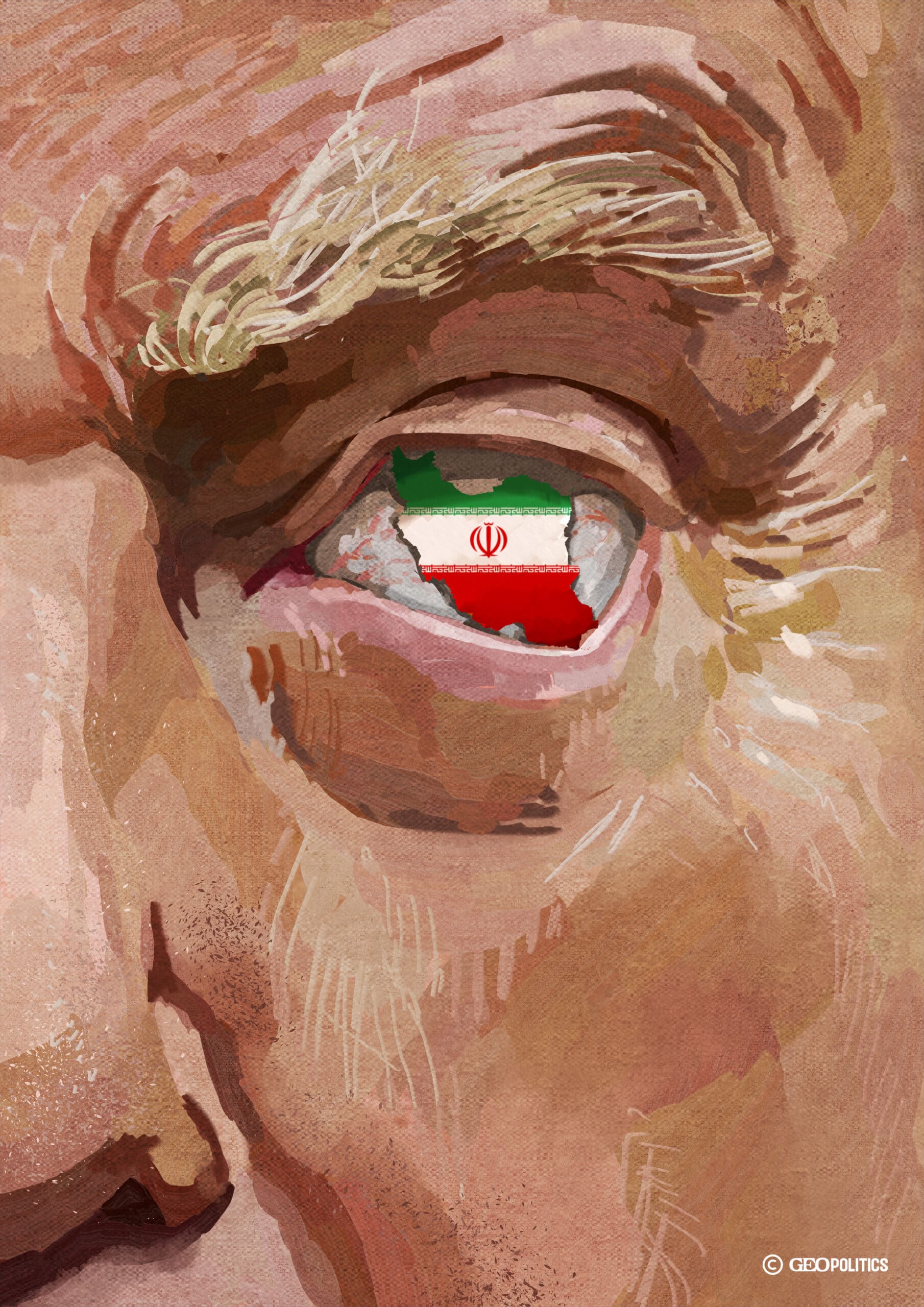
So far, the war in Iran and its consequences still pose many more questions than answers. While the guessing game has become a favorite activity for media, analysts, and online commentators, there is consensus that world politics will never be the same. In this cacophony of opinions and predictions, it’s worth adding some extra questions or highlighting several not-so-obvious dimensions of the consequences of this war.
Iran has long served as the political and ideological heart of Twelver Shia Islam, exporting its revolutionary model through the “Axis of Resistance,” involving Hezbollah in Lebanon, Shia militias in Iraq, the Houthis in Yemen, and support for Assad’s regime in Syria. The 1979 Islamic Revolution fused Shia theology with governance under the Velayat-e faqih (Guardianship of the Islamic Jurist), positioning Iran as a vanguard against perceived Sunni dominance and Western influence. Ayatollah Ali Khamenei’s death and the degradation of Iranian military capabilities, including ballistic missiles and proxy networks, represent a severe blow to this model.
The war has accelerated a potential decline in Shia political ascendancy in the Middle East. Decades of gains, bolstered by the U.S. invasion of Iraq, the Arab Spring, and Iranian funding, now face reversal.
The war has accelerated a potential decline in Shia political ascendancy in the Middle East. Decades of gains, bolstered by the U.S. invasion of Iraq, the Arab Spring, and Iranian funding, now face reversal. Hezbollah has suffered setbacks, Iraqi Shia factions are fragmented, and the “Shia Crescent” arc of influence appears fractured. Sunni Arab states, many of which quietly or overtly supported efforts to weaken Iran, may capitalize on this vacuum, intensifying sectarian rivalries. In Iraq, longstanding tensions between Shia communities and the central government could intensify without Iranian backing.
Religiously, the conflict challenges the fusion of Shia faith and state power. The Islamic Republic’s theocratic experiment, already strained by domestic protests and economic woes, risks being viewed as a historical failure if the regime collapses or becomes a weakened pariah. This could prompt a redefinition of global Shiism, shifting toward more decentralized, apolitical, or quietist interpretations favored by some clerics in Najaf or Qom. Twelver eschatology, which some Iranian hardliners tied to hastening the Mahdi’s return through chaos and confrontation with “infidels,” may lose appeal amid visible setbacks.
Iran’s revolutionary model fused clerical authority with militia networks (Hezbollah, the IRGC’s foreign proxies, and various Iraqi and Syrian militias). The war could decouple social-religious identity from militarized political practice in two possible directions. In one, trauma and sectarian targeting could entrench militias as community defenders, accelerating the local militarization of Shia politics and perpetuating cycles of violence. Conversely, prolonged conflict and international pressure could delegitimize armed non-state actors, catalyzing movements within Shia communities pushing for demilitarization, political pluralism, and reinvestment in social welfare and religious scholarship rather than armed outreach.
War often generates theological reflection. The experience of violence, authoritarianism, and state failure might prompt internal critiques of clerical rule among Shia intellectuals and laity.
War often generates theological reflection. The experience of violence, authoritarianism, and state failure might prompt internal critiques of clerical rule among Shia intellectuals and laity. Movements advocating separation of mosque and state, reinterpretations of religious authority, and rights-based discourses (women’s rights, minority protections) could gain traction, particularly among younger, urban Shia populations exposed to global information flows. Alternatively, existential threats could strengthen conservative, security-first interpretations of religion, emphasizing loyalty, sacrifice, and resistance.
However, Shia Islam as a faith is unlikely to disappear. Communities in Lebanon, Iraq, Bahrain, Pakistan, and the diaspora have independent vitality, with flourishing mosques and institutions even without Iranian subsidies. A weakened Iran might paradoxically foster resilience, encouraging Shia thinkers to separate religious identity from failed political projects. In the long term, the future could see a more pluralistic Shiism – less centralized around Tehran, more focused on cultural and spiritual dimensions – but with heightened Sunni-Shia fault lines in the short term, potentially fueling instability in multi-sectarian states.
In the last couple of decades, the Kurdish ethnos worldwide has successfully managed to shift its victimhood narratives (oppressed by Turks, Iraqis, Iranians, and Syrians) to more hopeful, yet fragmented success stories. A window of opportunity opened with Iraqi Kurdistan, which not only survived Saddam’s regime but became a significant player in post-Saddam Iraq. The war with ISIS further elevated the Kurdish role not only in Iraq but in Syria as well, and the recent collapse of Assad’s regime opened different avenues for Syrian Kurds, even though under the watchful eye of Türkiye. It looks like Kurds may have yet another opening – this time in Iran.
Iran’s Kurdish population, concentrated in the northwest and estimated at 8–10 million, has long faced marginalization under both the Shah and the Islamic Republic. The war has thrust Iranian Kurds into a pivotal, risky role. Kurdish opposition groups, including the Democratic Party of Iranian Kurdistan (PDKI) and others based partly in Iraq’s Kurdistan Region, have coordinated politically and signaled readiness for action, with some forces reportedly moving across borders. Speculation about U.S. or Israeli encouragement of a Kurdish uprising, framed as a “Kurdish card” to pressure Tehran, has circulated, though Washington has been cautious to avoid signaling full endorsement. Regionally, strengthened Iranian Kurds could inspire or link with Kurds in Iraq, Türkiye, and Syria, complicating those states’ policies.
Kurdish political movements are ideologically diverse, ranging from ethno-nationalist to leftist and Islamist factions. The war in Iran could drive diaspora mobilization, fundraising, and recruitment, but also deepen schisms among Kurdish groups pursuing divergent strategies (armed struggle vs. political negotiation). Transnational Kurdish networks might exploit state weakness to consolidate control over borderlands, but the risk of factional violence and fragmentation would be high. International actors may instrumentalize Kurdish actors for their own aims, but this could result in fleeting gains followed by punitive measures once interests diverge.
The war highlights Kurds’ perennial role as both victims and potential kingmakers in Middle Eastern power struggles.
While durable Kurdish statehood remains unlikely without major shifts in the strategic calculations of Türkiye, Iran, Iraq, and Syria, and decisive international support, the war highlights Kurds’ perennial role as both victims and potential kingmakers in Middle Eastern power struggles. Their future hinges on the conflict’s endgame: a weakened central authority might grant concessions to prevent disintegration, while regime survival could mean intensified repression. Either way, Kurdish aspirations for self-determination are likely to gain visibility, though at the cost of heightened volatility.
The Abraham Accords, signed in 2020 under the first Trump administration, normalized relations between Israel and several Arab states (UAE, Bahrain, Morocco, Sudan), driven by shared concerns over Iran, economic opportunities, and U.S. incentives. The 2026 war, by severely degrading Iran’s conventional and proxy threats, has the potential to accelerate the expansion of these accords rather than undermine them. A weakened Iran reduces the primary security rationale for Arab hesitation toward Israel, particularly for Saudi Arabia, whose normalization talks were previously stalled.
Gulf states have already cooperated tacitly or actively in defending against Iranian missiles and drones, fostering de facto security ties with Israel. The conflict’s demonstration of Israeli (and the U.S.) military effectiveness against a common foe could forge deeper integration, evolving the Accords from bilateral normalizations into a broader regional security and economic architecture – an “Abrahamic Alliance” against residual threats. Economic diversification away from oil, tech cooperation, and tourism could flourish in a lower-threat environment.
Yet, the strategic logic favors consolidation: Arab states see value in aligning with a strong Israel and U.S. patronage when Iran is diminished.
Challenges remain, though. Public opinion in Arab streets, inflamed by images of destruction in Iran and civilian casualties, could complicate formal Saudi or other expansions. Palestinian issues, sidelined in the original Accords, might resurface if the war’s fallout includes renewed focus on Gaza or Lebanon. Israeli domestic politics, including Prime Minister Benjamin Netanyahu’s position, also factor in. Yet, the strategic logic favors consolidation: Arab states see value in aligning with a strong Israel and U.S. patronage when Iran is diminished.
In the longer term, a post-war Middle East with a chastened Iran could see the Accords as the foundation for a new order—less ideological, more pragmatic, and prosperity-oriented. If regime change or fundamental reform occurs in Tehran, even limited Iranian reintegration might be possible, though unlikely in the near term. The war may thus “forge the next Abraham Accords” through necessity and shared victory, expanding normalization under fire.
The conflicts with Iran, spanning the 2024 direct exchanges, the June 2025 Twelve-Day War, and the February–March 2026 U.S.-Israeli Operation Epic Fury (and related operations), have forced a profound rethinking of alliances across the Middle East and globally. These engagements highlighted the strengths of integrated, like-minded coalitions in delivering air and missile defense, precision strikes, and intelligence sharing, while exposing the fragility of authoritarian “axes,” the risks of entanglement for great powers, and the limits of hedging strategies for smaller states.
The wars validated the value of interoperable, multi-domain partnerships. The most striking lesson was the operational success of U.S.-Israeli coordination, augmented by contributions from the UK, France, Jordan, and others. Joint interception of Iranian missile and drone salvos reached high success rates through shared early warning, layered defenses, and fighter intercepts.
From a military and strategic perspective, the wars validated the value of interoperable, multi-domain partnerships. The most striking lesson was the operational success of U.S.-Israeli coordination, augmented by contributions from the UK, France, Jordan, and others. Joint interception of Iranian missile and drone salvos reached high success rates through shared early warning, layered defenses, and fighter intercepts. This went beyond ad hoc cooperation into something approaching structural integration: real-time intelligence fusion, synchronized strikes on Iranian air defenses and nuclear/missile sites, and burden-sharing in sustainment. Israel’s ability to conduct deep strikes despite distance, combined with U.S. bunker-busters and naval support, degraded Iranian capabilities significantly. Gulf states (even if publicly cautious) hosted U.S. assets and benefited from defensive coverage, turning informal partnerships into a functional “operating system” during a crisis. This model of shared threat assessment plus interoperability proved far more effective than Iran’s “Axis of Resistance,” whose proxies (Hamas, Hezbollah, Houthis) were largely degraded or sidelined earlier, offering little meaningful relief or assistance to Tehran.
Meanwhile, Iran’s partnerships with Russia delivered rhetorical support, dual-use components, satellite imagery, drone technology tweaks, and some intelligence, but no direct military intervention. Russian S-300 missile systems underperformed or were neutralized; Chinese-enabled missiles and navigation helped volume, but not a decisive effect. Moscow and Beijing condemned U.S./Israeli actions but prioritized their own interests. This “alliance” proved transactional, but limited and dysfunctional. Iran faced relative isolation on the battlefield, with external backers providing sustainment support rather than serious, decisive military or financial aid. The wars underscored that authoritarian alignments often prioritize self-preservation over collective defense, especially when escalation risks high costs (e.g., Chinese economic ties to Gulf states or Russian resource constraints).
This situation will surely prompt significant rethinking within NATO, but it is less likely to lead to NATO’s disappearance.
At the same time, the war in Iran found NATO in a classical “out of area crisis,” and a number of European members showed limited enthusiasm for direct involvement in “not our war,” with some allies (e.g., Spain) restricting base access and others focusing on defensive measures (intercepts over Türkiye, naval escorts for Strait of Hormuz). This situation will surely prompt significant rethinking within NATO, but it is less likely to lead to NATO’s disappearance.
Future high-end warfare will likely reward the alliances built on trust, compatible systems, joint exercises, and political will for mutual defense. Loose coalitions of democracies (or democratic-leaning partners) can achieve effects that authoritarian groupings struggle to match due to mismatched incentives and lower interoperability.
Hormuz closure has given the South Caucasus a geostrategic edge, making it an important energy and logistics hub amid global supply shocks. The Middle Corridor and Trump Route for International Peace and Prosperity (TRIPP) have moved from aspirational to near-essential, reshaping Eurasian connectivity away from vulnerable southern routes. Long-term success depends on infrastructure investment, conflict de-escalation, and balanced diplomacy to mitigate new dependencies in an already volatile region. The episode reinforces that in an era of contested chokepoints, diversified overland networks through stable transit zones like the South Caucasus offer strategic insurance for global trade and energy security.
The Strait of Hormuz closure has transformed the Middle Corridor from a niche alternative (previously overshadowed by Russian Northern or Iranian Southern routes) into a strategic imperative. Disruptions to Iranian airspace, ports, and the International North-South Transport Corridor have funneled aviation, freight, and energy flows through Azerbaijan and Georgia.
It is truly a massive operational momentum: logistics operators report surging interest in the Trans-Caspian route for China-Europe trade, with Central Asian goods moving via Caspian ferries and ports into the South Caucasus.
Airlines avoiding Iranian and Russian airspace have increased east-west flights over Azerbaijani and Georgian territory, boosting overflight revenues and highlighting the region’s role as a narrow but vital air bridge.
TRIPP—the U.S.-managed corridor through southern Armenia—and other Middle Corridor projects gain urgency. It could plug gaps in the Middle Corridor, enabling smoother flows between Central Asia, the South Caucasus, and Türkiye while bypassing Iranian routes.
TRIPP—the U.S.-managed corridor through southern Armenia—and other Middle Corridor projects gain urgency. It could plug gaps in the Middle Corridor, enabling smoother flows between Central Asia, the South Caucasus, and Türkiye while bypassing Iranian routes. Progress on TRIPP, including Azerbaijani fuel shipments to Armenia and eased transit rules, has been facilitated by the crisis.
Against this background, it looks like the Georgian regime continues to “never miss an opportunity to miss an opportunity.” The halted Port of Anaklia project was supposed to gain momentum, but so far, concrete progress remains elusive due to ongoing anti-Western rhetoric and the substitution of Western investors with Chinese ones. The recent rerouting of air traffic “due to interference with scientific studies” runs counter to national interests. While Ukraine is being rediscovered by the Gulf countries as a security provider and bilateral contracts measure in billions of dollars, the Georgian regime remains not only anti-Western but also anti-Ukrainian. Georgian ports are still allegedly used for the transportation of sanctioned Russian goods, instead of developing more strategic ties with Central Asian countries.
Unlike the Georgian spotted trout, which swims against the stream to reach spawning grounds or lay eggs, it looks like the Georgian regime is swimming against the stream and putting its eggs in the wrong basket, again.