8 January, 2026
|
21 minutes to read

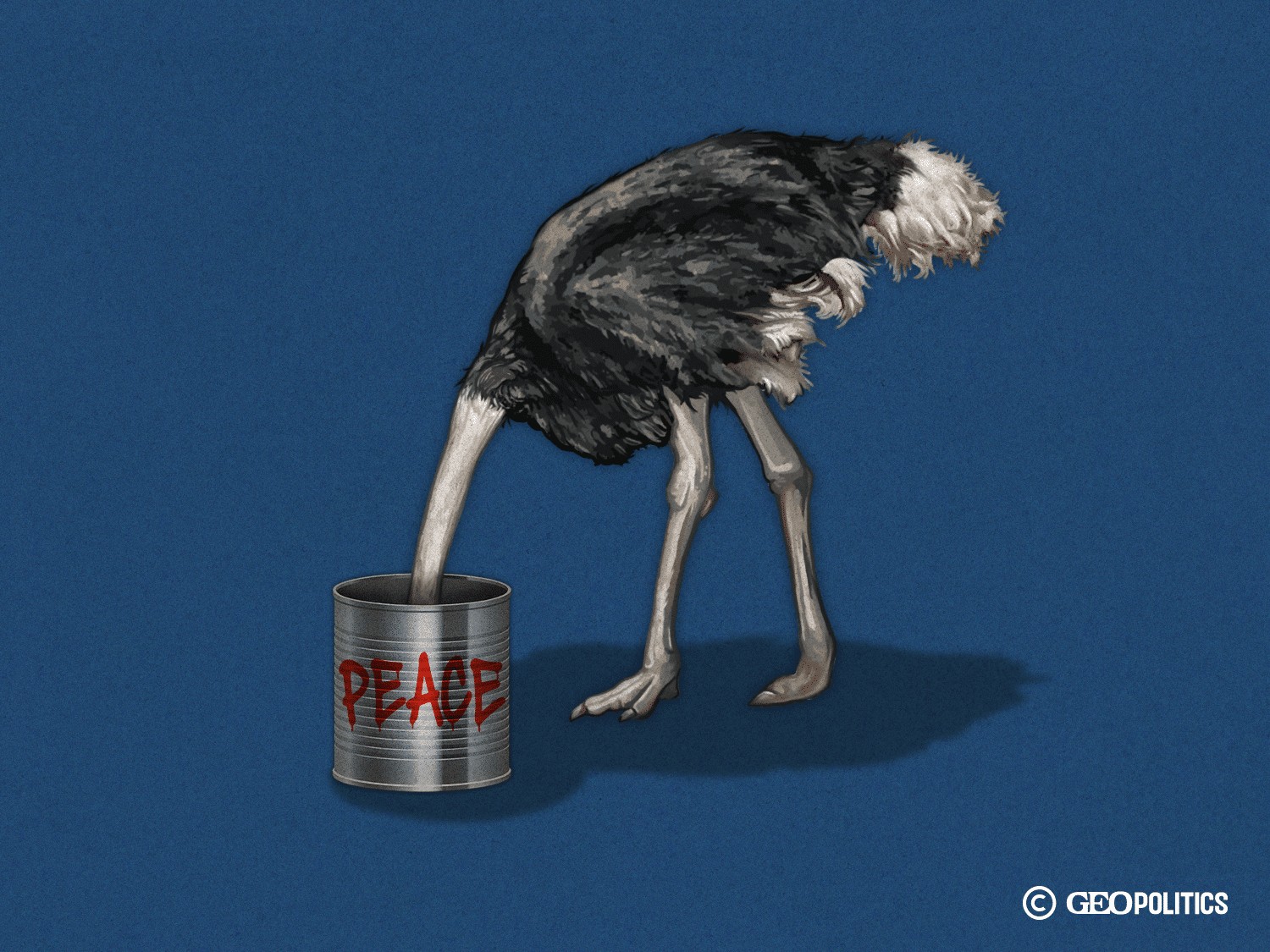
Nearly four years after Russia’s full-scale invasion of Ukraine, a number of political forces in Western Europe have found it expedient to adopt “anti-war” rhetoric expressed in a variety of forms. The spectrum is wide, ranging from Jean-Luc Mélenchon, leader of La France Insoumise, who has claimed that NATO’s promise of future membership to Ukraine and Georgia amounted to a declaration of war against Russia, to the Dutch far-right leader Geert Wilders, who warned: “Do not let Dutch households pay the price for a war that is not ours.” The so-called “anti-system” parties, whether on the far-right or the far-left, have found in the war in Ukraine a ready-made repertoire of political arguments, often devoid of substance, yet easily accessible to a broad public and readily convertible into popular votes.
Calls for peace are often presented as humane, prudent, and responsible alternatives to what is portrayed as reckless escalation by governing elites. Calls for peace require no clarity about terms, no guarantees, no enforcement mechanisms, and no accountability if negotiations fail.
In contemporary Europe, few political positions are as morally attractive and as politically inexpensive as being “pro-peace.” It offers immediate moral legitimacy while sparing parties the political, fiscal, and strategic burdens associated with supporting Ukraine. Calls for peace are often presented as humane, prudent, and responsible alternatives to what is portrayed as reckless escalation by governing elites. Calls for peace require no clarity about terms, no guarantees, no enforcement mechanisms, and no accountability if negotiations fail. By contrast, sustaining Ukraine entails visible costs, defense spending, energy volatility, long-term commitments, and electoral risk. This asymmetry allows opposition and “anti-system” parties to reap moral credit while free-riding on the deterrence provided by others. Detached from questions of responsibility and power, peace rhetoric thus functions less as a policy than as a politically convenient shelter from hard choices, one that may ultimately prolong, rather than end, the war.
In the summer of 2024, a public poster campaign in Italy declaring “Russia is not our enemy,” organized by several associations close to the far-right, appeared across Italian cities, although the campaign was not formally endorsed by Matteo Salvini’s Lega—despite Salvini’s well-known admiration for Vladimir Putin. The same posters resurfaced in France and Belgium in the autumn of 2025 and went viral on social media.
This unfolded against the backdrop of warnings issued on November 18 by France’s Chief of the Defence Staff, General Fabien Mandon, about the growing risk of military confrontation with Russia on the European continent, as well as an intensifying debate in Belgium in December 2025 over using Russian assets frozen in Europe to support Ukraine. In this context, the timing of these orchestrated campaigns—carried out, among others, by a group calling itself “SOS Donbas”—alongside Moscow’s increasingly bellicose rhetoric was hardly coincidental.
In Germany, the Alternative for Germany (AfD), the Sahra Wagenknecht Alliance (BSW), and Die Linke, three parties with very diverse historical backgrounds and trajectories, redefine the war in Ukraine not as an act of Russian aggression, but as a geopolitical conflict provoked by Western elites. This NATO-driven proxy war allegedly does not serve German interests. As a consequence, they call for “peace negotiations immediately” without addressing Russia’s responsibility or conditions and portraying military aid to Ukraine as warmongering while depicting concessions to Russia as “realism.” Slogans such as “Geld für unsere Bürger, nicht für fremde Kriege” (“Money for our citizens, not for foreign wars”) create a zero-sum narrative: either social welfare for Germans or solidarity with Ukraine. This approach aligns with Russia’s interest in seeing allies abandon Ukraine, while ignoring Germany’s long-term security interests and the costs of a Russian victory for Europe.
Even if the AfD, the Austrian Freedom Party of Austria (FPÖ), the French National Rally (RN), the Italian Lega Nord, and others carefully avoid explicit endorsement of Russia’s war, they minimize Russian war crimes, relativize responsibility (“both sides”), and emphasize “Russian security interests.” Internally, party dynamics include some openly pro-Kremlin individuals with financial or business ties to Russia and networks associated with Russian media ecosystems. This aligns them de facto with Russian strategic goals.
Pro-Russian “peace” propaganda exploits every available lever: fears of a Russian attack, conspiracy theories about the hidden interests of the defense industry, public exasperation over the scale of aid to Ukraine, and broader anti-internationalist or anti-liberal multilateral and “sovereigntist” sentiments, whether directed against NATO or the European Union.
It would nevertheless be a mistake to attribute exclusive agency to Russia and treat Moscow as the sole driver of the growing “peace at any price” narrative and declining support for Ukraine. Such “pro-peace” positions among Europe’s far-left and mainly far-right originate in indigenous Western ideological traditions. Russian, and earlier Soviet, hybrid influence has not created these currents, but has selectively amplified, radicalized, and coordinated them, particularly during the Cold War and again since 2022.
As we wrote earlier in GEOpolitics, “peace” was one of the Soviet Union’s most effective ideological weapons. Moscow consistently presented itself as the champion of peace against allegedly “imperialist” and “warmongering” Western elites, framing NATO rearmament, nuclear deterrence, and U.S. alliances as the true sources of global instability. But a dense ecosystem of front organizations and campaigns, such as the World Peace Council, peace congresses, disarmament petitions, and “anti-imperialist” intellectual networks, pre-existed; the USSR sought to mobilize and help them, particularly within left-wing and anti-nuclear movements. The objective was to delegitimize Western security policy from within, weaken public support for deterrence, and create political pressure against defense spending, missile deployments, and alliance cohesion. Today, the objective remains fundamentally the same.
Russian/Soviet hybrid methods did not invent European pacifism. They exploited it. European “peace” positions are rooted in European history and largely predate the Cold War. There was a distinct and influential current of European pacifism from the late 19th to the early 20th century, although it was neither dominant nor uniform. It appeared as a reaction to nationalism, imperial rivalry, militarism, and social Darwinism. Its intellectual and political origins were diverse, often internally contradictory, drawing on Kantian enlightened universalism and rationalism, Christian morality and anti-violence principles, socialist internationalism, and liberal economic idealism.
Ultimately, the European pacifism failed to prevent World War I, but the horrors of the war, millions of dead and mass destruction, gave rise to a new form of pacifism, grounded in an aversion to war. The war was regarded as a collective civilizational failure, and the fear of another “total war” dominated public opinion in France, Britain, and Weimar Germany.
Post-World War I pacifism in Europe was broader, deeper, and more emotionally charged than its pre-1914 predecessor. It was no longer primarily an elite, legalistic, or economic doctrine; it became a mass cultural, political, and moral phenomenon, rooted in trauma, mourning, and disillusionment. Yet, it was also ambivalent and internally fractured, oscillating between moral rejection of war and political paralysis in the face of renewed aggression. Otto Dix and Georg Grosz in painting and Erich Maria Remarque and Louis-Ferdinand Céline in literature are a few examples of pacifism becoming existential rather than programmatic, underscoring the meaninglessness and immorality of suffering inflicted on ordinary men by a distant power.
Institutionally, the post-World War I pacifism tried to replace power politics with rules. The creation of the League of Nations, the signature of the Briand-Kellogg Pact (1928), renouncing war as a policy instrument and engaging nations to solve disputes peacefully, and the setting up of International Disarmament Conferences (in Geneva in the 1930s) were examples of these attempts and reflected a belief that naming war illegal could make it politically impossible.
Cultural, artistic, and literary pacifism depoliticized responsibility and erased distinctions between aggressor and defender. This moral equivalence later proved to be dangerous and deadly.
Nevertheless, this institutional, political, and cultural pacifism fell short of its intended objective. Quite the opposite. International treaties were symbolically powerful, but strategically toothless. The disarmament was asymmetric, and the revisionist or expansionist powers (Nazi Germany, the Soviet Union, and Fascist Italy) exploited restraint and opposing the war by disarming only democracies became nonsense. Cultural, artistic, and literary pacifism depoliticized responsibility and erased distinctions between aggressor and defender. This moral equivalence later proved to be dangerous and deadly.
But the left had no monopoly on pacifism in Europe. On the far right, “peace” discourse is rooted in a different tradition. What distinguishes it from liberal or left pacifism is not a principled rejection of violence, but a selective, instrumental, and sovereigntist conception of peace. Far-right pacifism is not a commitment to international law or universal human rights; it is opposition to specific wars deemed “foreign,” “globalist,” or “not ours.”
Far-right pacifism inevitably leads to geopolitical realism and to a world divided into zones of influence in which major powers dominate, and small states’ resistance is framed as futile or irresponsible. This is peace through acceptance of spheres of influence.
Deeply rooted in philosophical traditions such as Johann Gottfried von Herder’s cultural particularism and Carl Schmitt’s critique of liberal universalism, far-right peace supporters hold that the culprits are universalist ideologies that moralize the world, thereby leading to war. “Humanitarian war” is the most dangerous form of war, and opposing intervention becomes a defense of plural, sovereign spaces. Far-right pacifism inevitably leads to geopolitical realism and to a world divided into zones of influence in which major powers dominate, and small states’ resistance is framed as futile or irresponsible. This is peace through acceptance of spheres of influence.
National isolationism and order that characterize the far-right pacifism are compatible with admiration for authoritarian violence. Thus, the interwar European far-right parties were for peace with Adolf Hitler, but turned a blind eye to his aggression against their neighbors. For example, the Vichy regime in France made peace with Germany, and the supposed benefits of that peace were a central pillar of its political propaganda. Right-wing pacifist rhetoric considered “peace through revision” as, for them, liberal or foreign/global elites imposed war. Peace was attainable only after the defeat of these elites, whose international institutions were responsible for the instability and destruction of the traditional order. Whoever restored conventional social hierarchy and order among nations was considered a guarantor of peace and was supported. To sum up, far-right pacifism in Europe traditionally opposes war not because it destroys human lives, but because it threatens domestic priorities and serves liberal or supranational projects.
Russia’s political warfare in Europe is now exceptionally well documented and explored, and the War/Peace theme is one of its pillars. As noted above, Russia did not invent pacifist ideologies from scratch. Despite some propaganda success so far, Russia has not converted pro-Ukraine parties into pro-Russia ones either. All mainstream European parties remain in pro-Ukraine positions and are increasingly cautioning their citizens about the threat coming from Russia, the need to increase military spending, and promoting societal resilience.
The sheer brutality of Russia’s aggression against Ukraine has compelled many European parties that were previously openly or overtly pro-Russian to tone down that stance, but the trend is uneven and context-dependent. The scale of Russia’s aggression and its human cost made open support for Moscow politically toxic; consequently, many have deliberately shifted to criticizing Western policies (e.g., inflation, energy costs, migration) rather than explicitly defending Moscow’s foreign policy. This is often described as “strategic silence” or “blurring” their stance on Russia.
These parties, however, did not become pro-Ukrainian, and their geopolitical views did not fundamentally change. Parties such as the AfD, the FPÖ, and other smaller nationalist parties maintained their opposition to sanctions and continued to call for the restoration of ties with Moscow. France’s RN, reflecting its domestic electoral calculations, has adapted its rhetoric, now criticizing sanctions, NATO, and EU cohesion and emphasizing “dialogue/diplomacy” rather than explicit praise for Putin.
Finally, Moscow does not control European parties in a strictly hierarchical, command-and-control manner. What exists instead is a web of asymmetric, opportunistic, and largely deniable relationships that combine ideology, finance, media ecosystems, personal networks, and tactical convergence against the liberal mainstream. The relationship is instrumental rather than organizational, and there is no Comintern-style control with a centralized chain of command, formal subordination, and systematic discipline. The only strategic objective that counts is to weaken and ultimately destroy the existing liberal-democratic model and European unity, normalize spheres of influence, and legitimize authoritarian governance. Whether or not a party is far-right or far-left is secondary; what matters is functional utility. However, it should be emphasized that, if Russia today prefers plausible deniability and operates through fragmentation and redundancy, this is not a weakness but a design feature.
Claims that European “peace” positions are simply “Russian puppets” are analytically weak and politically counter-productive. Russia’s well-cultivated plausible deniability and the popularity crisis of many mainstream political forces in Europe make these accusations less audible and credible to many European voters. On the contrary, a significant portion of the electorate believes that pointing to “Russian manipulations” serves to mask the failures of the ruling parties and coalitions in addressing “real” problems such as the economy, social issues, and immigration control.
If it is true that peace rhetoric pre-exists Russian hybrid tactics, it is politically weaponized and amplified by Moscow, ultimately serving Russian strategy.
Russian hybrid influence proceeds first by narrative selection. Russian information ecosystems select Western voices that already say that “NATO caused the war,” “This is not our war,” “Weapons prolong suffering,” and “Money spent on defense or on helping Ukraine means less money for local needs,” etc. Access to these media and narrative ecosystems is sometimes more important than financial support. Russian state media (RT, Sputnik) and the pro-Russian media space (alternative media ecosystems, social media, echo chambers, and influencers) disseminate these narratives, which are amplified by European actors who serve as vectors and are more effective. These voices are amplified, translated, and circulated as proof of “Western dissent.”
A general call for peace is reframed as acceptance of territorial concessions and the abandonment of security guarantees under the guise of realism. At this point, traditional pacifism becomes strategically aligned with Russian objectives.
Russian hybrid influence does not create pacifism but drives its discursive radicalization. Moscow encourages European partner parties to move beyond pre-existing ideological affinities or soft alignment around calls for “ceasefire talks” toward more operational demands such as “stop arms deliveries immediately,” and from appeals for “more diplomacy” to assertions that “Ukraine must compromise.” In this process, a general call for peace is reframed as acceptance of territorial concessions and the abandonment of security guarantees under the guise of realism. At this point, traditional pacifism becomes strategically aligned with Russian objectives.
Additionally, Russian narratives encourage convergence between the far-left and the far-right despite ideological hostility. The key elements of the far-left ideology are anti-(Western) imperialism, anti-NATO, anti-U.S., and “peace.” The far-right is more built on anti-liberalism, anti-multilateralism (EU, NATO), pro-sovereignty, and pro-”national interest.” Russia does not unify them ideologically, but it synchronizes their outputs.
Russia also chooses the timing for escalation. In the first year of the full-scale invasion of Ukraine, the “peace with Russia” message was given a boost when the energy crisis, provoked by cutting the purchase of Russian gas, was supposed to hit the EU. The same resurgence occurred with inflation, which surged to a record high of 9.2% in 2022. In the last two years (2024 and 2025), inflation rates returned to near-normal levels, pro-peace rhetoric progressively shifted toward “war fatigue” themes, which have now become dominant.
And last but not least, Russia’s appeasement discourse is systematically revived whenever Moscow escalates its threats against the West. Repeated nuclear warnings issued by Russian officials, such as Dmitry Medvedev, or amplified by regime propagandists like Vladimir Soloviev and Dmitry Kiselev, are designed to deepen existing divisions within Western European societies. A generalized nuclear war remains highly improbable, as experts in nuclear deterrence broadly agree—a reality well understood by European political and military leaders, who therefore refrain from reacting to such verbal provocations. Nor do these threats resonate in Ukraine, where a society already at war has endured daily violence for nearly four years. The intended target, therefore, is Western public opinion. By stoking fear, Moscow seeks to prompt domestic pressure on European governments to curtail support for Ukraine and accommodate Russian demands. Much like a hostage-taker exploiting the psychology of fear to extract concessions, Russia expects that societies threatened with nuclear escalation will pressure their own leaders into compliance with Moscow’s dictates.
“Peace” is uniquely effective because, first of all, it is normatively unassailable and emotionally resonant. No serious political force can run a campaign against peace and in favor of war. Not everyone can be Winston Churchill, who said, “I have nothing to offer but blood, toil, tears, and sweat,” or Giuseppe Garibaldi, who addressed his followers in Rome in 1849 with, “I offer you hunger, thirst, forced marches, battles and death.” Times have changed, and bellicose discourse is no longer audible, especially given that the war outside Ukraine is essentially hybrid and difficult for many to grasp.
In democratic politics, this makes “pro-peace” rhetoric immune to moral criticism, resistant to factual rebuttal, and easily framed as common sense. Being simply pro-peace is politically low-cost because it allows parties to gain moral legitimacy while avoiding responsibility, risk, and strategic clarity. It requires no policy detail, no enforcement mechanism, no accountability for outcomes, and no responsibility if peace fails. In short, it functions as a form of political free-riding on the security provided by others.
Supporting Ukraine is politically costly because it entails budgetary trade-offs, energy price volatility, defense spending, naming the aggressor, long-term strategic commitments, and voter fatigue. Hence, the asymmetry: those who defend Ukraine bear the costs; those who call for peace reap the moral credit.
In contrast, supporting Ukraine is politically costly because it entails budgetary trade-offs, energy price volatility, defense spending, naming the aggressor, long-term strategic commitments, and voter fatigue. Hence, the asymmetry: those who defend Ukraine bear the costs; those who call for peace reap the moral credit.
In “pro-peace” discourse, strategic ambiguity is an electoral asset, which is why “pro-peace” talking heads consistently and deliberately avoid answering core questions about the terms of peace, the security guarantees, and the future of Ukrainian state sovereignty and territorial integrity. They also remain silent on what would happen if Russia refuses to stop the war. This ambiguity is not accidental; it is electorally functional. It allows parties to address war fatigue, capture protest votes, and unite heterogeneous constituencies by casting a wide net of peace.
A key feature of contemporary “peace” rhetoric is the erasure of responsibility; this is peace without an aggressor and no (or displaced) agency. War becomes a tragedy, not a crime. A testament to this is Donald Trump’s obsessive craze for “people dying” and “killings should stop,” with established moral equivalence between the aggressor and the aggressed. In this discourse, violence becomes abstract, and the aggressor and the victim are moralized symmetrically. This framing lowers the cognitive burden on voters, avoids naming Russia explicitly, and peace becomes a psychological refuge from uncomfortable realities. But this works for the voters. One may reasonably question the sincerity of the lamentations over human lives expressed by political leaders who promote this reading of the conflict. Beyond electoral calculations, there also looms the prospect of material gains from future “deals” with the aggressor, including benefits from lifting the sanctions imposed on Russia.
For many European parties, especially populist, far-right, or far-left actors, the war in Ukraine (in reality, a war in Europe) is framed as an externality. This “not our war” narrative is politically comfortable as it allows governing elites to be portrayed as diverting attention from pressing social concerns.
For many European parties, especially populist, far-right, or far-left actors, the war in Ukraine (in reality, a war in Europe) is framed as an externality. This “not our war” narrative is politically comfortable as it allows governing elites to be portrayed as diverting attention from pressing social concerns. The war is described as an elite obsession, while “peace” serves as a euphemism for lower energy prices, greater social spending, and national prioritization. Of course, all is presented in general and loose terms, without providing concrete details. Ukraine’s fate is treated as external to domestic political responsibility.
Pro-peace rhetoric allows anti-system parties to appear morally superior to governing elites. It provides an ideal instrument for attacking NATO, the EU, and so-called “globalist” forces, which are portrayed as constraining national sovereignty and imposing decisions from outside. It is both convenient and effortless, as it relieves proponents of the burden of expertise and strategic planning. Lastly, it mobilizes fear without proposing solutions. It is a perfect opposition posture: maximum rhetoric, minimum responsibility.
History shows that peace without deterrence increases the risk of war.
Unfortunately, history shows that peace without deterrence increases the risk of war. Politically low-cost peace rhetoric is strategically high-risk because it weakens deterrence, the only truly effective instrument for peace. It also signals the Western division, which encourages Russian maximalism. Russia has repeatedly interpreted Western weakness or fragmentation as an invitation to pursue increasingly aggressive policies, including outright invasions. This approach prolongs rather than shortens the war, yet its costs are deferred in time, diffuse, and externalized, which makes them politically invisible. Peace is popular, preparedness is not.
As noted earlier, the “pro-peace” positions of some European political forces are neither purely legitimate pacifism nor purely Russian manipulation. They are hybrid phenomena where moral (left) or national interest (right) language masks power asymmetry. Peace rhetoric is politically weaponized, and, as agency remains Western, its consequences serve Russian strategy. European far-left and far-right “pro-peace” positions on Ukraine are best understood as endogenous ideological traditions that Russian hybrid methods have strategically activated, synchronized, and weaponized without fully controlling them. This is precisely why they are so effective and so difficult to counter.
By the 1930s, liberal and left pacifism increasingly collided with reality, and fear of casualties outweighed fear of dictatorship. Democracies like France and Britain were ready for “peace at almost any price,” and it resulted in one of the most shameful moments of 20th-century Europe, the October 1938 Munich agreement and the acceptance of Nazi Germany’s claims over Czechoslovakia’s Sudetenland. Only a few months later, Hitler occupied the whole of Czechoslovakia, and less than a year later, he attacked Poland. Democracies hesitated to judge while aggressors framed themselves as “grievance bearers.” Pacifism morphed into appeasement, often unintentionally, but with consequences, as it shaped the conditions under which aggressive revisionism could advance unchecked. The far-right pacifism also contributed to the rise of Hitler by advocating non-resistance to the newly rising German power and by accusing its enemies – liberals, Jews, and democrats – of wanting war.
The interwar experience showed that pacifism born of trauma can become politically disabling, and “never again war” can eclipse “never again aggression.” It also showed that peace rhetoric can be both morally sincere and strategically exploitable. These dynamics resonate strongly with current European debates on Ukraine, deterrence, and rearmament.
Peace remains a legitimate and necessary goal. But when it becomes a politically cost-free substitute for strategy, when it evades questions of agency, enforcement, security guarantees, and deterrence, it no longer constitutes a policy but rather a shelter from responsibility and, more troublingly, a signal that may encourage continued aggression.
History suggests that peace cannot be conjured by moral invocation alone. Today, in the war against Ukraine, “cheap peace” rhetoric risks repeating these patterns by offering moral comfort while eroding the conditions under which a just and durable peace might actually emerge. Peace remains a legitimate and necessary goal. But when it becomes a politically cost-free substitute for strategy, when it evades questions of agency, enforcement, security guarantees, and deterrence, it no longer constitutes a policy but rather a shelter from responsibility and, more troublingly, a signal that may encourage continued aggression. In Ukraine, as in earlier European crises, the uncomfortable truth is that peace is not achieved by wishing for it, but by sustaining the conditions that prevent aggression. Peace should be an outcome, not a substitute.