8 January, 2026
|
12 minutes to read

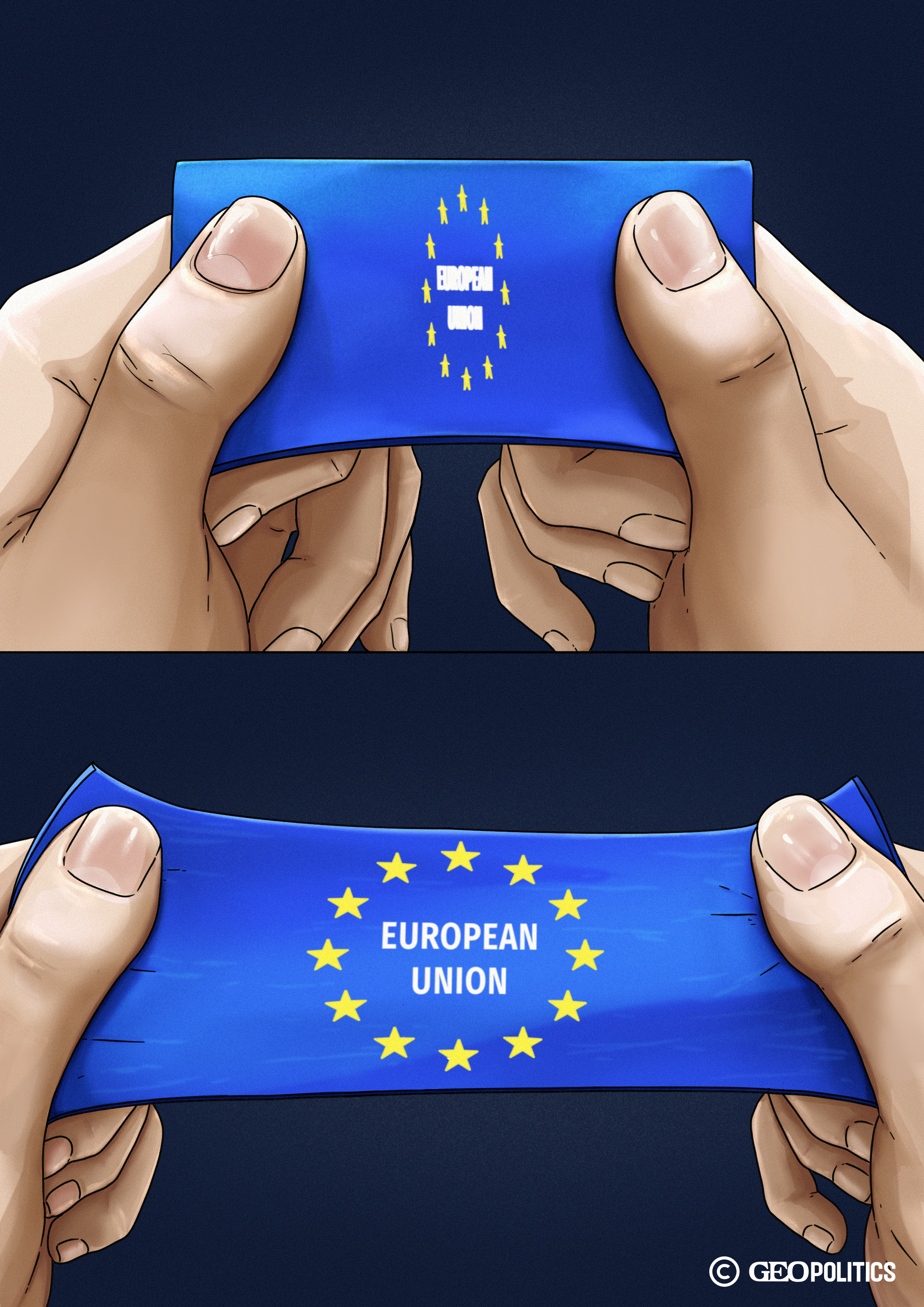
European Union enlargement did not return to the political agenda because Brussels suddenly rediscovered its transformative mission. It returned because Russia’s war against Ukraine forced a strategic choice. When Russian tanks and soldiers crossed into Ukraine in February 2022, enlargement re-emerged as a tool to strengthen the long-term resilience of Europe’s eastern flank, simultaneously signaling deterrence toward Moscow, incentivizing Kyiv, and repositioning the European Union as a security actor. Within 96 hours of the invasion, Ukraine submitted its application for EU membership, which at the time was viewed as a demonstration of European unity. This move, unprecedented in both speed and political symbolism, fundamentally altered the trajectory of EU enlargement.
Ukraine’s application triggered immediate repercussions beyond its borders. Moldova and Georgia followed by submitting their own applications, while the long-dormant enlargement agenda for the Western Balkans regained political relevance. For the first time in years, EU enlargement ceased to be a technocratic exercise as evidenced by lightning-fast (by European standards) Commission opinions, questionnaires, and other EU decisions. This shift was openly acknowledged at the highest political level. As EU High Representative Kaja Kallas stated, enlargement is “not a ‘nice to have,’ it is a necessity if we want to be a stronger player on the world stage.”
This new enlargement momentum also extended the EU’s political horizon beyond the Black Sea. Granting Georgia a European perspective and, later, candidate status, in a geopolitical move signaled a willingness to rethink not only the pace of enlargement but also its geographical and strategic scope. Enlargement became increasingly embedded in the Union’s broader geopolitical positioning as a peace project for a wider continent.
EU’s enlargement capacity is long exhausted and now a mere rhetorical exercise rather than a potent geopolitical instrument of transformation and resilience.
However, as enlargement returned to the continent’s political agenda and expectations rose on all sides, long-standing questions of credibility, absorption capacity, budget, and political sustainability once again came to the fore of the debate. The ability to answer these questions will now determine the fate of the enlargement process, either bringing it to a logical end in the near future or reinforcing the view that the EU’s enlargement capacity is long exhausted and now a mere rhetorical exercise rather than a potent geopolitical instrument of transformation and resilience.
The current enlargement wave encompasses ten countries at varying stages of readiness. Among them, Albania, Montenegro, Moldova, and Ukraine are generally viewed as the most advanced. Compared to the preceding 15 years, the process is unfolding at an accelerated pace. Enlargement Commissioner Marta Kos has openly referred to potential timelines, noting that “if we finish the technical part of the accession negotiations in 2026, then in 2028 we could get the 28th member of the EU. Albania could join as the 29th member in 2029.”
Such explicit political signaling marks a departure from the EU’s previous caution in setting timelines. The European Commission’s most recent enlargement communications explicitly reference target dates. In contrast, the EU Presidency conclusions on enlargement in December 2025 announced the establishment of an Ad Hoc Working Party to draft Montenegro’s Accession Treaty. The Commission further assessed that Montenegro and Albania could realistically conclude accession negotiations by 2026 and 2027, respectively, provided reform momentum is sustained. Ukraine and Moldova have indicated their ambition to close negotiations by the end of 2028.
However, the revival of deadlines also reopens unresolved questions about credibility. The EU’s 2018 Western Balkans strategy had suggested a 2025 membership perspective for Montenegro and Serbia, contingent on sustained reforms and political will. Those expectations were not met, leaving behind skepticism both within candidate countries and among EU citizens. The failure to honor earlier timelines entrenched a perception of the systematic shifting of goals whereby compliance with ever-expanding conditions did not translate into political rewards. In such a setting, new deadlines risk being read less as commitments than as tactical declarations, helpful in managing expectations but reversible when domestic constraints or internal EU divisions prevail. Timelines can mobilize reforms, but they also risk accelerating disillusionment when promises once again outpace delivery, a routine practice in the Balkans.
Unlike earlier enlargement rounds, the current process enjoys relatively solid public backing within the EU. As of September 2025, 56% of EU citizens expressed support for further enlargement. Support is particularly strong among younger generations, with nearly two-thirds of respondents aged 15-39 favoring enlargement once candidates meet the required criteria. Nevertheless, public opinion remains fragmented with lower levels of support in Germany, Austria, the Czech Republic, and France.
EU policymakers openly acknowledge that prolonged stagnation in the accession process risks creating a strategic vacuum in the Union’s neighborhood, which Russia, China, or other external actors could exploit.
From a strategic standpoint, Brussels and eager capitals increasingly frame enlargement as a response to geopolitical competition and Russian encroachment. EU policymakers openly acknowledge that prolonged stagnation in the accession process risks creating a strategic vacuum in the Union’s neighborhood, which Russia, China, or other external actors could exploit. This logic has gained additional traction as Donald Trump gradually recalibrates U.S. engagement in Europe. As outlined in the U.S. National Security Strategy, Washington seeks to prevent NATO from being perceived as a perpetually expanding alliance.
In this context, the EU’s role as a stabilizing force becomes more pronounced. As European Commission President Ursula von der Leyen argued: “In the age of geostrategic rivalries, a larger European Union gives us a stronger voice in the world.” Enlargement is, therefore, increasingly justified not only on normative grounds, but as a strategic investment in European security and influence.
Despite the renewed political momentum, the European Union has been explicit that enlargement will remain a strict, merit-based process. According to Kaja Kallas, the EU “will not cut corners” and “does not offer shortcuts” even if membership by 2030 is described as a realistic objective for some candidates. The Copenhagen criteria—democracy, rule of law, human rights, and an independent judiciary—remain the cornerstone of the accession process.
For candidate countries, this translates into heightened scrutiny and more demanding conditionality. The EU has drawn lessons from democratic backsliding observed in several Central European states following the 2004 enlargement. As a result, future Accession Treaties are expected to include stronger safeguards against post-accession regression and explicit requirements to render reforms irreversible.
At the same time, differentiation among candidates has become increasingly pronounced. Montenegro and Albania are institutionally advanced and politically aligned with EU priorities. Ukraine and Moldova benefit from strong geopolitical support but face extraordinary challenges related to war, security, and internal political resilience. Georgia’s accession path, by contrast, has stalled amid tensions between its political leadership and the EU, placing it outside the grouping of Eastern Partnership frontrunners.
This differentiation complicates the EU’s traditional regional approach to enlargement. While regional frameworks were designed to prevent fragmentation and rivalry, the current context makes uniform progress increasingly unrealistic. Managing these asymmetries without undermining fairness or credibility remains a central challenge for the enlargement policy.
One of the most significant challenges for the European Union in the context of enlargement concerns its governance and decision-making capacity. Although the Lisbon Treaty reduced the scope of unanimity voting, consensus remains the dominant mode of operation within both the Council and the European Council. This practice, rooted in political culture rather than legal obligation, has increasingly limited the Union’s ability to act decisively.
Key policy areas in the EU, including the Common Foreign and Security Policy, taxation, enlargement, treaty change, and the Multiannual Financial Framework, still require unanimity. Between 2011 and 2025, 46 vetoes were exercised by 15 member states across 38 policy issues, with nearly one-third occurring in the last 18 months. Hungary alone accounted for 19 vetoes, followed by Poland (7 vetoes) and other countries (2 or 1 vetoes). Enlargement and sanctions have been among the most affected areas.
This pattern has fueled concerns that a larger Union could become increasingly paralyzed. Vetoes are no longer exceptional instruments but are increasingly used as leverage in broader political bargaining.
This pattern has fueled concerns that a larger Union could become increasingly paralyzed. Vetoes are no longer exceptional instruments but are increasingly used as leverage in broader political bargaining. Enlargement, in this environment, risks becoming hostage to bilateral disputes or domestic political agendas.
Debates on institutional reform have, therefore, resurfaced. Proposals range from expanding Qualified Majority Voting and invoking passerelle clauses to more controversial ideas such as temporary accession without voting rights. The latter, however, has encountered strong resistance from candidate countries. Montenegro’s Deputy Prime Minister, Filip Ivanović, has warned that “accession without full voting rights would be hardly acceptable.”
This approach also raises several substantive concerns. It offers no guarantee that member states currently using veto power to block decision-making would refrain from doing so even if new members were temporarily deprived of voting rights. Moreover, such an arrangement could conflict with EU law by undermining the principle of equality among member states. It would also risk placing new members in a position where they are expected to implement EU decisions without being able to participate meaningfully in the decision-making process. Further questions of democratic representation arise as MEPs and ministers from future member states would be unable to fully represent their citizens within EU institutions. Finally, concerns of fairness persist as these states would be excluded from shaping discussions on future enlargement rounds or treaty reform processes.
Financial considerations represent another major challenge for the European Union. Enlargement is frequently portrayed as a costly undertaking that would strain the EU budget and disproportionately burden current member states. However, empirical analyses suggest that these fears are often overstated.
Studies indicate that while some net beneficiary states might receive slightly reduced allocations following enlargement, the overall impact would be modest. In the long term, enlargement tends to generate economic benefits through expanded markets, increased investment, and higher productivity. From a macroeconomic perspective, previous enlargement rounds have contributed positively to the Union’s overall growth.
The more significant challenge lies in public perception. According to Eurobarometer data, 67% of EU citizens feel poorly informed about enlargement. This information gap has enabled the dissemination of disinformation and fear-based narratives. As of September 2025, the most common public concerns related to enlargement were uncontrolled migration, corruption and organized crime, and costs to taxpayers.
In parallel, enlargement raises legitimate questions about the EU’s absorption capacity. Integrating large and economically diverse countries—particularly Ukraine—would have far-reaching implications for cohesion policy, agricultural funding, and regional development. Addressing these issues requires early, transparent debate rather than postponement until accession is imminent.
Domestic political dynamics within EU member states constitute the third major challenge to enlargement. The rise of far-right and Eurosceptic parties has narrowed the political space for enlargement-friendly policies. These actors frequently frame enlargement as a threat to national sovereignty, economic stability, and social cohesion.
Electoral cycles further complicate decision-making. France’s presidential election in 2027 coincides with key phases of the enlargement process. Under Article 88‑5 of the French Constitution, any treaty authorizing the accession of a new state to the European Union must be submitted to a referendum by the President of the Republic unless both chambers of Parliament approve it by a three-fifths majority. While the 2008 constitutional revision provides an alternative to a popular vote, the possibility of a referendum introduces political uncertainty and may incentivize caution in ratifying accession treaties.
Germany faces different, but comparable, pressures. While referendums are not constitutionally required, declining public support for enlargement and the rise of the far-right Alternative for Germany party constrain political leadership. In this context, governments may recognize the strategic necessity of enlargement while hesitating to defend it openly.
These domestic dynamics reveal a central paradox: enlargement is increasingly justified on geopolitical grounds, yet its success depends on sustained domestic political consent. Without proactive leadership and public engagement, enlargement risks being undermined from within.
Ukraine’s application reshaped not only its own European trajectory but also the prospects of Moldova, Georgia, and the Western Balkans. Yet, the renewed momentum has also exposed enduring structural weaknesses within the enlargement framework.
The war in Ukraine decisively returned EU enlargement to the political agenda, transforming it from a long-neglected policy into a strategic imperative. Ukraine’s application reshaped not only its own European trajectory but also the prospects of Moldova, Georgia, and the Western Balkans. Yet, the renewed momentum has also exposed enduring structural weaknesses within the enlargement framework.
Accelerated timelines, heightened expectations, and unprecedented geopolitical urgency characterize today’s enlargement process. Candidate countries face stricter conditionality and demands for irreversible reforms, while differentiation among candidates has become unavoidable. At the same time, the European Union confronts governance constraints, budgetary debates, and domestic political pressures that increasingly shape enlargement outcomes.
Enlargement today is not merely about expanding borders; it is about defining the future political shape, credibility, and resilience of the European Union.
Proposals such as accession without voting rights illustrate the depth of concern regarding institutional capacity. Yet, their rejection underscores the EU’s continued commitment to equality among member states—a principle enshrined in Article 2 of the Treaty on European Union. Enlargement remains, fundamentally, a two-way process. Candidate countries must demonstrate credible reform and political will, while the EU must show strategic leadership, institutional adaptability, and the ability to communicate honestly with its citizens.Whether the current window of opportunity leads to a successful enlargement wave will depend less on external circumstances than on the Union’s capacity to reconcile ambition with cohesion. Enlargement today is not merely about expanding borders; it is about defining the future political shape, credibility, and resilience of the European Union. The EU enlargement process is a test for both accession countries, which must demonstrate their genuine interest in implementing reforms, and for the European Union, which must prove that the process is credible.